

Share on
Cross-border Payments: Why Global Businesses Lose Revenue — and How to Improve Payment Performance
International expansion often highlights issues businesses were previously unaware of at home.
Cross-border payments can seem like a backend issue, yet their direct impact can have serious ramifications on revenue, conversion, cash flow and customer trust - something global merchants typically discover after expanding: orders increase across markets while payment success rates remain unpredictable.
Why Do Cross-Border Payments Still Cause Revenue Loss

Hidden Costs Extend Beyond Transaction Fees
Businesses often underestimate the true costs associated with cross-border payments because they only focus on transaction fees; in reality, however, losses often come from hidden friction throughout the payment chain and include: FX spreads during currency conversion;intermediary bank fees; Failed payment retry costs and refund processing fees as well as chargeback and dispute handling.
Delayed Settlement Losses
Low-margin industries such as fast fashion, dropshipping, and consumer electronics incur delayed-settlement losses that can significantly diminish profitability.
A business operating with an 8% product margin cannot absorb more than 3-5% payment-related leakage without impacting growth and incurring losses.
As businesses expand to multiple countries, this becomes even clearer. Payment flows that work efficiently in one market may become expensive or unreliable elsewhere due to local banking infrastructure constraints, acquiring limitations or currency conversion layers.
According to the World Bank’s Fast Payments Toolkit, cross-border B2B and retail transaction costs remain significantly higher than domestic clearing systems due to multi-layered intermediary friction. This financial drag underscores the urgent need for a unified global payment system that can bypass legacy correspondent banking bottlenecks. This financial drag underscores the urgent need for a unified global payment system that can bypass legacy correspondent banking bottlenecks.
Slow Cross-Border Settlement Increases Operational Pressure
Settlement delays are frequently seen as financial issues, but their ripple effects extend much further than this.
When cross-border settlement takes several days instead of hours, businesses may experience:
- Inventory Restocking Delays
- Supplier Payment Timing issues
- Cash Flow Gaps
- And Continued Ad Spend Without Confirmed Revenue.
Delayed financial reconciliation
For e-commerce businesses running aggressive advertising campaigns, delayed financial reconciliation can skew decision-making. Teams may scale campaigns further before realizing payment conversion or settlement performance has fallen below expectations.
B2B businesses must contend with similar challenges: payments distributed among multiple intermediary banks can create uncertainty surrounding delivery timing and invoice reconciliation, often more harmful than fees themselves!
Similarly, the Bank for International Settlements (BIS) Committee on Payments and Market Infrastructures (CPMI) has emphasized the slow, fragmented, and less transparent nature of traditional cross-border payment systems, driving the global mandate for standardized message sets and harmonized protocols.
Payment Failures Can Occur Due To Lack Of Localization Gaps
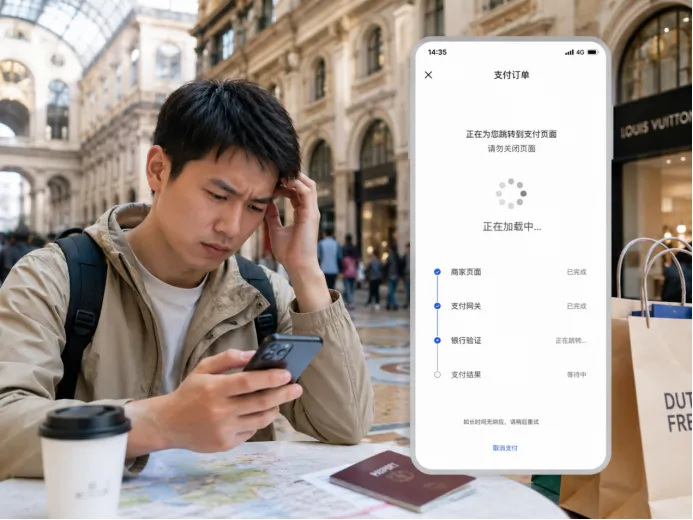
Instead of treating transaction drops as random customer friction, sophisticated enterprises implement a localized international payment gateway to systematically reduce cross-border payment failures. High decline rates are rarely just an issue of insufficient funds; rather, they point to structural localization mismatches within the checkout flow, poor local acquiring coverage, or inefficient routing.
Common examples may include:
Customers are not seeing familiar payment methods within their local payment flow;
International card distrust signals a currency mismatch during checkout mobile payment friction
or poor locals acquiring coverage;
Businesses expanding into Southeast Asia quickly realize that card acceptance alone may not suffice.
Customers in many markets tend to trust alternative payments like local wallets and bank-based payment solutions as part of the checkout experience.
Antom offers over 300 payment methods globally, such as international cards, regional wallets, bank transfers and local payment tools.
Their checkout flow can dynamically prioritize locally preferred options based on user region to reduce friction prior to authorization even taking place.
Why Different Businesses Face Different Cross-Border Payment Problems?
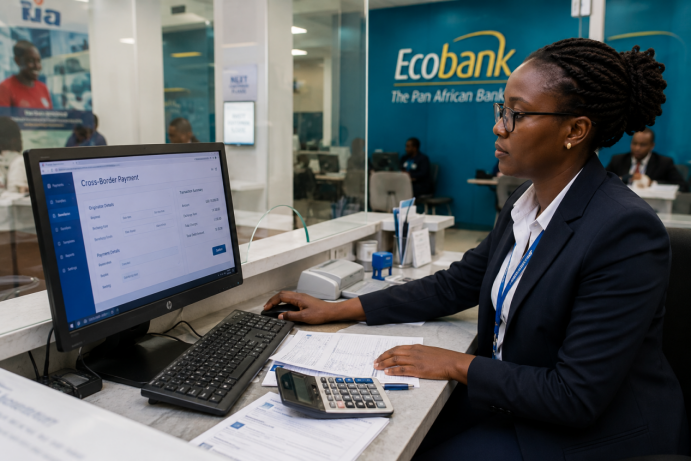
E-commerce Businesses Are Focused On Conversion And Authorization Rates
At e-commerce brands, conversion efficiency can often be their greatest challenge. A campaign may generate high traffic volumes and purchase intent but still fail during checkout if the brand relies on a rigid, non-localized international payment gateway. Common causes of abandonment include missing local payment methods, poor mobile checkout UX, authorization declines, forced currency conversion, and slow payment redirection.
Too late, many teams realize that high advertising performance does not guarantee successful payment conversion.
Research by BlueSnap and other payment providers consistently reveals that international checkout abandonment rates increase significantly when localized payment options are unavailable.
Southeast Asian customers may hesitate to enter international card details on an unfamiliar website but may complete payment instantly using their trusted local wallet.
B2B Businesses Prioritize Reconciliation Over Checkout
B2B payment issues tend to center around financial coordination rather than checkout issues, with typical pain points including invoice mismatches, multi-currency reconciliation and supplier payout tracking being among them.
In such situations, manual finance operations could become necessary.
Settlement Unpredictability
With large supplier networks, payment fragmentation quickly becomes a serious operational challenge for finance teams. They frequently spend extra time matching invoices, exchange rates, payment references and settlement reports across numerous providers, which adds unnecessary administrative overhead and increases the financial team's workload significantly.
Antom's integrated payment management capabilities help businesses centralize transaction visibility across payment channels, currencies, and markets to reduce manual reconciliation pressure and enhance reporting consistency.
Platforms and Marketplaces Have Compliance and Scale Complexity
Marketplaces face different hurdles altogether when it comes to scaling.
As geographic coverage expands, payment complexity increases exponentially, forcing platforms to transition from fragmented local processors to a standardized global payment system. Businesses must manage AML/KYC requirements, multi-party settlement, regional compliance rules, fraud risk management and payout orchestration to remain compliant.
Operational Explicability
A platform providing services across multiple regions must take steps to accommodate local regulations, establish relationships between entities, currency settlement rules and payout timing all simultaneously.
Failure visibility is equally crucial. When payments fail, operations teams need to know if the issue stemmed from fraud rules, issuer declines, routing issues or local compliance restrictions - without this knowledge, support teams become overwhelmed with unresolved payment disputes.
What Improves Cross-border Payment Performance
Utilize Local Payment Methods Instead of Relying Solely on Cards
Target Region | Preferred Local Payment Methods | Payment Infrastructure Solutions |
Southeast Asia | Digital E-wallets & Local QR Systems | Integrated Cross-border payment API for instant settlement |
Europe | SEPA Account-based Transfers & Open Banking | Localized acquiring routing via a unified Global payment system |
Latin America | Voucher-based cash payments & Local Cards | Adaptive checkout options to reduce cross-border payment failures |
One effective strategy for increasing cross-border payments is using local payment methods instead of depending solely on international cards alone.
Within each market, there can be different expectations when it comes to payment behaviors; one such example would be trust in local payment behaviors in comparison with international card usage.
Local payment methods enhance both user familiarity and authorization performance.
Built as a comprehensive global payment system, Antom's checkout infrastructure supports localized payment presentation, enabling businesses to adapt payment flows by region without developing separate integrations for every market.
Payment trust directly impacts conversion.
However, local payment methods are not equally important in every market. In some B2B or high-ticket SaaS scenarios, international cards may still remain the preferred payment option because of corporate procurement processes and global billing requirements.
Reduce Friction in Cross-Border Checkout Flows
Cross-border checkout friction has the ability to quietly undermine revenue.
Common friction points include:
too many redirects;
forced account creation;
slow mobile loading time;
currency confusion and long authorization steps.
These issues become especially pernicious on mobile devices, where users frequently abandon transactions quickly.
Antom's Scan to Link feature offers a simple solution for cross-device commerce: rather than forcing users to manually enter payment credentials on TVs, PCs, or gaming devices themselves, users can instead scan a code with their phones to quickly authorize payment within seconds.
Increase Visibility to Payment Failures
Merchants worldwide often experience difficulty because payment failures appear as generic declines that leave operational blind spots unobserved.
Companies need visibility into where failures come from:- Fraud screening - Issuer declines Acquiring issues Routing failures Compliance checks Settlement interruptions.
Without issuer and routing-level insights, optimizing becomes an exercise in guesswork.
Operating teams frequently struggle when all failed transactions appear similar and do not yield issuer- or routing-level insights.
Payment orchestration and granular transaction visibility allow global businesses to quickly detect structural anomalies early, systematically reduce payment failure rate, and continuously improve authorization performance over time.
Choose Payment Infrastructure Based on Expansion Stage
Expansion Stage | Typical Need |
Early international expansion | Aggregation |
Multi-country scaling | Orchestration |
Platform or marketplace operations | Unified infrastructure |
There is no universal payment set-up that suits every business perfectly.
Infrastructure requirements vary based on your expansion stage and geographic scope.
Businesses at different expansion stages often need different payment setups. Early-stage sellers entering one or two markets may prioritize fast integration and broad payment coverage, while larger platforms usually require orchestration, localized acquiring, reconciliation visibility, and multi-party settlement support. Choosing infrastructure based only on transaction pricing often creates operational bottlenecks later.
An infrastructure system designed for one country might become intractable when applied across several locations and environments of expansion.
Businesses should evaluate payment infrastructure on operational complexity, geographic coverage, reconciliation needs and compliance exposure - not only transaction pricing.
How Antom Helps Businesses Simplify Cross-Border Payments
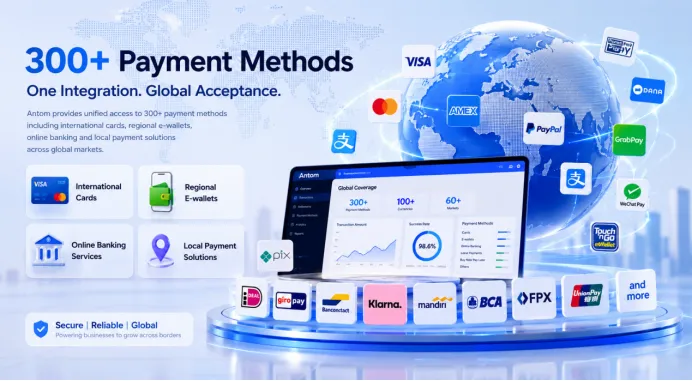
Antom provides businesses with tools and expertise for customizing checkout experiences across global markets by supporting regionally preferred payment methods and adapting presentation based on user location.
This will reduce payment method mismatch and strengthen customer trust during checkout.
Antom Provides Access to Over 300 Payment Methods Through One Integration
Antom provides access to more than 300 payment methods through a single cross-border payment API integration, covering international cards, regional e-wallets, online banking services, and local payment solutions across global markets. This robust cross-border payment API integration drastically reduces technical development overhead while maximizing global payment coverage.
Businesses seeking global expansion can use a unified infrastructure layer to centralize payment operations rather than managing individual payment providers separately.
This streamlines operations while improving payment coverage.
Antom offers multi-currency settlement and integrated payment management capabilities that enable businesses to increase reconciliation efficiency and operational visibility, and supports E-commerce, SaaS and Platform Businesses.
Different business models necessitate different payment strategies.
Subscription businesses may prioritize retry logic and optimizing billing frequency; marketplaces might emphasize payout orchestration and compliance issues; ecommerce brands could prioritize checkout conversion and localization efforts.
Antom supports multiple business scenarios through a flexible payment infrastructure rather than one set payment model, eliminating common cross-border payment mistakes made by businesses today.
Common Cross-border Payment Challenges Businesses Continue to Overlook
Many businesses initially assume card payments will suffice when entering new markets, only to later realize that local wallets and bank-based payments drive much higher conversion.
Expanding into Markets Without Localizing
Payment processes that work effectively in one region might fail in others due to cultural trust differences, acquisition gaps or payment behavior patterns.
Ignoring Settlement and FX Costs
Businesses often underestimate how FX spreads and settlement delays impact profitability in low margin industries like low manufacturing.
Treating Payment Failures as "Normal"
Persistent payment decline rates are often structural rather than random. In many cases, they indicate acquiring gaps, routing inefficiencies, localization mismatches, or fraud configuration issues that require operational optimization instead of more marketing spend.
Long-term optimization requires visibility into payment routing, localization performance and authorization outcomes - in other words: visibility must also include FAQs.
FAQs
Q1: How do legacy banking bottlenecks impact global cross-border payments?
Cross-border payments often suffer from revenue leakage due to hidden intermediary fees and FX spreads. To protect margins, international businesses are shifting toward an integrated global payment system to bypass traditional correspondent networks and achieve higher authorization rates.
Q2: What are the main operational benefits of an optimized cross-border settlement?
An efficient cross-border settlement process minimizes cash flow gaps, ensures predictable supplier payment timing, and streamlines multi-currency financial reconciliation, allowing low-margin businesses to maintain strict operational liquidity.
Q3: Why should platforms prioritize a unified Cross-border payment API integration?
Integrating a robust cross-border payment API allows marketplaces and enterprise platforms to streamline checkout localization, utilize smart routing, and manage compliance infrastructure globally through a single, secure integration layer.
What can businesses do to reduce cross-border payment friction?
Businesses can enhance payment performance by localizing payment methods, streamlining checkout flows, improving failure visibility, and integrating a robust global payment system compatible with their current expansion stage.
To learn more: https://antom.com/