

Share on
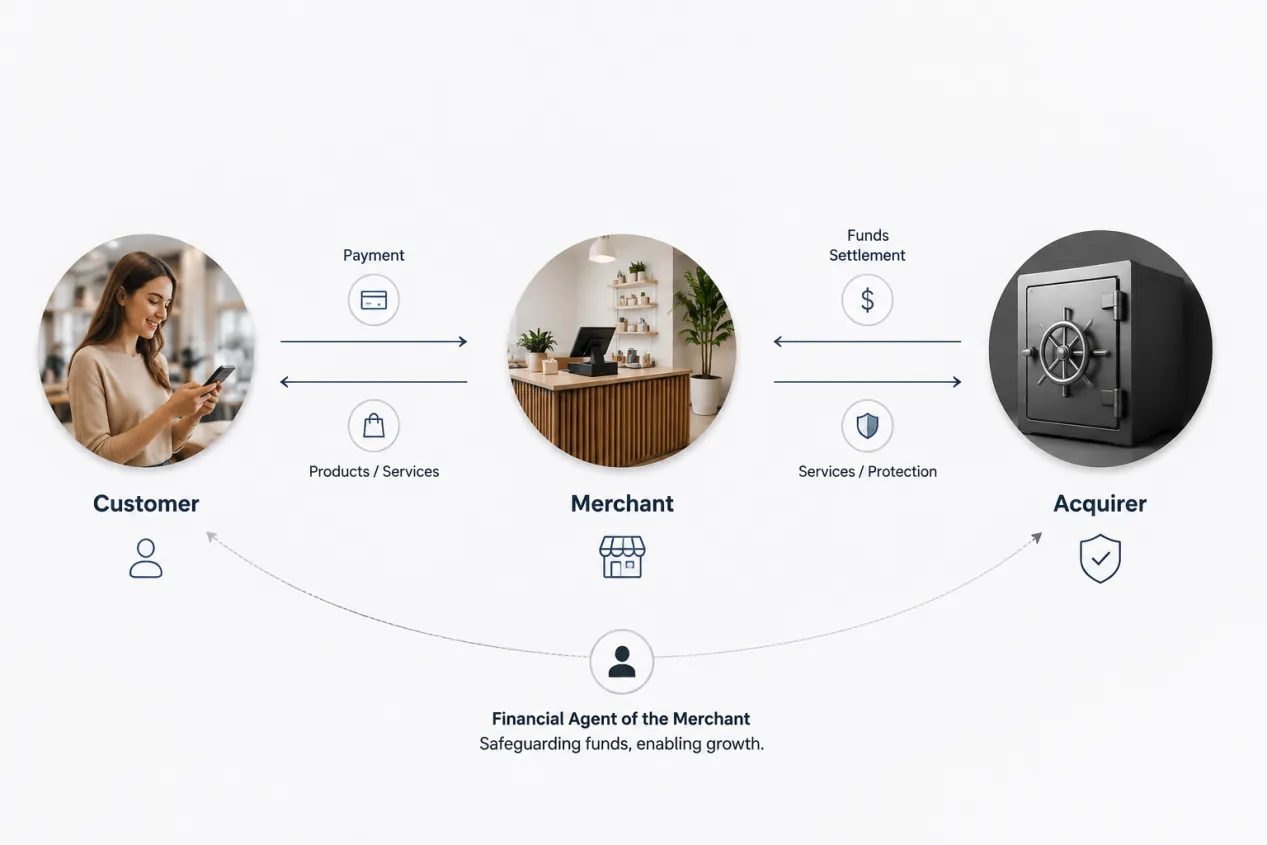
In order to build a sustainable global business, one must understand how money moves through digital commerce. If you have ever wondered what an acquirer in payments is then consider that an acquirer serves as the financial engine behind digital commerce.
What Is an Acquirer in Payments: A Core Definition
Definition of an Acquirer/Accumulating Bank:
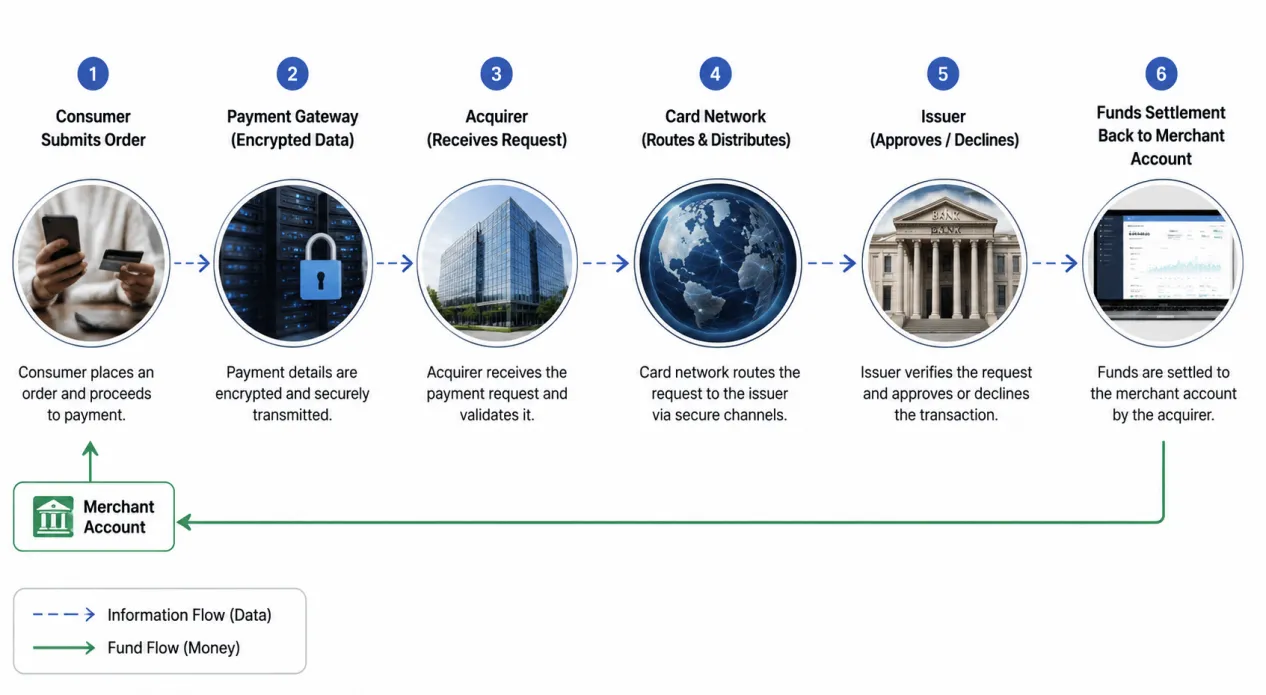
An acquirer (or acquiring bank) is a licensed financial institution that processes credit and digital transactions on behalf of merchants. Acquirers collect payment details, route the authorization request through card networks for approval, and eventually settle approved funds into their merchant accounts.
In terms of relationships, acquirers stand firmly as your financial representative in an intricate global payments web.
Acquiring Bank: Their Role
An acquiring bank serves a critical function for businesses: taking on the financial risk associated with processing transactions for customers. When they click "buy," your acquirer steps in to verify and ensure funds are available before facilitating secure transfer to your merchant account—where sales revenue collects before it gets transferred back into your main bank account.
Real-World Examples of Acquirers
In the past, when asked what an acquirer was, most would reply that JP Morgan was an example. Now however, modern payment orchestrators like Antom, Stripe and Adyen have changed this landscape by providing comprehensive gateway functions, risk management capabilities, acquiring services and payment processing in one convenient tech stack - meaning no more stitching together different vendors to accept payments globally!
Understanding Acquirers, Issuers, and Payment Gateways
Learning to distinguish among acquirers, issuers, and gateways is vital in order to properly diagnose where payments fail. A payment processor (or gateway) acts as the secure digital bridge transmitting transaction data while an acquirer collects money on behalf of merchants while an issuing bank (issuer) provides funds on behalf of consumers.
How Can I Differentiate Between an Issuing Bank and an Acquirer?
One simple way of keeping track of these two entities is looking at who they represent: an issuing bank (issuer) issues a card to consumers and pays an acquirer on behalf of cardholders while acquirers work exclusively for merchants by collecting approved funds from cardholders and depositing them directly into merchant accounts.
Who Needs a Global Acquirer and Who Doesn't (Setting Boundaries)
Complex problems rarely have one-size-fits-all answers, and let's be clear: global acquiring networks aren't for everyone.
Who Doesn't Require It: For local coffee shops in Chicago or UK-based online retailers that operate solely domestic e-commerce stores, traditional banks or simpler payment tools like Square should suffice - more complex payment orchestrators would only end up draining resources.
Who Needs It: If you are selling digital goods globally or running an high-risk SaaS platform with >20% cross-border decline rates in Latin America or Southeast Asia, using just one domestic acquirer won't cut it; in such an instance you need an expert Global Payment Orchestrator that can route transactions locally while bypassing cross-border friction.
Traditional Western acquirers frequently apply blanket decline rates in emerging markets. Why? Not always fraud; often the issuing bank simply doesn't trust foreign acquirers and returns vague error codes like "Do Not Honor."
Cross-border acquisition with localized strategies provides a way out. By routing transactions through local entities in the shopper's region, transactions bypass cross-border data friction and increase approval rates significantly.
Pricing Models: Interchange++ Vs Blended Rates
Selecting an acquirer requires selecting a pricing model; be aware of hidden costs.
Blended/Flat Rates: These rates may seem straightforward (e.g. 2.9% + 30¢), yet often mask high profit margins for processors as well as true foreign exchange (FX) markups.
Interchange++: is an extremely transparent model, detailing exactly which fees are being collected by card networks, issuers and acquirers for mid-to-large global merchants to optimize costs. It's essential for optimizing cost efficiency.
Edgar Dunn & Company (EDC) reports that alternative payment methods in Asia-Pacific and Latin America are quickly overtaking traditional credit cards as payment options become more readily accessible to customers. A modern acquirer provides access to these local payment methods so cart abandonment doesn't occur from lack of familiar options.
The 4 Questions You Should Ask Before Selecting an Acquirer
(For compliance, always opt for platforms with AICPA SOC 2 Type 2 certifications and PCI SSC standards to guarantee leading data protection).
Stop relying solely on basic features when procuring modern acquiring services; rather, pose these four difficult questions during procurement to evaluate modern acquisition services:
- Can your services support local settlement in my target markets to avoid double FX markups?
- How should I submit evidence in response to a chargeback, manually or using your AI-powered dispute system?
- In the event that my primary network goes down, how quickly will your dynamic routing switch to an alternative channel? (Benchmark: Elite orchestrators execute this Active Retry in under 500 milliseconds, completely invisible to the shopper.)
- Can I see your API documents? How long will integration take my engineering team?Through a single RESTful API integration, modern orchestrators eliminate the need for months of hard-coding, turning a complex migration into a sprint of just a few weeks.
Advanced Fraud and Chargeback Management
According to The Nilson Report, global card fraud costs billions each year; yet rigid fraud rules turn away legitimate customers.
"Merchants often lose disputes due to limited capacity to gather compelling evidence. Merchants using Antom's AI-powered dispute management can save hours by automatically producing defense materials based on transaction profiles."
— Antom Payment Experts Team
Smart Dynamic Routing to Maximize Approval Rates
Dynamic routing uses algorithms that direct transactions towards the specific acquiring channel most likely to approve them at that exact moment. By taking into account historical data and issuer preferences, this intelligent routing can recover failed payments using Active Retry technology - improving authorization rates by several percentage points.
Antom Redefines Acquiring Services for Global Merchants
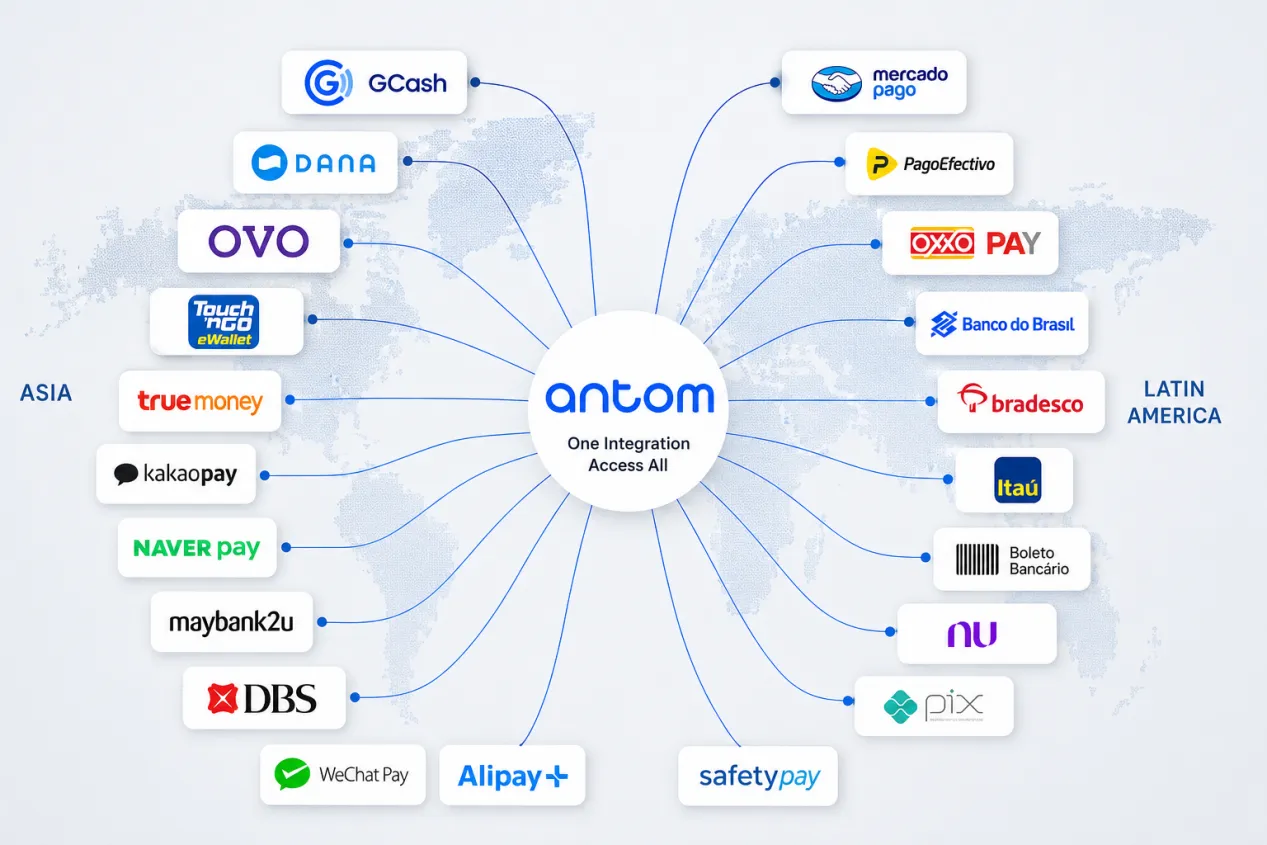
While platforms like Stripe are designed for developers and Square is best-suited to micro-merchants, Antom was specifically created to address the complexity of cross-border e-commerce, social selling, and large digital platforms. Research from Gartner and Forrester show that using a Payment Orchestration platform like Antom's Global Payment Orchestrator (APO) saves mid-to-large enterprises significant development costs by cutting development by up to 70% while increasing reconciliation efficiency by 90% via one dashboard!
Emerging markets often struggle with payment mismatch, and Antom offers merchants access to over 300 local payment methods through one API integration.
Antom Shield Offers Real-time AI Decision-Making To Stop Fraud And Recoup Revenue
Antom Shield's billion-point database powers millisecond-level AI decision making that accurately intercepts malicious fraud while offering merchants chargeback management tools with "AI Intelligent Defense", helping merchants collect evidence against chargebacks automatically so they can win disputes faster.
Improves Checkout Experience across Devices
Checkout friction is the bane of social commerce and digital entertainment sales.
"Traditional wallet payments require 7 redirects, which can greatly diminish conversion. Merchants that implement Antom's Pay By Link and 2-step binding solutions have seen their checkout time reduce from 40 seconds to 10 seconds seamlessly, increasing repurchase rates up to 96%."
— Antom Payment Experts Team
Trusted by Global Leaders
Antom powers global brands like AirAsia, Temu, Shein, Alibaba, miHoYo, foodpanda and Grab.
"Traversing global waters is one thing; realizing local success is quite another. Antom's EasySafePay has significantly enhanced our payment success rates and eliminated page redirection hassles for an exceptional business experience."
— Ren Fei, Head of Operations for SF Express Intra-city
FAQs
Q: What is an Acquirer in Payments?
A: An acquirer in payments refers to any licensed financial institution that processes card and digital transactions on behalf of merchants. An Acquirer serves as a bridge between your business, card networks and issuing banks allowing funds to settle safely for your payment needs.
Q: Who are some examples of acquirers?
A: Traditional examples would include retail banks such as JP Morgan; while modern examples include global payment orchestrators like Antom, Adyen and Stripe which offer both gateway and acquiring services for seamless operations.
Q: What is the Difference between an Issuer and Acquirer?
A: An acquirer works for merchants to collect payments. On the other hand, issuers work directly for consumers by issuing them with credit or debit cards that transfer funds between issuing banks and acquirers when successfully completed transactions occur.
Q: How are acquiring services handling high-risk industries?
A: Top-tier acquiring services employ artificial intelligence-powered fraud detection to decrease chargebacks without impacting approval rates, while advanced systems offer intelligent dynamic routing and dispute management tools designed specifically to safeguard high-risk merchants.
Q: Why is cross-border acquiring important for e-commerce?
A: Cross-border acquiring allows merchants to process payments locally in each shopper's region without being restricted by international restrictions, improving approval rates, reducing FX fees, and supporting expansion through local payment methods.
Optimize Your Global Acquiring Strategy Now
Learning what an acquirer is only half the battle; finding an ideal acquisition partner is the next step toward global expansion for your enterprise. In today's low-margin digital economy, employing robust dynamic routing and an expansive network of local wallets can result in an increase of one percent payment success rates resulting in net profit expansion.
Do not let an outdated payment infrastructure hinder your international expansion.
Reach out to Antom's Payment Experts now for a customized cross-border payment diagnostic report tailored specifically to the markets where you operate.