

Share on
A PSD2 payment service provider is a payment service provider operating in, serving, or interacting with the European payment services framework shaped by the Second Payment Services Directive, commonly known as PSD2. For payment companies, fintech platforms, marketplaces, SaaS businesses, and global merchants, PSD2 is important because it affects payment licensing, open banking access, strong customer authentication, user consent, API connectivity, payment security, and compliance expectations.
PSD2 is not just an EU legal text. It changed how payment service providers, banks, account information service providers, payment initiation service providers, and merchants think about payment access, customer authentication, data sharing, and account-based services.
Definition Box A PSD2 payment service provider is a provider that offers regulated payment services under the PSD2 framework or under national rules implementing PSD2. Depending on the business model, this may include payment institutions, electronic money institutions, banks, account information service providers, payment initiation service providers, and account-servicing payment service providers.
For businesses, the key question is not only "What is PSD2?" The more practical question is: what does PSD2 mean for payment service provider compliance, AML controls, licensing, API access, user consent, and the selection of a reliable payment partner?

Key Takeaways
- PSD2 regulates payment services in the EU and has influenced payment service provider compliance expectations beyond Europe.
- A payment service provider under PSD2 can include banks, payment institutions, electronic money institutions, and certain registered or exempt providers.
- PSD2 introduced important open banking concepts, including account information services, payment initiation services, account-servicing payment service providers, API access, and user consent.
- Strong customer authentication and secure communication are core PSD2 compliance themes.
- Payment service provider AML obligations, transaction monitoring, fraud detection, sanctions screening, and customer due diligence remain critical parts of PSP compliance.
- Payment service provider license requirements differ by jurisdiction, including Ireland, Malta, Mauritius, Georgia, South Africa, the UK, and other markets.
- Merchants choosing a PSP should evaluate not only payment methods and fees, but also regulatory readiness, compliance governance, AML controls, security, reporting, and operational resilience.
- Antom helps global businesses accept local and global payment methods through one integration while supporting payment risk management, transaction operations, reconciliation, and scalable payment infrastructure.
What Is PSD2?
PSD2, or the Second Payment Services Directive, is an EU directive designed to modernize payment services, improve security, support innovation, and increase competition in the payments market. It replaced the first Payment Services Directive and expanded the regulatory framework for payment services in the European Economic Area.
PSD2 is especially important because it introduced or strengthened several concepts:
- strong customer authentication;
- secure communication between payment actors;
- account information services;
- payment initiation services;
- third-party provider access to payment accounts;
- user consent for account access;
- liability rules for unauthorized transactions;
- operational and security risk requirements;
- transparency and conduct rules for payment services.
For payment service providers, PSD2 is both a compliance framework and a market structure. It defines who can provide payment services, how they may access account data, what customer authentication is required, and how security obligations should be managed.
What Is a PSD2 Payment Service Provider?
A PSD2 payment service provider is a provider that falls within the payment services framework under PSD2 or national rules implementing PSD2.A PSP may be:
- a credit institution;
- an electronic money institution;
- a payment institution;
- a post office giro institution in certain contexts;
- a central bank when not acting as a monetary authority;
- a public authority when not acting in its public authority capacity;
- a registered account information service provider;
- a provider benefiting from specific exemptions where allowed.
In plain language:
A PSD2 payment service provider is an entity allowed to provide regulated payment services under PSD2 or the national laws that implement PSD2.
For merchants, this matters because the regulatory status of a PSP can affect onboarding, settlement, compliance, security, customer authentication, dispute handling, reporting, and access to payment methods.
PSD2 Title I Definitions: Account-Servicing Payment Service Provider
One important search phrase is "PSD2 Title I definitions account-servicing payment service provider." This refers to the definitions section of PSD2.
Under PSD2, an account-servicing payment service provider, often shortened to ASPSP, is a payment service provider that provides and maintains a payment account for a payment service user. In practical terms, this usually includes banks or other institutions that hold customer payment accounts.
This definition matters because ASPSPs play a central role in open banking. They are the institutions that account information service providers and payment initiation service providers may connect to, subject to user consent and regulatory requirements.
PSD2, API Access, and User Consent
Another important search phrase is "EU directive payment service providers API access user consent." This reflects one of PSD2's most important changes.PSD2 opened the door for regulated third-party providers to access payment account information or initiate payments from payment accounts, but only under defined conditions. The account holder must provide consent, and providers must follow security, authentication, and communication rules.
This created the foundation for many open banking services, including:
- account aggregation;
- personal finance tools;
- payment initiation from bank accounts;
- bank account verification;
- affordability checks;
- financial data enrichment;
- account-to-account payment flows;
- merchant checkout experiences based on bank payments.
For payment service providers, this means API access is not only a technical feature. It is also a compliance obligation. Providers need to manage consent, authentication, permissions, data security, incident handling, and auditability.
PSD2 and Strong Customer Authentication
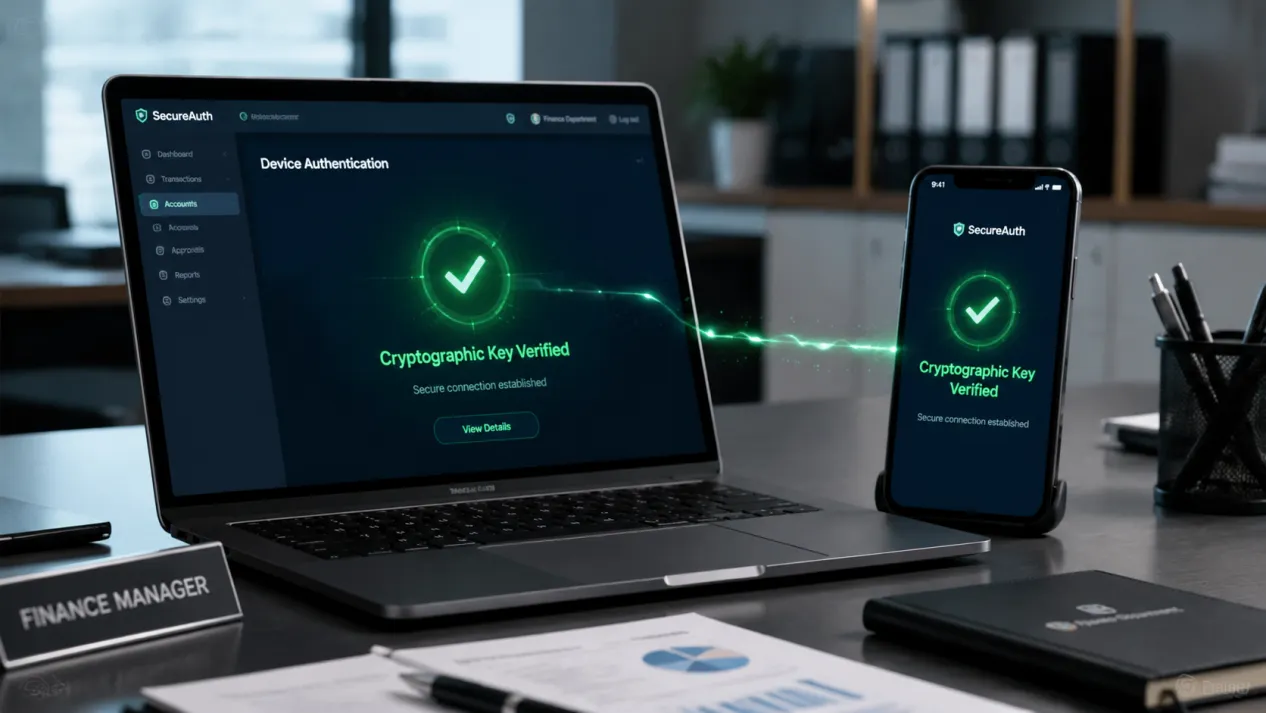
Strong customer authentication, or SCA, is one of the most visible parts of PSD2 for merchants and consumers. It generally requires payment service providers to apply multi-factor authentication when customers access payment accounts, initiate electronic payments, or perform actions that may carry fraud risk.SCA typically relies on at least two independent elements from these categories:
- knowledge: something the user knows;
- possession: something the user has;
- inherence: something the user is.
For example, a payment may require a password plus a mobile authentication app, or a banking app confirmation plus biometric verification.
For merchants, SCA can improve security but may also affect checkout conversion if poorly implemented. A strong PSP should help merchants balance compliance, fraud control, and customer experience.
Payment Service Provider AML: Why It Matters
Payment service provider AML refers to anti-money laundering obligations and controls that help prevent payment infrastructure from being used for money laundering, terrorist financing, fraud, sanctions evasion, or other financial crime.AML expectations differ by jurisdiction, license type, product, transaction flow, customer type, and risk profile. However, payment service providers commonly need controls such as:
- customer due diligence;
- business verification;
- beneficial ownership checks;
- sanctions screening;
- politically exposed person screening;
- transaction monitoring;
- suspicious activity reporting;
- ongoing customer monitoring;
- record keeping;
- risk assessment;
- compliance policies and procedures;
- staff training;
- governance and internal controls.
A PSP's AML program should be proportionate to its risk exposure. A provider serving domestic low-risk merchants may have a different AML profile from a PSP supporting cross-border payments, marketplaces, money remittance, digital wallets, or high-risk industries.
Best AML Transaction Monitoring Services for Payment Service Providers
Businesses searching for "best AML transaction monitoring services for payment service providers" are usually trying to solve a practical compliance problem: how to detect suspicious transactions at scale.A transaction monitoring service for PSPs should support: Capability Why It Matters Real-time or near-real-time monitoring Helps detect suspicious activity quickly Rule-based scenarios Supports known AML typologies and red flags Risk scoring Helps prioritize alerts Merchant monitoring Tracks unusual merchant behavior Customer behavior monitoring Detects unusual payment patterns Corridor and currency monitoring Useful for cross-border payment risk Sanctions screening integration Helps block restricted parties Case management Supports investigation workflows Audit trail Helps prove compliance decisions Model governance Important when using machine learning or AI Regulatory reporting support Helps meet reporting obligations Alert tuning Reduces false positives
Compliance for Payment Service Providers
Compliance for payment service providers is broader than one regulation. A PSP may need to manage multiple layers of compliance depending on where it operates.Common compliance areas include:
- payment services licensing;
- AML and counter-terrorist financing;
- sanctions compliance;
- fraud monitoring;
- data protection;
- consumer protection;
- operational resilience;
- cybersecurity;
- incident reporting;
- safeguarding of customer funds;
- outsourcing and third-party risk;
- PCI DSS where card data is involved;
- strong customer authentication;
- open banking access rules;
- complaint handling;
- regulatory reporting;
- fit-and-proper requirements for directors and key persons.
This is why payment service providers compliance should be treated as an ongoing operating system, not a one-time license application.
Payment Services Provider Regulations: Why They Differ by Country
Payment services provider regulations are not identical across countries. PSD2 applies in the EU and EEA context, but countries outside Europe have their own payment frameworks.For example:
- The UK has its Payment Services Regulations 2017, which implemented PSD2-style requirements before Brexit and continues to regulate payment services under UK law.
- Ireland regulates payment institutions and electronic money institutions through the Central Bank of Ireland.
- Malta authorizes financial services firms through the Malta Financial Services Authority.
- Mauritius has payment-related licensing through the Financial Services Commission for relevant non-bank financial services activities.
- Georgia requires payment service providers to register with the National Bank of Georgia under its payment services framework.
- South Africa regulates its national payment system through national payment system laws, supervisory structures, and payment industry governance.
For businesses, the important point is simple: a license in one country does not automatically mean the same provider can provide the same services in every country. Passporting, local licensing, exemptions, banking partnerships, and regulatory registrations must be checked jurisdiction by jurisdiction.
Regulations for Payment Service Providers UK PSD2
The UK implemented PSD2 largely through the Payment Services Regulations 2017. After Brexit, the UK continues to operate its own payment services regulatory framework, with the FCA acting as the key regulator for many payment and e-money firms.Businesses evaluating regulations for payment service providers UK PSD2 should consider:
- FCA authorization or registration;
- payment institution and e-money institution status;
- strong customer authentication;
- safeguarding requirements;
- operational and security risk management;
- complaint handling;
- conduct requirements;
- open banking access rules;
- reporting obligations;
- AML and financial crime obligations.
A business should not assume that "PSD2 compliant" alone is enough in the UK. It should check current FCA requirements and provider permissions.
Payment Service Providers License in Ireland
A firm seeking a payment service providers license in Ireland will generally deal with the Central Bank of Ireland. Ireland is an important jurisdiction because it is within the EU and can be relevant for firms seeking EU payment institution or e-money institution authorization.Businesses evaluating Ireland should consider:
- payment institution authorization;
- electronic money institution authorization;
- account information service provider registration;
- governance and substance requirements;
- fitness and probity;
- safeguarding;
- AML compliance;
- outsourcing controls;
- business plan and financial projections;
- operational resilience;
- risk management;
- regulatory engagement.
Ireland can be attractive for EU financial services operations, but authorization is not a simple formality. It requires preparation, documentation, governance, and regulatory readiness.
Malta Payment Service Providers License
A Malta payment service providers license may be relevant for payment institutions, electronic money institutions, fintechs, or financial services firms seeking authorization in Malta.Businesses evaluating Malta should consider:
- MFSA authorization requirements;
- payment institution or electronic money institution status;
- governance and local substance;
- AML and financial crime controls;
- capital requirements;
- safeguarding;
- outsourcing;
- technology risk;
- compliance staffing;
- reporting obligations.
Malta is often discussed in fintech and financial services circles, but licensing should be evaluated carefully with local regulatory advice.
Payment Service Providers License in Mauritius
Searches such as "get payment service providers license in Mauritius," "obtain payment service providers license in Mauritius," and "payment service providers license in Mauritius" usually reflect a licensing or market-entry intent.Mauritius may be relevant for certain payment, fintech, non-bank financial services, or international business structures. Businesses should evaluate:
- whether the activity falls under payment intermediary services or another licensed activity;
- the responsible regulator;
- minimum capital requirements;
- governance and local presence;
- compliance policies;
- AML and counter-terrorist financing obligations;
- technology and cybersecurity controls;
- customer fund handling;
- reporting obligations;
- banking relationships.
A Mauritius PSP licensing strategy should be based on the actual activity conducted. Payment gateway, merchant acquiring, remittance, wallet, e-money, or payment intermediary services may not have the same licensing treatment.
Payment Service Provider License Georgia
A payment service provider license Georgia or registration strategy involves the National Bank of Georgia, which provides rules for payment service provider registration and regulation.Businesses evaluating Georgia should consider:
- whether payment service provider registration is required;
- payment system operator requirements if operating a payment system;
- information to be submitted to the regulator;
- governance and ownership structure;
- AML and sanctions compliance;
- technology risk;
- customer fund handling;
- reporting and supervision;
- local operating requirements.
Georgia can be relevant for regional payment businesses, but firms must check whether they are acting as a payment service provider, payment system operator, e-money provider, remittance provider, or another regulated entity.
Payment Service Provider Regulations South Africa
Searches such as "payment service provider license requirements South Africa," "payment service provider regulations South Africa," "regulations for payment service providers in South Africa," and "regulatory requirements for payment service providers in South Africa" all point to the same need: understanding how payment services are regulated locally.South Africa's payment framework involves the national payment system, financial sector regulation, and industry governance. Businesses should evaluate:
- National Payment System Act requirements;
- South African Reserve Bank oversight;
- payment system participation rules;
- PASA-related structures where applicable;
- financial sector licensing where relevant;
- AML and counter-terrorist financing requirements;
- customer due diligence;
- consumer protection;
- safeguarding and settlement;
- technology and operational resilience;
- reporting obligations;
- bank partnership requirements.
A company entering South Africa should not assume that a global PSP model can be copied directly. Local payment rules and banking relationships matter.
Payment Service Provider AML and PSD2: How They Connect
PSD2 and AML are different frameworks, but both affect payment service providers.PSD2 focuses heavily on payment services, account access, security, authentication, and market competition. AML focuses on preventing financial crime. A PSP operating in Europe or serving European customers may need to comply with both PSD2-related obligations and AML requirements.
A strong PSP should be able to demonstrate:
- clear regulatory permissions;
- customer and merchant onboarding controls;
- sanctions screening;
- transaction monitoring;
- suspicious activity escalation;
- secure customer authentication;
- fraud detection;
- incident response;
- data protection;
- audit logs;
- risk governance;
- documented policies.
For merchants, this matters because a PSP with weak compliance can create business disruption, account reviews, transaction holds, delayed payouts, or regulatory exposure.
What Merchants Should Ask a PSD2 Payment Service Provider
When choosing a PSP, merchants should ask compliance-related questions, not just pricing questions.Question | Why It Matters |
What licenses or registrations do you hold? | Confirms regulatory basis |
Which countries are covered? | Avoids unsupported market assumptions |
Are you a payment institution, EMI, bank, or agent? | Clarifies role and responsibility |
How do you support SCA? | Affects PSD2 compliance and checkout |
How do you handle user consent? | Important for open banking flows |
Do you support API-based account access? | Relevant for AISP and PISP services |
What AML controls do you operate? | Reduces financial crime risk |
How do you monitor transactions? | Helps detect fraud and suspicious activity |
How do you safeguard customer funds? | Protects merchants and users |
How do you handle incidents? | Supports resilience and reporting |
What reports are available? | Helps reconciliation and audits |
How do you manage outsourcing risk? | Important for regulated operations |
How Antom Supports Compliant Global Payment Operations
Antom helps businesses accept global and local payment methods through one integration. Its website describes access to 200+ payment markets, 300+ payment methods, and 140+ currencies through a single gateway.For businesses evaluating PSD2 payment service provider requirements or broader payment services provider regulations, Antom can support payment operations through:
- global and local payment method acceptance;
- cards and local cards;
- digital wallets and online banking;
- one-time payments;
- subscription and recurring payment scenarios;
- payment orchestration;
- smart routing and custom routing;
- payment risk management;
- transaction operations;
- reconciliation and billing support;
- multi-currency payment acceptance;
- cross-border expansion across APAC, LATAM, Europe, the Middle East, and other regions.
For merchants, Antom's value is not only payment method coverage. It also helps businesses manage payment complexity across markets: routing, risk, reporting, settlement, reconciliation, and operational visibility.
Decision Framework: Evaluating a PSD2 Payment Service Provider
Decision Area | Key Question | Recommended Action |
Regulatory status | Is the PSP authorized, registered, or exempt? | Verify license or registration by jurisdiction |
PSD2 relevance | Does PSD2 apply to the payment flow? | Check whether the provider offers regulated payment services |
ASPSP/API access | Is account access involved? | Review consent, authentication, and API requirements |
AML controls | Does the PSP monitor financial crime risk? | Evaluate KYC, KYB, sanctions, and transaction monitoring |
SCA | How is strong customer authentication handled? | Confirm customer authentication flows |
Data protection | Is customer data handled securely? | Review security and privacy controls |
Settlement | Are customer funds safeguarded and paid out reliably? | Check safeguarding, payout, and reconciliation rules |
Reporting | Can finance and compliance teams audit payments? | Require transaction, fee, refund, dispute, and settlement reports |
Country coverage | Which markets are supported? | Verify permissions and payment methods market by market |
Scalability | Can the PSP support future growth? | Choose infrastructure that can expand across countries |
Practical Example: Fintech Platform Expanding Across Europe and Africa
Imagine a fintech platform wants to launch payment services in Europe while also exploring South Africa, Mauritius, and Georgia. The team initially focuses on product features: payment links, merchant onboarding, card payments, and wallet acceptance.
However, payment service provider compliance quickly becomes the main workstream. The platform must answer:
- Does it need payment institution authorization?
- Is it acting as a payment service provider, agent, technical service provider, or marketplace?
- Does PSD2 apply to its European activity?
- Does it need account information service or payment initiation service permissions?
- How will it manage customer consent?
- What AML controls are required?
- Does it need transaction monitoring?
- Can it operate in South Africa under existing payment system rules?
- Does Mauritius or Georgia require a license or registration?
- Can one PSP partner reduce licensing and payment integration complexity?
A practical strategy would be:
- define the exact regulated activity;
- map countries and payment flows;
- consult local regulatory counsel where needed;
- select payment partners with appropriate permissions;
- design AML and fraud controls early;
- implement secure authentication and API governance;
- build reconciliation and audit reporting from day one;
- avoid launching payment flows before license and partner responsibilities are clear.
This is why PSP selection is not only a product or engineering decision. It is a compliance and operating model decision.
Common Mistakes in PSD2 Payment Service Provider Compliance
Mistake 1: Assuming a Payment Gateway Is Always Unregulated
Some technology-only providers may not need a payment license, but providers that hold funds, initiate payments, operate accounts, or execute regulated payment services may need authorization.
Mistake 2: Treating PSD2 as Only a European Checkout Rule
PSD2 affects payment provider roles, account access, SCA, open banking, and third-party provider rights. It is broader than checkout authentication.
Mistake 3: Ignoring AML When Focusing on PSD2
A provider can meet PSD2 technical requirements but still fail on AML, sanctions, or transaction monitoring controls.
Mistake 4: Assuming One License Works Everywhere
Payment service provider license requirements differ by country. Ireland, Malta, Mauritius, Georgia, South Africa, and the UK have different regulatory processes.
Mistake 5: Not Managing User Consent Properly
Open banking access depends on valid consent, secure authentication, and clear permission management.
Mistake 6: Underestimating Transaction Monitoring
Payment service providers need monitoring that can detect fraud, unusual merchant behavior, suspicious patterns, high-risk corridors, and sanctions exposure.
Summary
A PSD2 payment service provider operates within a payment services framework that covers authorization, payment roles, account access, user consent, strong customer authentication, secure communication, and operational security. PSD2 also introduced important open banking concepts such as account information services, payment initiation services, and account-servicing payment service providers.
But PSD2 is only one part of payment service provider compliance. PSPs also need AML controls, transaction monitoring, fraud prevention, sanctions screening, data protection, safeguarding, reporting, and jurisdiction-specific licensing.
Businesses searching for payment service provider AML, payment services provider regulations, payment service provider license Georgia, payment service provider license requirements South Africa, Malta payment service providers license, payment service providers license in Ireland, or payment service providers license in Mauritius are usually asking the same broader question: what does it take to operate payments legally, safely, and at scale?
For merchants and platforms, the safest path is to choose payment partners with strong regulatory readiness, clear licenses or registrations, reliable AML controls, secure API infrastructure, and scalable payment operations.
Antom helps businesses accept local and global payments across 200+ payment markets through one integration, with support for payment orchestration, risk management, transaction operations, and reconciliation.
Explore Antom's payment service provider capabilities to see how your business can support customers with secure, scalable, and locally relevant payment options across global markets.
FAQs
1. What is a PSD2 payment service provider?
A PSD2 payment service provider is a provider that offers regulated payment services under PSD2 or national rules implementing PSD2. It may include banks, payment institutions, electronic money institutions, account information service providers, or payment initiation service providers.
2. What is an account-servicing payment service provider under PSD2?
An account-servicing payment service provider, or ASPSP, is a payment service provider that provides and maintains a payment account for a payment service user.
3. What does PSD2 mean for API access and user consent?
PSD2 allows regulated third-party providers to access payment account information or initiate payments under defined conditions, with user consent and secure authentication.
4. What is payment service provider AML?
Payment service provider AML refers to anti-money laundering controls used by PSPs, including customer due diligence, sanctions screening, transaction monitoring, suspicious activity reporting, and ongoing risk management.
5. What are the best AML transaction monitoring services for payment service providers?
The best AML transaction monitoring services for PSPs should support risk scoring, real-time monitoring, rule scenarios, merchant monitoring, sanctions integration, case management, audit trails, and regulatory reporting workflows.
6. What is compliance for payment service providers?
Compliance for payment service providers includes licensing, AML, sanctions, fraud monitoring, data protection, safeguarding, operational resilience, security, incident reporting,, and consumer protection.
7. What are regulations for payment service providers UK PSD2?
In the UK, PSD2-style rules were implemented mainly through the Payment Services Regulations 2017. Firms providing payment services generally need FCA authorization or registration unless an exemption applies.
8. How do I get payment service provider license in Mauritius?
A Mauritius licensing path depends on the exact payment activity. Businesses should review FSC requirements, determine whether the activity falls under payment intermediary services or another licensed activity, and seek local regulatory advice.
9. What are payment service provider license requirements, South Africa?
South African requirements depend on the activity and role in the national payment system. Businesses should consider National Payment System Act requirements, SARB oversight, payment system participation, AML, customer due diligence, settlement, and local bank relationships.
10. How does Antom support payment service provider compliance needs?
Antom supports global and local payment acceptance through one integration, with payment orchestration, risk management, transaction operations, reconciliation, and access to payment methods across 200+ payment markets.