

Share on
When it comes to expanding your business, you need to know exactly what you want: how to accept international payments efficiently. Cart abandonment is often caused by high transaction fees and complex regulatory compliance. Modernizing your payment stack for 2026 requires partnering with unified global infrastructure providers.
The real cost of expanding globally: beyond cross-border transaction fees
When researching how to accept international payments, businesses tend to focus on the gateway fees at first. High cross-border transaction costs certainly reduce profit margins, but they are just the tip of the iceberg. In reality, the real costs are hidden in currency conversion rates and conversion rate drops caused by mismatched payment methods. These old correspondent banking models have a reputation for being slow, fragmented, and with unpredictable routing charges. Modern payment gateways offer real-time processing and have replaced the old rails. If your checkout page shows prices in US dollars to a customer from Jakarta or only accepts card payments for a user located in Manila, the user will abandon their cart. According to the latest FIS Global Payments Report, Asian markets are heavily dominated by local payment methods: 78% in China, 72% in India, and 72% in Indonesia. Your cross-border transaction costs won't be a factor if your payment infrastructure ignores the preferences of your customers.
Why is it not enough to accept credit cards globally
It is a common misconception that global expansion is only possible by partnering with international card networks. While accepting payments globally via credit cards is important, relying solely on them alienates large segments of your audience. In many fast-growing economies, credit card usage is low. Mobile wallets, bank transfer solutions, and "Buy Now Pay Later" (BNPL), are heavily used by consumers. Local payment methods are essential if you want to maximize the potential of these markets. For scaling merchants, relying on dozens of regional providers is inefficient. A unified infrastructure streamlines global expansion. You can adapt your checkout experience to a user's IP by integrating with an integrated platform. You can see the difference between a buyer from Europe and a buyer from Southeast Asia. Modern digital infrastructures are capable of supporting diverse payment methods. By switching from a single processor to a network of over 300 APMs, you can transform your market and improve your bottom line.
Step-by-Step Guide: How to set up global payments for my website
Figuring out how to accept payments online across borders can be overwhelming for technical teams. When figuring out how to set up global payments for your website, focus on three standard pillars: technical integration, localized routing, and multi-currency settlement.
Choose Unified Orchestration Over a Fragmented System
Many platforms make the error of adding payment gateways as they enter new markets. It creates a fragile and bloated codebase, which is difficult to maintain by your engineering team. Security and compliance are important factors in the integration of payment gateways. By partnering with a provider who has PCI-DSS certification Level 1 and has acquired licenses for 16+ local entities, you can ensure compliance with regional financial and data storage regulations.
With developer tools like Antom's Copilot, engineering teams can complete multi-currency API integrations in under 30 minutes, saving weeks of sprint planning.
Localized pricing and multi-currency settlement
If not handled correctly, displaying prices in local currency can cause headaches for the finance team. A robust infrastructure must support automated multi-currency payments. This means the system accepts payments in over 140 transaction currencies but settles into your corporate bank account in your preferred fiat currency. Furthermore, flexible settlement cycles (ranging from T+2 to T+25 days) allow enterprise finance teams to optimize their working capital and drastically reduce the cash flow strain typically associated with international commerce.
Minimizing Friction in Online International Payments
Traffic acquisition can be expensive. Any friction, whether it's a cumbersome form, an account creation that is forced, or a sudden redirect, will ruin the sale. To master how to accept international payments online, you must optimize your checkout conversion rate. Forrester research indicates that cumbersome verification screens directly hurt conversion rates, driving frustrated customers to competitors.
Mobile Optimization and the Power of Scan-to-Link Technology

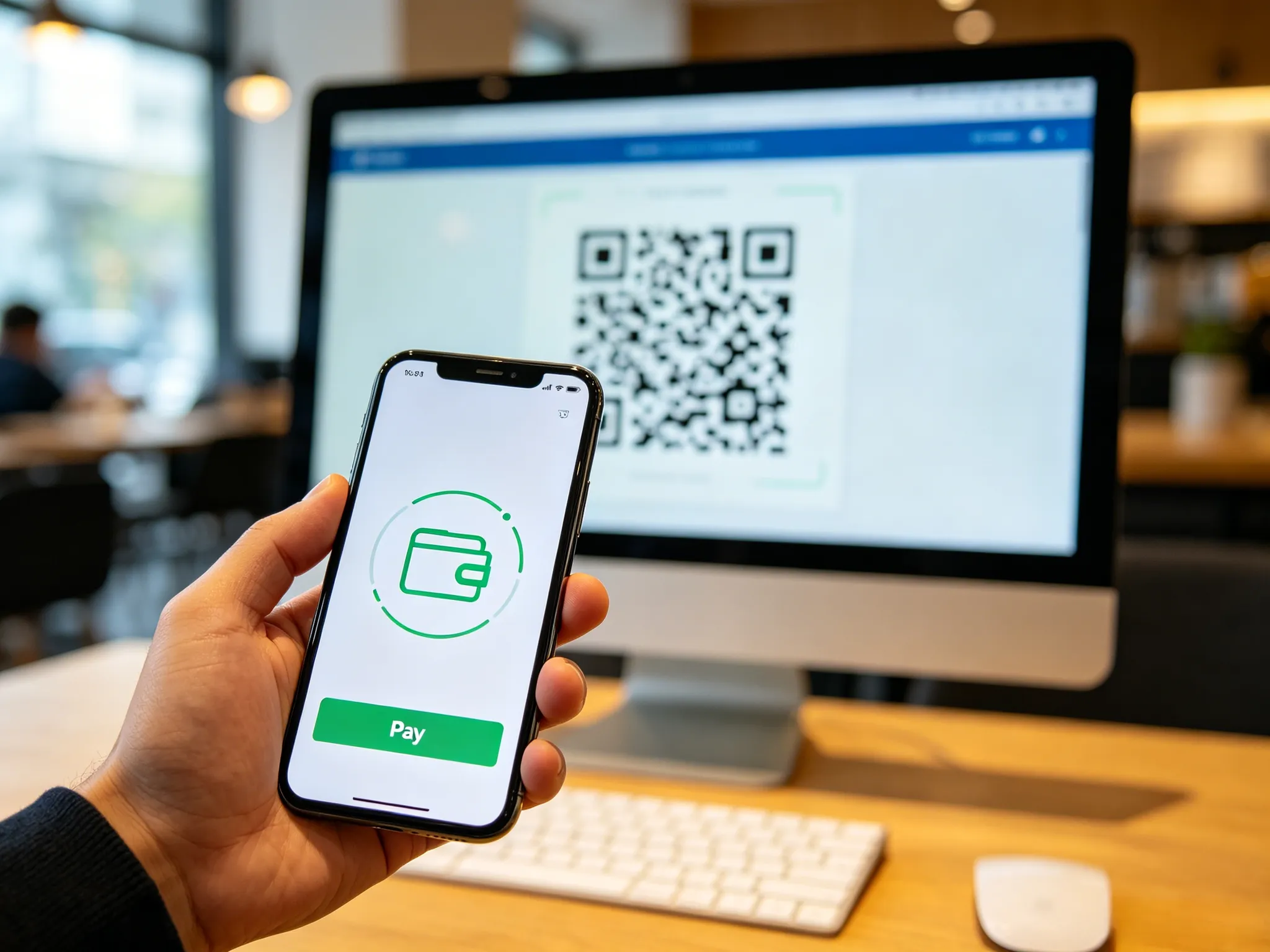
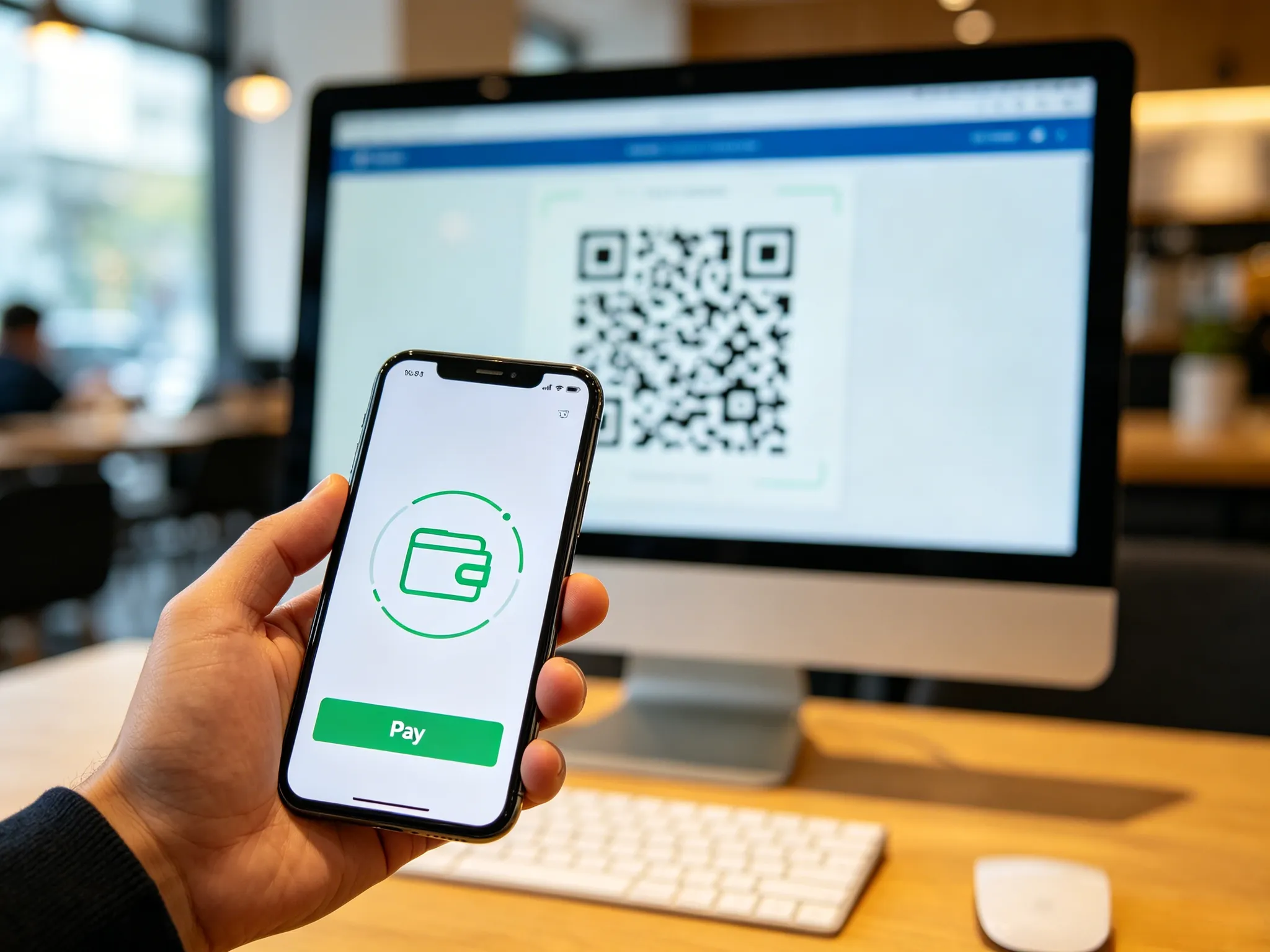
Think about the frustration of a user attempting to purchase enterprise software or game credits on a smart TV or desktop monitor. Typing a 16-digit corporate card number and navigating 3DS authentication with a keyboard is a poor experience. Innovative technologies like "Scan to Link" shift the payment authorization from the input device to the confirmation device (the user's smartphone). The user simply scans the QR code and authorizes payment directly on their smartphone. What used to be a frustrating 40-second process is now reduced to a 6-second seamless flow.
For DTC brands targeting Southeast Asia, switching to Scan to Link eliminates cumbersome card entry. Customers simply scan a code to authorize payments via mobile wallets—taking only 6 seconds.
The impact of eliminating redirects can be measured. Recent implementations of optimized eWallet flows (like EasySafePay) reduced the checkout steps from 9 to 2.
Future-Proofing SaaS Revenue: Overcoming Subscription Churn
Accepting international payments for vertical SaaS, digital publishers and subscription boxes is not an event that happens once. This is a long-term relationship. Involuntary Churn is the biggest silent killer for recurring revenue. It occurs when a customer wants your service but cannot pay due to an insufficient balance, a network failure, or an expired credit card. Payment processors that accept traditional payments will decline the transaction, forcing your team to manually contact clients to update billing information. The solution is advanced smart routing and tokenization. Modern systems replace raw card data during the initial transaction with a long term, encrypted token. When the payment fails because of a soft decline, such as a temporary error in the network, AI-driven smart retrying strategies are activated. The system uses historical data to determine the best time of day to attempt the charge. The combination of tokenization with intelligent retries works as a revenue recovery team that automates the process.
The Growth Engine: Turning payments into a marketing channel
In the past, finance departments viewed accepting payments globally as a cost center. Next-generation infrastructures have flipped this narrative and are turning checkout into a powerful growth engine. Some advanced payment networks offer built-in features that leverage the vast global wallet ecosystems. Integrated rewards engines, for example, can deliver targeted digital coupons and promotional offers directly to the users' preferred eWallets. Merchants can gain instant exposure to more than 250 million digital wallet users in multiple high-growth countries by plugging into the unified global network. Leveraging a unified network like Antom allows merchants to turn checkouts into growth engines and scale globally.
AI Fraud Prevention Without Heavy Operations: Navigating Global Risks

Hackers target cross-border transactions using credential stuffing, synthetic identities, and friendly fraud (unjustified chargebacks). However, implementing overly rigid, rule-based fraud filters is counterproductive, as blocking legitimate high-value buyers (false negatives) directly damages revenue. Enterprise-grade payment infrastructures solve this by deploying AI and real-time decision models. Advanced risk management systems can analyze hundreds of transactional variables (device identification, geolocation velocity, and behavioral biometrics) within milliseconds. Merchants have a huge advantage by relying on an infrastructure built from over 100 billion data processing events, fused with more than 100 million external data sources. Platforms can intercept cross-border fraudulent patterns instantly based on customizable risk thresholds, preserving revenue while minimizing friction for real buyers.
FAQs
We've compiled a list of the most common questions that business leaders ask themselves when developing their international checkout strategy.
Q1: How to accept international payments online securely?
Choose a unified gateway with built-in AI fraud protection. Advanced risk management systems can analyze hundreds of transactional variables in milliseconds, preventing fraud and keeping conversion rates high.
Q2: How can I accept credit cards worldwide without paying high fees?
Combining global cards and local payment networks is the best way to go. A coordinated infrastructure allows you to accept credit cards worldwide while supporting 300+ local methods.
Q3: How can I set up global payment for my website?
Choose a unified payment infrastructure. Integrate a checkout API that supports multiple currencies (this can be done in under 30 minutes using smart developer tools). Enable dynamic local payments routing. Set your preferred currency for settlement. You can contact us for detailed technical support.
Q4: What challenges are faced by international payment processors?
The biggest hurdles are high cart abandonment rates caused by unfamiliar foreign currencies and failed 3DS authentications. Mastering how to accept international payments requires smart routing and highly localized checkouts. Modern infrastructures use these to increase authorization success rates up to 5%.
Q5: Is a local entity required to accept payments internationally?
Not necessarily. While traditional merchant accounts usually require local entities, partnering with a global infrastructure provider--one that holds acquiring licenses in 16+ jurisdictions--simplifies compliance, allowing for borderless expansion without heavy legal overhead.
Q6: When figuring out how to accept payments online for SaaS, what is the best way to manage global subscriptions?
SaaS businesses need more than just a payment processor. They need an intelligent subscription engine. The use of AI-driven smart retries and encrypted tokenization ensures automatic billing. This reduces the amount of involuntary churn that is caused by expired cards or timeouts on networks.
Upgrade Your Global Infrastructure
Accepting payments worldwide in 2026 will no longer be about simply processing transactions. It's going to become a key growth driver. Unifying your infrastructure can help you reduce development and reconciliation costs by as much as 70%, while improving global conversion rates. Upgrade your tech stack if your operations team continues to struggle with high cross-border costs, fragmented reports, and involuntary SaaS dropouts.
Contact our global payment experts today to unlock high-conversion, compliant financial solutions custom-built for your global expansion.
References:
- McKinsey & Company: The Global Payments Report
- Forrester Research: The ROI Of Improving B2B Checkout Experiences
- Gartner: Strategies to Reduce Involuntary Churn in SaaS