

Share on
For businesses expanding across countries, global acquiring is no longer a back-office payment term. It can directly affect payment approval rates, checkout conversion, cross-border fees, settlement, reconciliation, customer experience, and long-term international growth.
A merchant selling in one country may be able to use a domestic acquirer, processor, or payment service provider. But once the business accepts customers from multiple markets, the payment setup becomes more complex. Cards may be issued in different countries. Customers may expect local currencies. Local payment methods may matter more than international cards. Issuers may treat foreign-acquired transactions as higher risk. Finance teams may need settlement reports across currencies, entities, and markets.
That is where global merchant acquiring becomes important.
Definition Box: Global acquiring is a payment setup that allows a business to accept card and other electronic payments across multiple countries or regions through one acquiring relationship, global acquirer, payment platform, or connected acquiring network. It can support cross-border payment acceptance, multi-currency processing, local acquiring, settlement, reporting, fraud management, and payment optimization. |
|---|
Stripe describes global acquiring as an approach that lets businesses accept payments through a single acquirer across multiple markets, in contrast to local acquiring where the acquirer and the origin of the payment are located in the same country.

Key Takeaways
- Global acquiring helps businesses accept payments from customers across multiple countries and regions.
- Global merchant acquiring is especially important for e-commerce, SaaS, marketplaces, travel, gaming, digital goods, retail, and other cross-border businesses.
- Local acquiring and global acquiring are not the same. Local acquiring can help transactions look more domestic to issuers, while global acquiring can simplify multi-market payment operations.
- The best global acquiring services for multi-currency processing in 2025 and 2026 should be evaluated by market coverage, local acquiring depth, card acceptance, payment methods, currencies, settlement, authorization rates, risk tools, reporting, and enterprise support.
- Enterprise global acquiring solutions should not be selected only by brand name or headline fees.
- Elavon global acquiring solutions, Worldpay global acquiring, Mastercard's acquirer network, Stripe's global acquiring guidance, Adyen's acquiring model, Checkout.com's local acquiring content, and Antom's global payment coverage all reflect different parts of the global acquiring landscape.
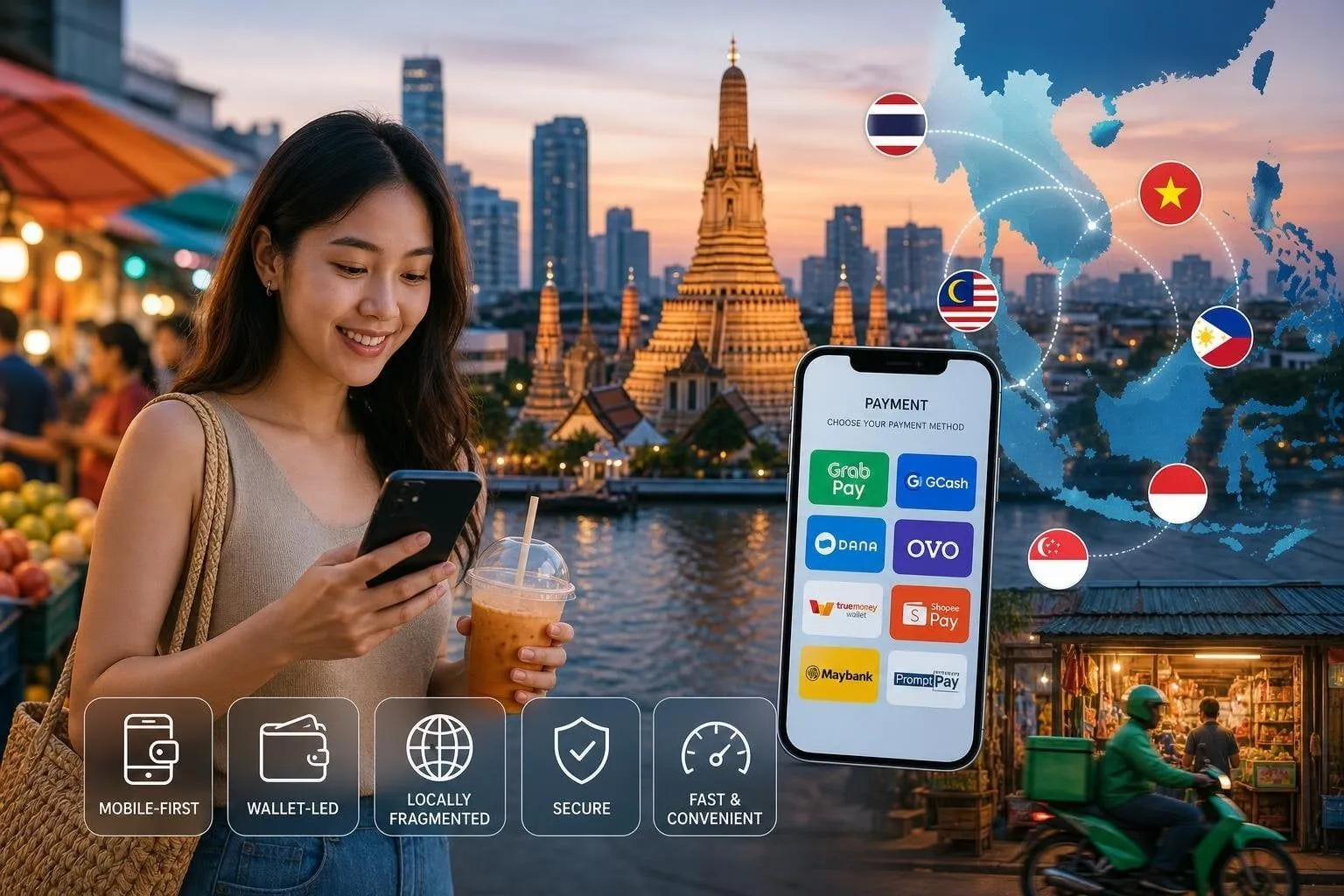
- Antom helps businesses access 200+ payment markets, 300+ global and local payment methods, and 100+ currencies through one integration.
What Is Global Acquiring?
Global acquiring refers to the ability to accept and process payments from customers across multiple countries, often through a global acquirer, acquiring network, payment service provider, or payment platform.
In card payments, an acquirer is the financial institution or acquiring provider that enables a merchant to accept card payments and receive funds. Adyen explains that an acquirer is effectively the merchant's bank and may also be called a merchant acquiring bank or merchant acquirer.
A global acquiring setup may help a merchant:
- accept international cards;
- process payments in multiple markets;
- support multi-currency pricing;
- settle in selected currencies;
- reduce cross-border payment friction;
- connect to local acquiring where available;
- improve authorization performance;
- support local payment methods;
- manage refunds, chargebacks, and disputes;
- reconcile payments across markets;
- scale payment operations from one platform.
For enterprise merchants, global acquiring is not only about “can we accept cards internationally?” It is about whether the payment setup can support profitable, reliable, localized, and finance-ready global growth.
Global Acquiring vs Local Acquiring
Global acquiring and local acquiring are related, but they solve different problems.Area | Global Acquiring | Local Acquiring |
Basic idea | Accept payments across multiple markets through a global setup | Process payments locally in the customer's market |
Acquirer location | May be outside the customer's country | Usually in the customer's country |
Main value | Simpler global expansion and centralized operations | Better local fit and potentially better authorization |
Currency support | Often supports multiple currencies | Usually strong in local currency |
Card perception | May be treated as cross-border by issuers | May look more domestic to local issuers |
Setup complexity | Lower than building every local relationship separately | Higher if each market requires local setup |
Best for | Multi-market merchants needing centralized infrastructure | Priority markets where local performance matters |
The practical lesson is simple: global acquiring gives scale, while local acquiring gives market depth. Strong enterprise payment setups often need both.
Why Global Merchant Acquiring Matters
Global merchant acquiring matters because payment performance is local, even when the business is global.A customer in Brazil, Japan, France, Indonesia, Mexico, or the UAE may use a different card type, currency, wallet, bank method, authentication flow, and checkout expectation. If the payment is routed poorly, the merchant may experience unnecessary declines, higher fees, longer settlement, FX complexity, and weaker customer trust.
Global acquiring can help merchants address:
- cross-border card acceptance;
- local issuer approval behavior;
- multi-currency checkout;
- foreign exchange exposure;
- payment method localization;
- market-specific authentication rules;
- settlement and reconciliation complexity;
- payment reporting across regions;
- fraud and chargeback differences;
- expansion into new countries.
For a global merchant, acquiring is not only infrastructure. It is part of revenue optimization.
How Global Acquiring Works
A simplified global acquiring flow looks like this:- A customer enters checkout in a target market.
- The customer selects a card, wallet, bank transfer, or local payment method.
- The merchant's checkout sends the payment request to a PSP, gateway, or payment platform.
- The payment platform routes the transaction to an acquirer or acquiring network.The acquirer sends the transaction through the relevant card network or payment rail.
- The issuer or payment method provider approves, declines, or requests authentication.
- The payment status is returned to the merchant.
- Funds are settled according to the payment method, acquirer, market, and currency rules.
- The merchant reconciles transactions, fees, refunds, chargebacks, and settlement files.
Stripe explains that in a global acquiring card flow, the global acquirer sends transaction data to the card network, which forwards it to the issuing bank.
This flow may sound simple, but in practice each market introduces its own payment behavior, issuer logic, fraud risk, FX rules, settlement timing, and reporting needs.
Benefits of Global Acquiring
Global acquiring can provide several business benefits.1. Multi-Market Payment Acceptance
A global acquiring setup can help merchants accept payments across many countries without rebuilding payment infrastructure market by market.2. Multi-Currency Processing
Merchants can price, process, or settle in multiple currencies depending on provider capabilities. This can reduce friction for customers and simplify finance operations.3. Better Checkout Localization
Global acquiring is stronger when combined with local cards, wallets, bank transfers, online banking, QR payments, or other local payment methods.4. Authorization Optimization
A well-designed acquiring setup can help improve approval rates by routing payments through better acquiring paths or local rails where available.5. Reduced Operational Complexity
Instead of managing many acquirer relationships separately, the merchant can work through one global payment platform or acquiring network.6. Improved Reporting and Reconciliation
Enterprise-ready global acquiring should provide transaction-level reports, settlement files, fee breakdowns, refund records, and chargeback data across markets.7. Faster Market Entry
A global acquiring partner can help businesses expand into new countries faster than building each local acquiring relationship from scratch.Challenges of Global Acquiring
Global acquiring also has trade-offs.Challenge | Why It Matters |
Cross-border fees | International transactions may carry higher card network or acquirer costs |
Authorization differences | Issuers may decline foreign-acquired transactions more often |
FX complexity | Pricing, processing, and settlement currencies may differ |
Local compliance | Countries may have different payment, data, tax, or consumer rules |
Settlement complexity | Payout timing and currencies vary by market |
Reconciliation | Multiple countries and currencies increase finance workload |
Fraud patterns | Risk behavior differs by region and payment method |
Payment method gaps | Card acquiring alone may not cover local customer preferences |
Entity requirements | Some markets may require local entities or local bank accounts |
Best Global Acquiring Services for Multi-Currency Processing 2025 2026
Searches such as “best global acquiring services for multi-currency processing 2025 2026” usually reflect a shortlist-building intent. But the best answer is not a fixed ranking. The payment market changes quickly, and providers differ by region, vertical, acquirer relationships, local licenses, currencies, settlement options, and support quality.
Global Payments, for example, announced that it completed its acquisition of Worldpay and divested its Issuer Solutions business, positioning the combined business as a pure-play commerce solutions provider. This kind of market movement shows why static provider rankings can become outdated.
A better approach is to compare global acquiring services using a structured checklist.
Criteria | What to Evaluate |
Market coverage | Which countries and regions are supported? |
Local acquiring | Where does the provider offer local acquiring or local routing? |
Multi-currency processing | Which currencies are supported for pricing, processing, and settlement? |
FX handling | How are rates, markups, conversions, and reports managed? |
Card coverage | Visa, Mastercard, Amex, JCB, UnionPay, local cards |
Local payment methods | Wallets, bank transfers, online banking, QR, BNPL, cash methods |
Authorization performance | Approval rates by market, issuer, BIN, and method |
Settlement | Payout timing, settlement currencies, reserve rules |
Reporting | Transaction, fee, refund, chargeback, and payout reporting |
Risk tools | Fraud scoring, 3DS, chargeback tools, rules, monitoring |
API quality | Documentation, webhooks, sandbox, SDKs, reliability |
Enterprise support | Account management, escalation, SLAs, regional expertise |
Scalability | Ability to support future countries, currencies, entities, and volume |
Elavon Global Acquiring Solutions
The phrase Elavon global acquiring solutions usually reflects users comparing enterprise or travel-oriented acquiring options. Elavon describes global acquiring for airline merchants and highlights cost transparency, Interchange Plus pricing, specialist integrations, and multi-channel support.Elavon also describes multi-currency conversion, saying it enables merchants to show prices in many currencies while Elavon processes the currency exchange and funds the merchant in its own currency.
For merchants, Elavon is one example of why global acquiring should be evaluated by vertical fit. A travel or airline merchant may have different needs from a SaaS company, gaming platform, cross-border e-commerce brand, or marketplace.
Worldpay Global Acquiring
Worldpay’s global acquiring page describes a full-service payments provider with global reach, more ways to pay, business protection, and revenue optimization. It also highlights multicurrency solutions.For enterprise merchants, Worldpay-type global acquiring solutions may be relevant when the business needs:
- broad acquiring reach;
- card acceptance at scale;
- multiple payment methods;
- global settlement support;
- risk and fraud tools;
- enterprise support;
- integrations across online, in-person, and omnichannel environments.
As with any provider, the question is not only whether the provider has global reach, but whether it has the right market depth for the merchant’s specific countries.
Mastercard Acquirer Network
Mastercard Gateway describes its acquirer network as a way for companies to connect to local merchant banks in target countries through a global acquirer network. It also says customers can access payment and digital acceptance solutions through a single touchpoint, locally and globally.This reflects an important theme in global acquiring: merchants often want one integration or one platform, but behind that platform they need access to multiple local acquiring relationships and payment rails.
Enterprise Global Acquiring Solutions: What to Look For
The phrase enterprise global acquiring solutions what to look for should be answered with a deeper operational checklist.Enterprise merchants should evaluate:
1. Local Acquiring Depth
Does the provider only support cross-border acquiring, or can it support local acquiring in priority markets?2. Multi-Currency Capabilities
Can the business price, process, settle, and report in the required currencies?3. Authorization Optimization
Can the provider improve approval rates through local acquiring, network tokens, issuer optimization, smart retries, or routing rules?4. Payment Method Coverage
Does the provider support cards only, or does it also support digital wallets, bank methods, local schemes, and alternative payment methods?5. Routing and Orchestration
Can the provider route by market, card type, issuer, currency, amount, risk level, or acquirer performance?6. Risk and Fraud Control
Does it support fraud scoring, 3DS, rules, chargeback alerts, transaction monitoring, and dispute tools?7. Settlement and Reconciliation
Can finance teams reconcile payments, fees, FX, refunds, disputes, and settlements across markets?8. Technical Integration
Are APIs, webhooks, SDKs, sandbox environments, and documentation strong enough for enterprise engineering teams?9. Compliance and Licensing
Does the provider understand regional acquiring rules, payment method rules, data protection, PCI DSS, AML, and local regulatory expectations?10. Enterprise Support
Does the provider offer implementation support, regional experts, account management, SLAs, and escalation during incidents?Global Acquiring vs Payment Orchestration
Global acquiring and payment orchestration are related but different.Area | Global Acquiring | Payment Orchestration |
Main role | Enables merchants to accept and process payments through acquiring relationships | Routes and manages payments across multiple providers, acquirers, and methods |
Core value | Card and payment acceptance across markets | Optimization, redundancy, and control |
Best for | Multi-market payment acceptance | Multi-provider payment strategy |
Scope | Acquirer and payment processing layer | Routing, fallback, analytics, and provider management |
Example use | Accept card payments locally or globally | Route one market to local acquirer, another to global PSP |
Cross-Border Acquiring vs Local Acquiring
Cross-border acquiring occurs when the acquirer is outside the customer’s market. Local acquiring occurs when the acquirer is in the same country or region as the customer or card issuer.Checkout.com explains that local acquiring can reduce international transaction costs and cross-border charges, while supporting global card networks and local payment methods.
Area | Cross-Border Acquiring | Local Acquiring |
Setup | Often easier for initial global sales | Requires local acquiring access |
Cost | May include cross-border fees | Can reduce some cross-border charges |
Issuer perception | May look foreign to issuer | May look more domestic |
Currency | Often more FX complexity | Stronger local currency alignment |
Authorization | May be lower in some markets | Can improve in priority markets |
Best use | Early expansion and lower-complexity markets | High-volume or strategically important markets |
Multi-Currency Processing: Why It Matters
Multi-currency processing is one of the most important reasons businesses search for global acquiring.A global merchant may need to:
- display prices in customer currency;
- accept payment in local currency;
- process in one or more transaction currencies;
- settle in preferred currencies;
- manage FX exposure;
- refund in the original currency;
- report fees and FX clearly;
- reconcile payment and settlement differences.
Elavon states that its Multi-Currency Conversion solution lets merchants show prices in multiple currencies and be funded in their own currency. Checkout.com also notes that global PSPs should support multi-currency solutions so customers can pay in their own currency and merchants can be paid in their chosen currency.
For enterprise merchants, multi-currency processing should be reviewed with finance and treasury teams, not only payment engineers.
Global Acquiring for Different Business Models
Different business models need different acquiring setups.Business Model | Global Acquiring Needs |
E-commerce | Cards, wallets, local methods, refunds, chargebacks, fraud tools |
SaaS | Recurring payments, card-on-file, retries, multi-currency billing |
Marketplace | Sub-merchant onboarding, split payments, payouts, local compliance |
Travel | High-value transactions, delayed fulfillment, refunds, fraud management |
Gaming and digital entertainment | Fast authorization, local methods, risk controls, chargeback management |
Retail | Omnichannel acceptance, POS, local cards, settlement reporting |
Digital goods | Fraud prevention, global tax/payment model alignment, instant delivery risk |
B2B | Bank transfers, high-value invoices, card acceptance, reconciliation |
Subscription commerce | Tokenization, retry logic, recurring billing, issuer optimization |
Global Acquiring Evaluation Checklist
Use this checklist before choosing a provider.Checklist Item | Evaluation Question |
Target markets | Which countries matter now and in the next 12-24 months? |
Local acquiring | Does the provider support local acquiring in priority markets? |
Cross-border acquiring | Can it support lower-complexity markets efficiently? |
Card networks | Which global and local card networks are supported? |
Local payment methods | Does it support customer-preferred methods beyond cards? |
Multi-currency | Can it price, process, settle, refund, and report in required currencies? |
Authorization rates | Can it provide approval-rate data by market and issuer? |
Routing | Can transactions be routed by market, currency, risk, or performance? |
Fraud tools | Are fraud scoring, 3DS, rules, and chargeback tools available? |
Settlement | Are payout timing, currencies, and fees transparent? |
Reconciliation | Can finance match orders, payments, fees, refunds, and settlements? |
Integration | Are APIs, plugins, SDKs, webhooks, and sandbox reliable? |
Compliance | Does the provider support local rules, PCI DSS, data, and payment regulations? |
Support | Is enterprise support available during incidents and expansion? |
Scalability | Can the setup support new markets without rebuilding payment infrastructure? |
How Antom Supports Global Acquiring and Cross-Border Payments
Antom helps businesses accept global and local payment methods through one integration. Antom’s public site describes 200+ payment markets, 300+ global and local payment methods, and 100+ currencies. Antom UK also describes a growing global acquiring offering that helps SMEs and enterprises benefit from local payment processing, supported by a global partnership network.For merchants evaluating global acquiring, Antom can support:
- global and local payment method acceptance;
- cards and local cards;
- digital wallets and online banking;
- local payment methods;
- one-time payments;
- subscription and recurring payment scenarios;
- payment orchestration;
- smart routing and custom routing;
- payment risk management;
- transaction operations;
- reconciliation and billing support;
- multi-currency payment acceptance;
- cross-border expansion across APAC, LATAM, Europe, the Middle East, and other regions.\
Antom is especially relevant for businesses that want to combine global acquiring, local payment method coverage, payment routing, risk management, and reconciliation in one scalable payment infrastructure.
Practical Example: Global E-Commerce Brand Expanding From One Market to Many
Imagine an e-commerce brand starts in one country and accepts domestic cards through a local PSP. After growth, the brand expands into Europe, Southeast Asia, Latin America, and the Middle East.At first, the business simply enables international card acceptance. But problems appear:
- some customers abandon checkout because local payment methods are missing;
- card approval rates vary by country;
- cross-border card fees increase costs;
- customers see unfamiliar currencies;
- refunds become harder to reconcile;
- fraud rates differ by market;
- settlement reports are difficult for finance;
- customer support receives more failed-payment questions.
At this stage, the business needs more than basic cross-border card acceptance. It needs a global acquiring and payment strategy.
The company should evaluate:
1. which markets require local acquiring;
2. which markets can be served through cross-border acquiring;
3. which local payment methods are essential;
4. which currencies should be supported at checkout and settlement;
5. how authorization rates vary by country;
6. how FX fees affect margin;
7. how refunds and chargebacks will be reconciled;
8. whether payment orchestration is needed;
9. whether one global PSP can support the plan;
10. whether Antom or another global payment platform can simplify implementation.
Common Mistakes in Global Acquiring
Mistake 1: Treating Global Acquiring as Just International Card Acceptance
Global acquiring is not only about accepting foreign cards. It involves local acquiring, multi-currency processing, payment routing, settlement, risk, and reporting.
Mistake 2: Ignoring Local Payment Methods
In many markets, local wallets, bank transfers, QR payments, or domestic schemes can be as important as cards.
Mistake 3: Choosing Only by Processing Fees
Lower fees do not help if authorization rates are weak, FX costs are high, or reconciliation requires manual work.
Mistake 4: Assuming One Provider Is Equally Strong Everywhere
A provider may be excellent in one region but weaker in another. Evaluate market by market.
Mistake 5: Not Involving Finance Early
Global acquiring affects settlement currency, FX, refunds, disputes, fees, and accounting. Finance should be part of the selection process.
Mistake 6: Not Testing Payment Flows
Test approvals, declines, refunds, chargebacks, webhooks, settlement files, and reconciliation before full rollout.
Mistake 7: Treating 2025/2026 Provider Lists as Final Answers
The acquiring market changes through acquisitions, partnerships, local licensing, and product expansion. A static “best global acquiring services” list should only be a starting point.
Summary
Global acquiring helps businesses accept and process payments across multiple countries, currencies, payment methods, and acquiring relationships. For cross-border merchants, it can affect authorization rates, checkout conversion, cross-border fees, settlement, FX, reporting, reconciliation, and expansion speed.
Global merchant acquiring is especially important for businesses selling across regions such as APAC, LATAM, Europe, the Middle East, and North America. But the right setup is not always the same. Some markets can be served through cross-border acquiring. Priority markets may need local acquiring. Some customers may prefer cards. Others may prefer wallets, bank transfers, QR payments, or local payment methods.
The best global acquiring services for multi-currency processing in 2025 and 2026 should be evaluated by market coverage, local acquiring depth, multi-currency support, payment method coverage, authorization performance, settlement, risk tools, reporting, reconciliation, integration quality, enterprise support, and scalability.
For enterprise global acquiring solutions, the key question is not only “who can process the payment?” It is “who can help the business accept more valid payments, reduce payment friction, manage risk, simplify finance operations, and scale into new markets?”
Antom helps businesses accept local and global payments across 200+ payment markets through one integration, with support for payment orchestration, smart routing, risk management, transaction operations, and reconciliation.
Explore Antom’s global acquiring and payment service provider capabilities to see how your business can support customers with scalable global and local payment options.
FAQs
1. What is global acquiring?
Global acquiring is a payment setup that helps businesses accept and process payments across multiple countries or regions through a global acquirer, acquiring network, PSP, or payment platform.
2. What is global merchant acquiring?
Global merchant acquiring refers to acquiring services that enable merchants to accept payments from customers in multiple markets, often with support for global cards, local acquiring, multi-currency processing, and settlement.
3. What is the difference between global acquiring and local acquiring?
Global acquiring supports payment acceptance across multiple markets, while local acquiring usually means the acquirer is in the same country or region as the customer or card issuer.
4. Why does local acquiring matter?
Local acquiring can help improve authorization rates, reduce some cross-border costs, and create a more localized payment experience in priority markets.
5. What should enterprises look for in global acquiring solutions?
Enterprises should evaluate market coverage, local acquiring, multi-currency processing, payment methods, authorization performance, routing, fraud tools, settlement, reporting, reconciliation, APIs, compliance, and support.
6. What are the best global acquiring services for multi-currency processing 2025 2026?
There is no universal best provider. The best global acquiring service depends on target markets, currencies, payment methods, volume, vertical, compliance needs, reporting requirements, and enterprise support.
7. What are Elavon global acquiring solutions?
Elavon global acquiring solutions refer to Elavon’s payment acquiring and multi-currency capabilities for businesses such as airlines and international merchants. Merchants should evaluate Elavon by market coverage, pricing, settlement, reporting, and vertical fit.
8. Is global acquiring the same as payment processing?
No. Payment processing refers to transaction authorization, clearing, and settlement. Global acquiring refers to the acquiring relationships and infrastructure needed to accept payments across markets.
9. Does global acquiring include local payment methods?
Not always. Some global acquiring solutions focus mainly on card acquiring. Strong global payment platforms also support wallets, bank transfers, online banking, QR payments, and local payment methods.
10. How does Antom support global acquiring?
Antom supports global and local payment acceptance through one integration, with access to 200+ payment markets, 300+ payment methods, and 100+ currencies. It also supports payment orchestration, smart routing, risk management, transaction operations, and reconciliation.