
Share on
Payment Acceptance: A Practical Guide for Growing Businesses
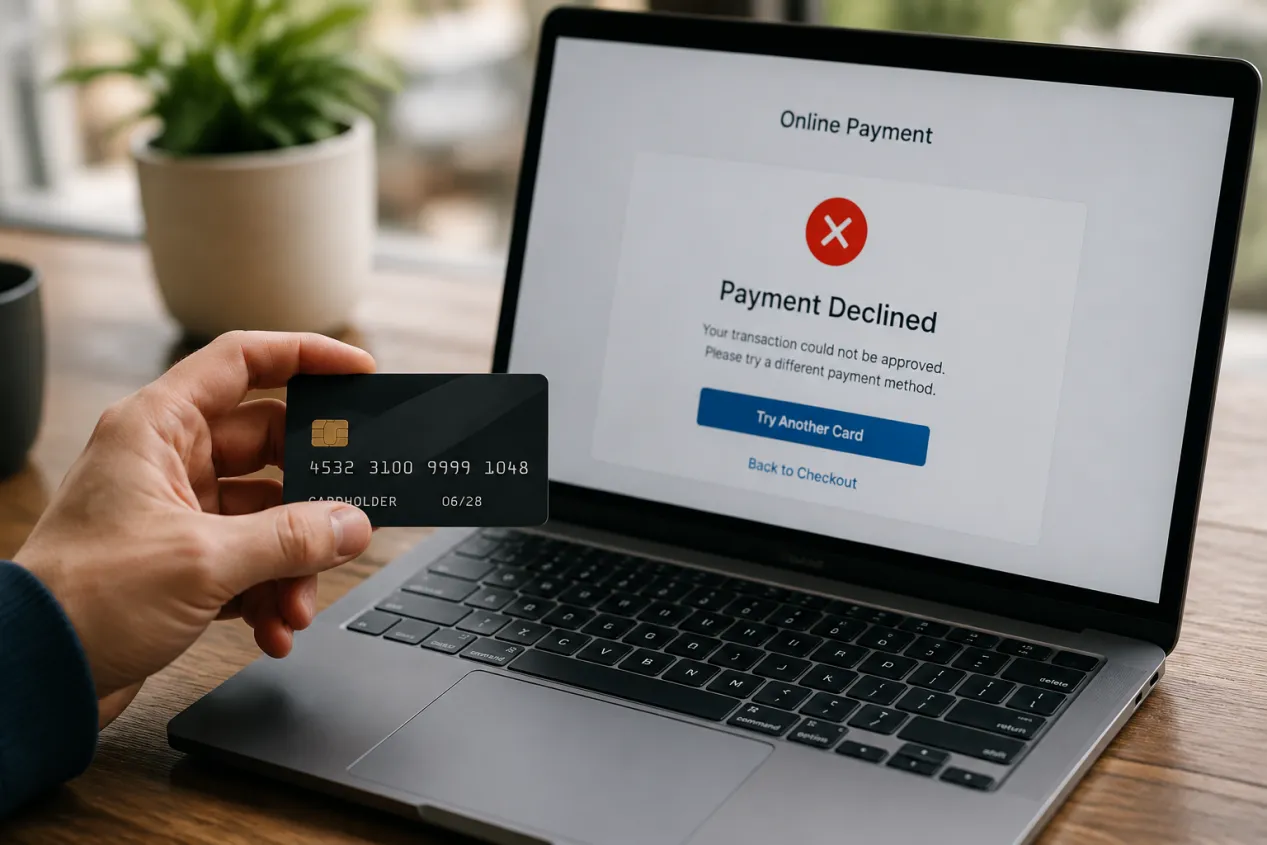
A customer reaches checkout, enters their details, and clicks “Pay.”
The transaction fails.
Not because they changed their mind. Not because they lacked intent.
The payment simply didn’t go through.
This is where revenue is quietly lost.
Most businesses track conversion. Fewer examine what happens after the payment button is clicked. Our experience shows this gap is material. A meaningful share of failed transactions are legitimate customers who were ready to buy.
Payment acceptance is the measure of how reliably those transactions succeed. It is shaped by issuer decisions, payment methods, fraud controls, and checkout design.
Improving it doesn’t require more demand. It requires fewer lost approvals.
What Is Payment Acceptance?
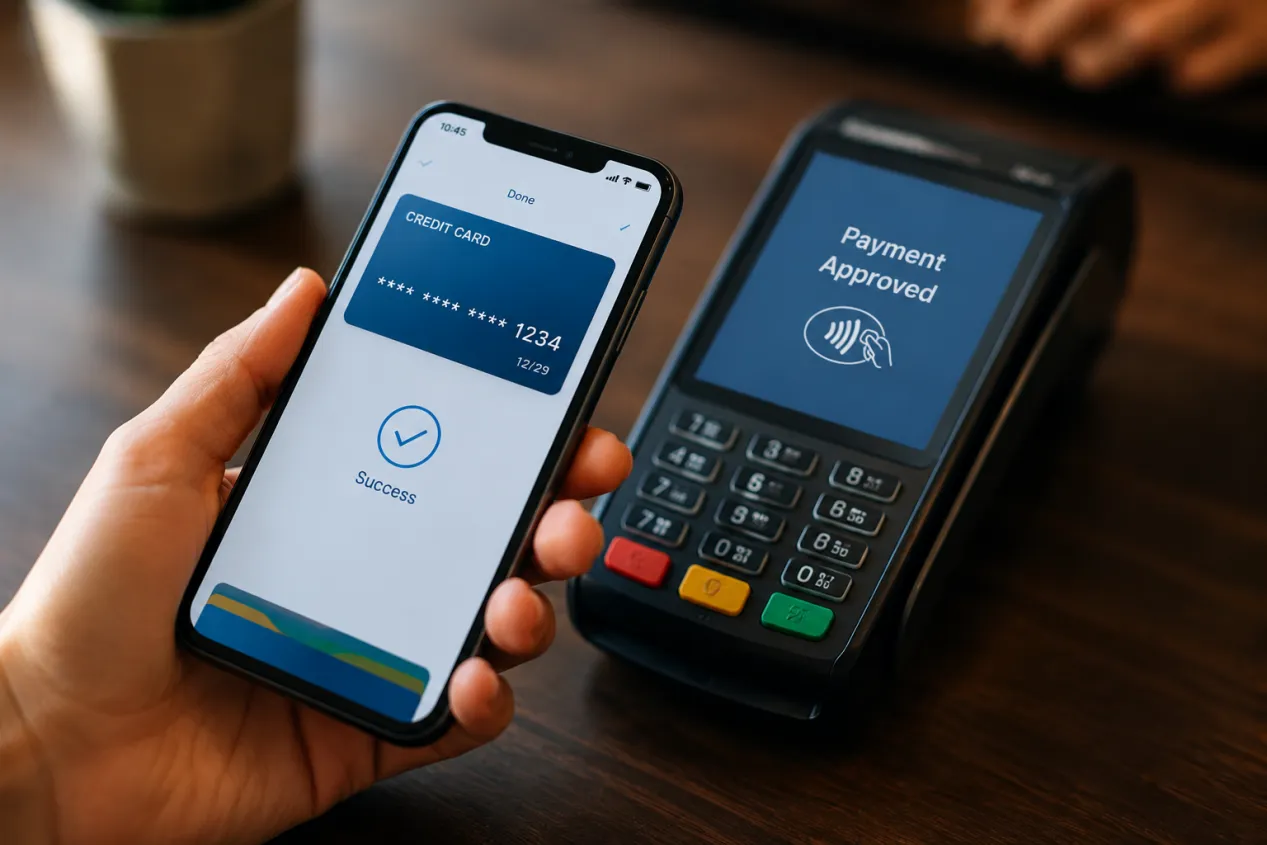
Payment Acceptance is the ability to turn payment attempts into approved transactions.
It’s typically measured as the payment acceptance rate (or authorization rate):
Approved transactions ÷ total payment attempts
If 1,000 customers try to pay and 920 succeed, the acceptance rate is 92%.
That sounds straightforward. In practice, approval depends on multiple systems working together—payment processors, acquiring banks, card networks, issuing banks, and fraud controls. A transaction can fail at any point.
This is the part many teams overlook.
Payment acceptance is not just a payment metric. It reflects how effectively the entire payment flow converts intent into revenue.
Why Is Payment Acceptance Important for Businesses?
At a surface level, the answer is simple: Payment Acceptance determines whether demand turns into revenue.
A customer who reaches checkout has already completed the hardest part. The acquisition cost is already paid. When a payment fails, the loss is immediate—and often not recovered.
But stopping at “lost revenue” misses how the impact actually shows up in the business.
Revenue Loss Is Direct, Not Theoretical
A declined transaction is not a missed opportunity. It is a failed conversion at the final step.
In many cases, the customer does not retry. They abandon the purchase or move elsewhere. Even small improvements in approval rates can unlock measurable revenue without increasing traffic.
Customer Experience Breaks at the Worst Moment
Payment failure happens at peak intent.
The customer has decided to buy. When the transaction fails, the experience shifts from completion to interruption. This creates uncertainty—and many users do not attempt again.
Retention Suffers, Especially in Subscription Models
For recurring businesses, failed payments directly affect retention.
A portion of churn is not intentional. It comes from expired cards, issuer declines, or authentication issues.
Customers are lost not because they chose to leave, but because payments failed.
Operational Complexity Increases
Payment failures create downstream cost:
- Customer support for failed transactions
- Retry and recovery logic
- Manual review of false declines
These costs scale with declining approval rates.
Expansion Is Limited by Payment Performance
In new markets, payment acceptance becomes a constraint.
Without localized methods and acquiring coverage, transactions fail even when demand exists. Growth stalls not at acquisition—but at payment completion.
Payment acceptance is not just a payment metric. It measures how efficiently a business converts intent into completed transactions.
Which Payment Methods Should Businesses Accept?
There is no universal payment mix that works everywhere.
What drives acceptance in the United States may not perform equally well in Europe, Southeast Asia, Latin America, or the Middle East.
The goal is not to offer every available payment method.
The goal is to offer the methods customers actually trust and use.
Credit and Debit Cards
Cards remain a foundational payment method for online commerce.
Visa, Mastercard, American Express, and Discover continue to account for a significant portion of global online transactions.
Cards are familiar, scalable, and widely accepted.
However, businesses relying exclusively on cards often encounter avoidable declines related to issuer risk models, authentication requirements, and cross-border transactions.
For many merchants, cards are necessary but not sufficient.
Digital Wallets
Digital wallets have become increasingly important for payment acceptance.
Solutions such as:
- Apple Pay
- Google Pay
- PayPal
can reduce checkout friction by eliminating manual card entry.
Digital wallets often improve mobile conversion rates because customers complete transactions with fewer steps.
Industry forecasts suggest digital wallets will continue gaining share across global eCommerce over the next several years.
Bank Transfers and Account-Based Payments
Account-to-account payment models are growing rapidly in many markets.
These methods can provide:
- Lower processing costs
- Faster settlement
- Reduced dependency on card networks
- Improved success rates in specific regions
Open banking infrastructure and real-time payment networks continue to expand these opportunities.
Local and Regional Payment Methods
One of the most common mistakes in international commerce is assuming global customers pay the same way.
They do not.
Customers often trust local payment methods more than international alternatives.
Examples include:
- Local bank transfer schemes
- Regional wallets
- Real-time payment systems
- Country-specific payment networks
Businesses entering new markets frequently discover that payment localization affects conversion as much as language or pricing.
At Antom, we've seen payment acceptance improve significantly when merchants align payment options with local consumer preferences rather than relying exclusively on global card acceptance.
What Factors Affect Payment Acceptance?
Payment outcomes are influenced by a combination of technical, operational, and customer-related factors.
The Payment Methods You Offer
Customers cannot use a payment method that is unavailable.
A payment stack that lacks preferred local options naturally produces lower acceptance rates.
Coverage matters.
But relevance matters more.
Adding ten payment methods that customers rarely use rarely improves performance.
Adding the two, they often prefer.
Fraud and Risk Settings
Fraud prevention is essential.
The challenge is balance.
Overly aggressive risk rules can generate false declines, where legitimate customers are mistakenly rejected.
This creates a hidden cost.
Businesses may successfully reduce fraud while simultaneously reducing revenue.
The strongest fraud programs focus on precision rather than blanket restrictions.
Issuer Decisions
Issuing banks play a major role in approval outcomes.
They evaluate:
- Available funds
- Card status
- Customer behavior patterns
- Fraud indicators
- Regulatory requirements
Many issuer decisions occur outside the merchant's direct control.
However, merchants can influence approval outcomes through better transaction data and optimized payment infrastructure.
Cross-Border Payment Performance
Cross-border transactions generally experience higher decline rates than domestic payments.
Several factors contribute:
- Currency mismatches
- Fraud concerns
- Regional regulations
- Issuer risk scoring
- Authentication requirements
Industry data suggests international transactions can experience significantly higher failure rates than domestic purchases.
For global businesses, cross-border optimization often becomes one of the largest opportunities for improving payment acceptance.
Payment Routing and Acquiring Strategy
Not all acquiring relationships perform equally.
The route a transaction takes can influence approval outcomes.
Smart routing strategies help merchants direct transactions toward acquiring partners that perform better in specific regions or scenarios.
This is an area many businesses overlook because customers never see it.
Yet it can materially affect authorization rates.
Checkout Experience
Customers frequently abandon transactions before issuers even make a decision.
Common causes include:
- Long checkout forms
- Excessive authentication steps
- Slow page loads
- Mobile usability issues
- Confusing payment flows
A technically successful payment infrastructure can still suffer from poor acceptance outcomes if checkout friction discourages completion.
How Businesses Can Improve Payment Acceptance Rates
Improvement starts with identifying where approvals are being lost.
Not all declines require the same solution.
Localize Payment Experiences for Different Markets
Payment preferences vary dramatically across regions.
Businesses should evaluate:
- Preferred local methods
- Currency presentation
- Language support
- Authentication expectations
Localization frequently delivers higher gains than adding more generic payment options.
Offer the Right Mix of Payment Methods
More payment methods do not automatically mean better acceptance.
The objective is strategic coverage.
A strong payment mix typically combines:
- Cards
- Digital wallets
- Account-based payments
- Relevant local methods
This approach reduces dependency on any single payment channel.
Reduce Checkout Friction
Every additional step creates another opportunity for abandonment.
Businesses should continuously review:
- Form length
- Mobile usability
- Authentication flows
- Error messaging
- Payment page performance
The best checkout experiences make payment completion feel almost effortless.
Use Smarter Fraud Controls
Fraud management should focus on accuracy.
Effective systems distinguish between:
- High-risk transactions
- Legitimate customers with unusual behavior
The goal is not maximum blocking.
The goal is maximum legitimate approval with controlled fraud exposure.
Monitor Approval and Decline Data Continuously
Many organizations monitor fraud closely but pay insufficient attention to approval performance.
That creates blind spots.
Businesses should regularly analyze:
- Approval rates by market
- Approval rates by payment method
- Issuer decline patterns
- Cross-border performance
- False decline trends
Continuous monitoring allows teams to identify problems before they become revenue leaks.
Final Thoughts: Payment Acceptance Is a Growth Strategy, Not Just a Payment Function
Many organizations still treat payments as a back-office infrastructure decision.
That perspective is increasingly outdated.
Payment performance influences conversion, customer experience, retention, international expansion, and revenue growth.
A customer who reaches checkout has already demonstrated intent.
The business has already invested in an acquisition.
Allowing preventable payment failures to interrupt that journey is rarely an efficient growth strategy.
The most effective businesses treat payment acceptance as a continuous optimization discipline. They monitor approval rates, expand relevant payment methods, localize experiences, refine fraud controls, and improve payment infrastructure over time.
The result is not simply fewer declines.
The result is more successfully completed customer relationships.
FAQs
What is the payment acceptance strategy?
A payment acceptance strategy is a structured approach to maximizing approved transactions while maintaining appropriate fraud controls. It typically includes payment method coverage, acquiring relationships, fraud management, payment routing, checkout optimization, and performance monitoring.
What is a good payment acceptance rate for online businesses?
The answer depends on industry, geography, business model, and payment methods. Many online businesses target authorization rates above 90%, but performance should always be evaluated against regional and sector benchmarks. The more important question is whether legitimate customers are being approved consistently.
Why do some payments get declined?
Common causes include insufficient funds, expired cards, issuer risk decisions, fraud screening, authentication failures, incorrect customer information, and cross-border transaction concerns. Not all declines indicate fraud or customer intent to abandon a purchase.
What should businesses look for in a global payment acceptance solution?
Businesses should evaluate payment method coverage, local acquiring capabilities, cross-border optimization, fraud controls, routing flexibility, data visibility, reporting capabilities, and support for regional payment preferences. The strongest solutions help merchants improve approval rates while maintaining operational simplicity.