
Share on
Here's something that happens all too often with the global supply chain: a physical product crosses the sea in days, but the B2B payment associated with moving that product takes weeks to clear. Payment processing becomes that “slow link” that drags down the supply chain. That's the situation with traditional banking systems, manual paperwork, and delayed payment terms in logistics.
And that's where advanced logistics payment solutions are making a difference today. They overcome the challenges associated with traditional payment processes and help businesses operate more quickly and accurately.
The Problem: Why Traditional Payment Processes Slow Down Global Supply Chains
The efficiency of the global supply chain depends on more than goods movement. Payments movement has a big, ever-increasing role to play.
Consider: the supply chain payment market was valued at $6.2 billion in 2025, with an estimated 10.8% annual growth rate till 2034.
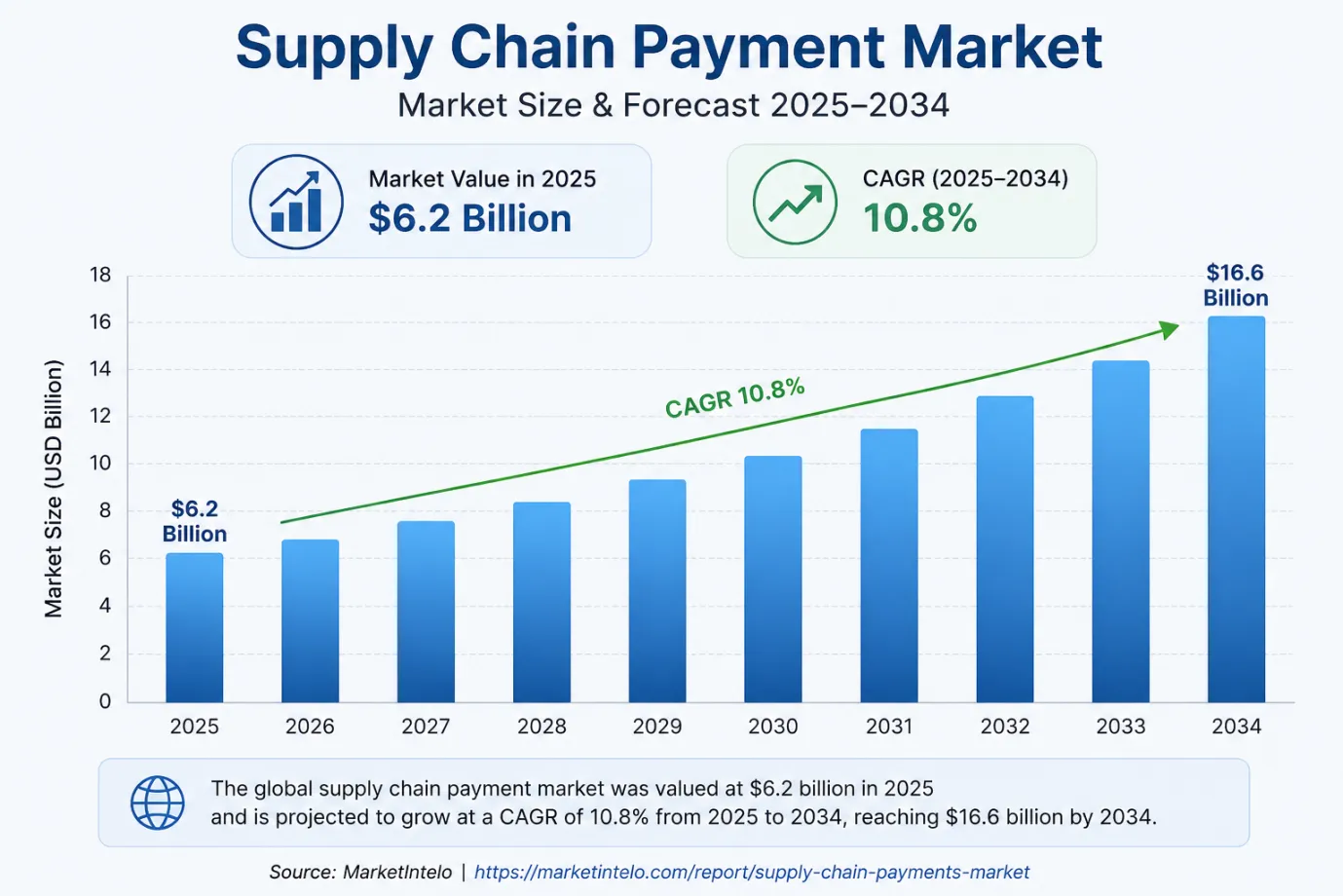
These figures indicate that companies are spending more on supply chain payment solutions, realising that having an efficient payment system improves the ease and speed of the supply chain.
When payment processes suffer delays, depend on manual workflows, or cannot circumvent cross-border complexities, there’s a direct effect on the global supply chain. Here are some specific ways traditional payment processes slow down supply chains.
Payment Delays Create Operational Bottlenecks
Traditional international payments often pass through multiple intermediary banks before reaching the recipient. Each additional institution may introduce processing time, compliance checks, and settlement delays. Businesses may also experience slower processing when payments move between different banking systems or currencies.
For logistics companies coordinating international shipments, delayed settlement can reduce visibility into available funds and create uncertainty around payment status. While modern payment platforms cannot eliminate delays caused by business decisions, they can reduce the time required to process, route, and settle legitimate transactions.
Manual Processes Increase Errors and Disputes
It’s easy to make mistakes with manual invoicing and data entry, which are characteristics of traditional payment systems. Sorting out these issues takes valuable time and resources that would have made the supply chain move faster.
Also, reconciling payments, invoices, and transaction records can be time-consuming for businesses handling large transaction volumes.
Cross-Border Transactions Are More Complex
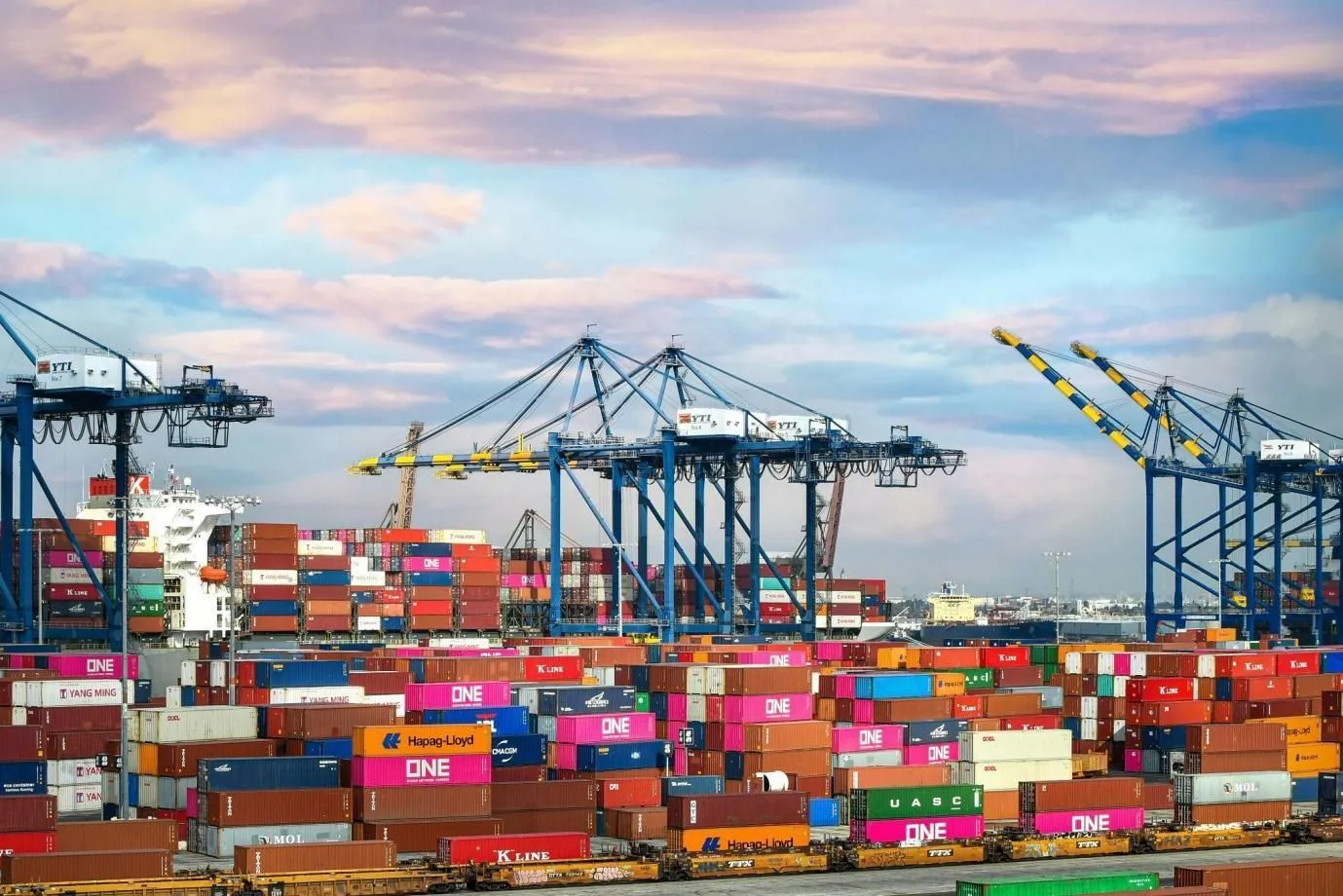
Global businesses often need to make and receive payments across multiple countries, banking systems, and currencies. However, traditional cross-border payments can be slow and difficult to manage.
There's also added friction from currency conversion fees, intermediary banks, and varying regulations. As a result, many businesses are even looking beyond traditional banking methods when making overseas payments.
Limited Visibility Makes Planning Difficult
When a business does not have a clear view of where payments are at a specific point during transactions, it's hard to predict cash flow. That's often the case with traditional payment systems. In such a situation, it's hard to plan inventory properly and make good purchasing decisions. In other words, the supply chain slows down.
Weak Payment Processes Can Strain Relationships Within The Global Supply Chain
In global logistics, predictability matters as much as speed. Suppliers, freight providers, and logistics partners all need confidence that payments can be processed efficiently and that transaction information is accurate.
When payment systems lack transparency, businesses may struggle to provide clear updates on payment status or settlement timelines. This can create unnecessary friction even when both parties intend to fulfill their obligations.
By providing clearer payment tracking and better transaction visibility, modern payment platforms help reduce uncertainty and improve communication between supply chain partners.
Traditional Systems Struggle to Scale With Growth
As businesses expand into new markets, payment processing becomes more complex too. What worked at a smaller scale may become difficult to manage with the new growth. Without a scalable payment solution, business teams spend more time handling administrative tasks and cross-checking transactions, leaving little to no time to focus on growth.
How Advanced Logistics Payment Solutions Support Global Supply Chain Growth
The challenges above make modern logistics payment solutions a necessity, something to provide a way out for businesses and positively impact global supply chain operations. Here's how they provide solutions:
Faster Payments Improve Cash Flow and Working Capital
With advanced logistics payment solutions, collections and payouts are faster. This gives businesses quicker access to working capital that they can reinvest into inventory, supplier payments, or day-to-day operations. It tackles the problem of overdue invoices.
Businesses operating in competitive markets find improved cash flow super helpful in responding to changing customer demand. In supply chains, cash flow is not just a financial concern; it determines how quickly a business can respond. A manufacturer that receives supplier payments faster may be able to secure the next shipment before competitors, while a retailer with delayed settlements may struggle to replenish popular products.
Simplified Cross-Border Collections and Payouts
The global cross-border payment market size stands at $193.5 billion in 2026 and is estimated to reach $312.1 billion by 2033, showing that businesses are expanding into new markets. Logistics payment solutions support this growth into international markets by simplifying cross-border collections and supplier payouts. Some of these platforms support hundreds of payment methods covering various regions.
This matters because global trade rarely involves two parties operating under identical conditions. A buyer in Europe may rely on one payment system, a supplier in Asia another, and a logistics provider somewhere else entirely. Without a flexible payment infrastructure, businesses end up building workarounds that slow operations.
With such solutions, businesses do not have to go through multiple banking relationships, currencies, and payment processes when transacting internationally. Even hidden foreign exchange fees are reduced, and it becomes easier to work with suppliers and logistics providers in different regions.
Automated Reconciliation Reduces Operational Friction
Modern payment solutions automate the process of reconciling payments, invoices, and transaction records. They match transactions with invoices and maintain accurate records in real time. The result is fewer payment disputes, faster invoice approvals, and less time spent investigating why a shipment payment does not match the corresponding transaction record.
This is especially important for businesses that process large volumes of transactions. Having to manually compare invoices with payment records and check for discrepancies can be so time-consuming, plus it leaves room for errors. Imagine a logistics company processing thousands of freight invoices each month.
Even a small percentage of mismatched records can create a backlog that affects supplier relationships and delays financial reporting. When automated systems do much of the work, it reduces the risk of errors, saves time, and allows employees to focus on more important tasks.
Greater Visibility Improves Financial Planning
Advanced logistics payment solutions allow businesses to monitor transactions and cash flow. This helps them make informed decisions about inventory purchases and future investments. It also helps businesses make budgeting plans with higher confidence.
Additionally, a clearer view of payment movement means teams can identify potential cash flow gaps before they become big issues. They can also track outstanding payments and maintain greater control over financial performance, even in different regions and markets. In complex supply chains, knowing where money is stuck can be just as important as knowing where goods are located.
Stronger Supplier and Partner Relationships
Supply chains run on relationships, and relationships depend on predictability. Suppliers are more willing to prioritise reliable partners who pay consistently and provide clear visibility into payment status.
Since modern logistics payment solutions make payments faster and easier to track, suppliers and partners can trust that transactions will be completed without unnecessary delays. That makes it easier to build long-term relationships and contributes to a more reliable supply chain.
Scalable Payment Infrastructure Supports Expansion
Modern logistics payment solutions help businesses keep up with growth by automating routine processes and simplifying international transactions. Growth often exposes weaknesses that were invisible at a smaller scale. A company managing payments for ten suppliers may cope with manual processes; the same approach becomes difficult when that number grows to hundreds across different countries.
This makes it easier to step into new markets, work with additional suppliers, and handle higher transaction volumes without worrying about extra administrative work.
Many businesses invest heavily in logistics technology, warehouse automation, and shipment tracking, but payment infrastructure is often upgraded later. This creates an imbalance: goods move faster, but the financial processes supporting those goods remain outdated
Businesses Are Turning to Stellar Logistics Payment Solutions
The difference made by modern logistics payment solutions is difficult to ignore. As global supply chains become more complex, businesses need payment solutions that can support cross-border growth without extra operational complexity.
Businesses addressing these challenges increasingly rely on payment platforms that combine multiple payment networks, currencies, and reconciliation capabilities in one system. Antom is one example of a platform built around this need. Equipped with over 300 payment methods, 140+ currencies, and access to over 200 payment markets, Antom makes it easier for businesses to collect payments and pay suppliers across borders.
This is particularly useful for businesses operating in multiple countries. Rather than dealing with different payment systems when transporting goods through different markets, they can manage collections and payouts through a single platform. That way, they spend less time handling payment administration and more time focused on growing the business and serving customers.
Conclusion
Global supply chains have always depended on two movements: the movement of goods and the movement of money. While businesses have invested heavily in faster shipping, better tracking, and smarter warehouses, payment processes are now becoming equally important to supply chain performance.
As we’ve seen, traditional payment methods often introduce challenges that can affect cash flow, supplier relationships, and proper planning. Modern logistics payment solutions address these issues by speeding up payments, simplifying cross-border collections, and automating payment and invoice reconciliation.
As supply chains become more connected and international trade continues to grow, businesses that modernise their payment processes will be better positioned to scale and take advantage of new opportunities in global markets.
FAQs
Q1: Is payment part of logistics?
Yes. Logistics is often viewed as the movement of goods, but every shipment depends on financial transactions happening at the right time. Freight payments, customs charges, supplier settlements, and storage fees all influence whether goods continue moving.
Q2: What are logistics payment solutions?
Logistics payment solutions are FinTech systems that automate and simplify money movement in the supply and movement of goods. They streamline payment collection, supplier settlements, reconciliation, and financial tracking across supply chain operations.
Q3: Do logistics payment solutions integrate with logistics software?
Yes, advanced logistics payment solutions use APIs to integrate with existing systems like Transportation Management Systems (TMS) and Enterprise Resource Planning (ERP) systems. This automates the movement of goods with the movement of payments.