
Share on
Key Insights
- Mexico is Latin America's second-largest economy, deeply integrated into the North American economic sphere through the USMCA agreement. In 2024, exports to the United States accounted for over 80% of Mexico's total exports, making the country one of the biggest beneficiaries of the global nearshoring trend. The Mexican government's "Plan México 2024-2030" sets a long-term goal of becoming the world's 10th largest economy by 2030, with substantial medium- to long-term growth potential.
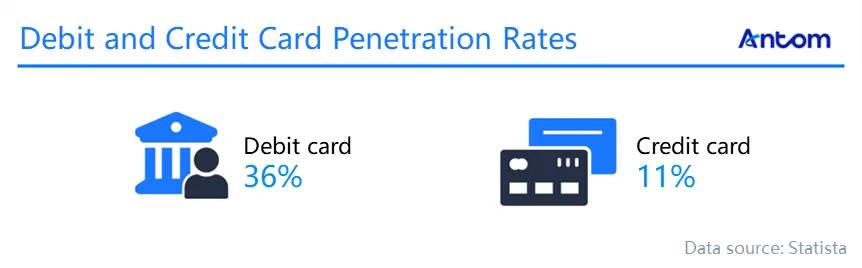
- Approximately 50% of Mexico's adult population is unbanked, making it one of the countries with the highest cash usage rates in the Americas. In 2024, debit card penetration was only 36% and credit card penetration only 11%, significantly lower than in major Latin American economies such as Brazil and Chile. However, fintech is bridging the gap—in 2023, digital payment user penetration exceeded 52%, with new payment methods such as digital wallets and deferred payments rapidly gaining traction.
- Mexico boasts a significant demographic advantage, with a median age of just 29.3 years and only 8% of its population over 65. Over 90% of online shoppers are young and middle-aged individuals under 54, representing the core of retail consumption. This youthful population structure is driving sustained growth in the consumer market and providing a user base for digital retail transformation.
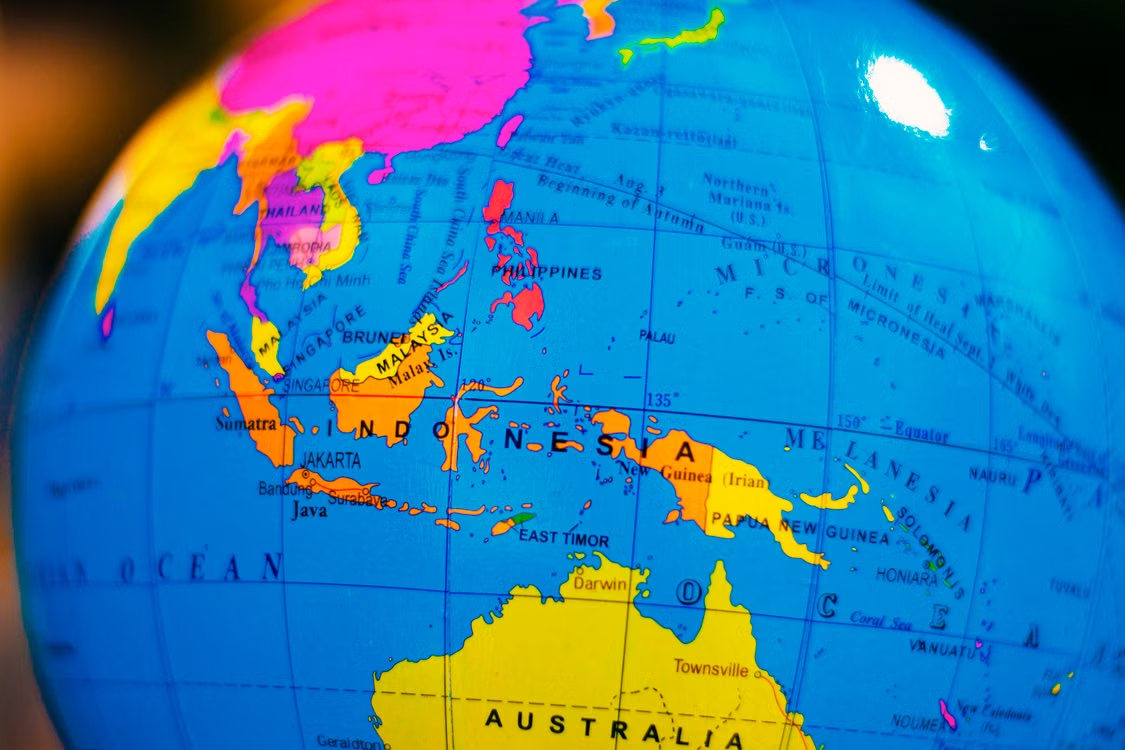
- In Mexico's retail market, offline retail accounts for 85%–88% of the market share. This percentage is significantly higher than in emerging markets such as China (approximately 53% offline) and Indonesia (approximately 68% offline), indicating that Mexican consumers still rely heavily on physical shopping channels, particularly for basic consumer goods such as food and daily necessities.
- Traditional grocery stores (tiendas de abarrotes) account for approximately 42% of the total retail market, with around 1.2 million stores nationwide. Leveraging their proximity, flexible credit mechanisms, and community trust, traditional grocery stores form one of the world's most extensive community retail networks. For small and medium-sized enterprises (SMEs) seeking to enter the Mexican market, penetrating traditional channels through wholesaler networks is an effective way to reach a broad consumer base.
- The nearshoring wave is reshaping the retail landscape in the northern region. The northern industrial corridors of Monterrey, Juárez, and Tijuana have developed emerging middle-income consumer groups driven by manufacturing expansion. Consumers in these regions have higher income levels, prefer modern shopping experiences, and lead the nation in digital payment penetration, making them noteworthy emerging retail hubs alongside Mexico City.
- Food retail is the dominant force in offline retail, with offline purchases accounting for 98% of the category. Household food expenditures represent approximately 38% of total spending, significantly higher than in Latin American economies such as Brazil (less than 20%). Sales of traditional handmade staples reached $26.6 billion, primarily transacted through traditional markets.
- Health and sustainable consumption are rapidly gaining prominence. In 2023, total retail sales of health and wellness food and beverages reached $33.8 billion and are projected to increase to $39.5 billion by 2028. Sixty percent of consumers actively seek out healthy ingredients, and 63% believe they can influence the environment through their purchasing choices. Generation Z is particularly engaged in sustainable consumption, presenting significant growth potential for this market segment.
- Rapidly emerging, digital wallets are expected to become the primary digital payment method by 2027. In 2023, digital payment users reached 67.96 million, representing a penetration rate of 52.84%, and this number is projected to increase to 80.80 million by 2025. Local brand Mercado Pago (preferred by 56% of consumers) and international giant PayPal (preferred by 79% of consumers) together dominate the market, filling the gap left by traditional financial services.
- Payment security is a key concern for Mexican consumers. Seventy-four percent of consumers cited payment issues as the main reason for abandoning purchases, and 75% were unwilling to provide banking information online due to security concerns. During the COVID-19 pandemic, e-commerce fraud attacks surged by 220%, making payment security and risk control capabilities a key competitive advantage for companies entering the Mexican market. Antom Shield offers AI-driven intelligent risk control services, utilizing a millisecond-level transaction risk assessment system to help both merchants and consumers mitigate fraud risks.
Why do traditional grocery stores still hold a 42% retail market share in Mexico, where approximately 50% of the population is unbanked? With e-commerce penetration steadily rising, why does offline retail still account for 85%–88% of consumer transactions?
As the nearshoring wave brings hundreds of thousands of new middle-class consumers to the northern industrial corridor, how can SMEs seize this emerging retail opportunity?
How can 1.2 million neighborhood stores scattered across streets and alleys become a golden channel for brands to reach 130 million consumers? And how can we address the "payment pain point" that causes 74% of consumers to abandon their shopping carts?
Today, we'll take you on an in-depth exploration of Mexico's physical retail market!
Mexico Overview
Overview of the Mexican Market
Mexico had a population of approximately 130 million in 2024, with about 59% of working age (between 20 and 64 years old). The official language is Spanish. As Latin America’s second-largest economy, Mexico plays a significant role in the global economic landscape.
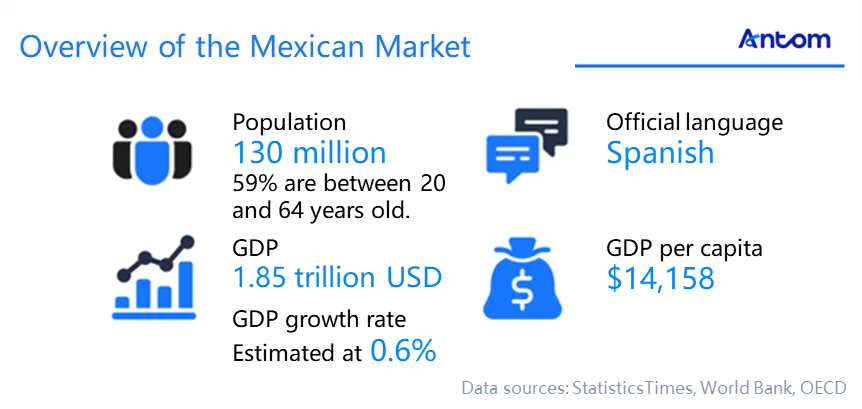
Mexico holds a sovereign credit rating of BBB assigned by S&P Global Ratings. Its nominal GDP reached $1.85 trillion in 2024, ranking it as the world’s 12th largest economy, with a per capita GDP of approximately $14,158. Market forecasts project Mexico's GDP growth to slow from 3.4% in 2023 to an estimated 0.6% in 2025. GDP continued to grow, but at a slower pace than in 2023. Mexico’s unique geographical advantage, bordering the United States, has deeply integrated it into the North American economic sphere. Thanks to the USMCA agreement (a free trade agreement between the United States, Mexico, and Canada that took effect in 2020, replacing NAFTA), Mexico enjoys zero tariffs on its exports to the United States. By 2025, exports to the United States are expected to account for 80%–85% of Mexico’s total exports, making it one of the biggest beneficiaries of the global nearshoring trend.
However, the economic outlook for 2025 faces some uncertainty: the IMF forecasts GDP growth of approximately 1.0%, while Mexico’s central bank (Banxico) offers a more conservative estimate of 0.6%. The main risks to the economic slowdown stem from changes in US trade and tariff policies, uncertainty regarding the USMCA review cycle, and fluctuations in global demand. Despite short-term pressures, the Mexican government’s “Plan México 2024-2030” – a national development strategy to transform the economy by strengthening domestic manufacturing, attracting foreign investment, and expanding infrastructure – still sets a long-term goal of becoming the world’s 10th largest economy by 2030. With its young population, continued foreign direct investment, and deep integration with the North American market, Mexico’s medium- to long-term growth potential remains substantial.
However, financial services are relatively underutilized in Mexico. According to industry data, approximately 50% of the adult population is unbanked, a figure significantly below the median for Latin America.Financial infrastructure is severely unevenly distributed. A World Bank report found that in 2021, Mexico had only 12 bank branches per 100,000 residents—just one-third of the OECD average. In 2020, 87% of rural areas lacked even ATM services, resulting in severely limited financial services in remote regions. In 2024, debit card penetration stood at 36%, while credit card penetration reached only 11%, significantly lower than in major Latin American economies like Brazil and Chile. However, as the fintech industry continues to flourish, new payment methods like digital wallets and post-pay are increasingly filling the gaps left by traditional financial services. By 2020, 16.8 million Mexican adults had accessed banking services for the first time through fintech platforms. In 2023, digital payment user penetration exceeded 52%, with a transaction value of over $90.56 billion, ranking Mexico 15th globally.
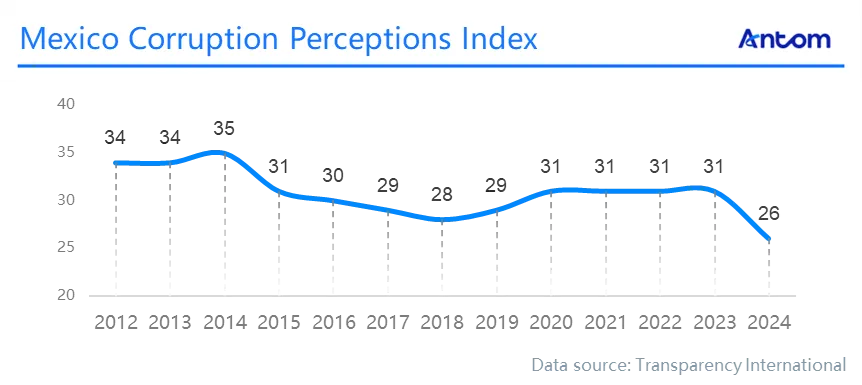
Furthermore, Mexico scored 26 out of 100 on the 2024 Corruption Perceptions Index, ranking 140th out of 180 countries. This indicates that Mexico’s public sector is perceived as highly corrupt. In 2023, Mexico scored 31 points, ranking 126th, representing a significant deterioration in the perception of corruption in the country over the past year. It is also worth noting that Mexico ranks lowest among all member countries of the Organization for Economic Cooperation and Development (OECD). This shows that Mexico’s anti-corruption performance is relatively weak among international organizations in both developed and developing countries, a concerning downward trend.
The Mexican peso experienced a significant appreciation trend in 2025. As of November 28, the U.S. dollar was trading at 18.2896 against the Mexican peso, reflecting the peso’s strong performance. Over the past month, the Mexican peso has appreciated by 1.05%, and its cumulative appreciation over the past 12 months has reached 10.23%, indicating a sustained upward trend throughout the year. Several factors are driving this appreciation trend. First, the Federal Reserve’s policy shift provided strong support for the peso. Growing market expectations of a Federal Reserve rate cut have weakened the U.S. dollar overall, relatively strengthening the Mexican peso. Secondly, domestic economic factors also played a significant role. Although Mexico’s economy contracted in the third quarter, this did not prevent an improvement in its overall trade performance for the year, and these positive trade figures supported the peso. Furthermore, the improvement in market sentiment is also significant. Investors have shown confidence in the relative stability of Mexico’s economic fundamentals, and this positive market sentiment has further strengthened demand for the peso. Looking ahead, analysts generally expect the Mexican peso to continue its appreciation over the next 12 months.
Discover how to capture value in Mexico’s booming market
as it aims to become the world’s 10th largest economy.