


Share on
Part III: From Operations to Optimisation: Building a Sustainable Growth Engine
Operating an independent site is a continuous process of iteration and refinement. Sustainable growth depends not on one-off traffic acquisition, but on long-term improvements in operational efficiency.
This section explores pricing strategies, product selection optimisation, marketing optimisation, and how data-driven insights can improve efficiency and conversion rates.
Q10: During operations, what points should I focus on to continuously optimise performance?
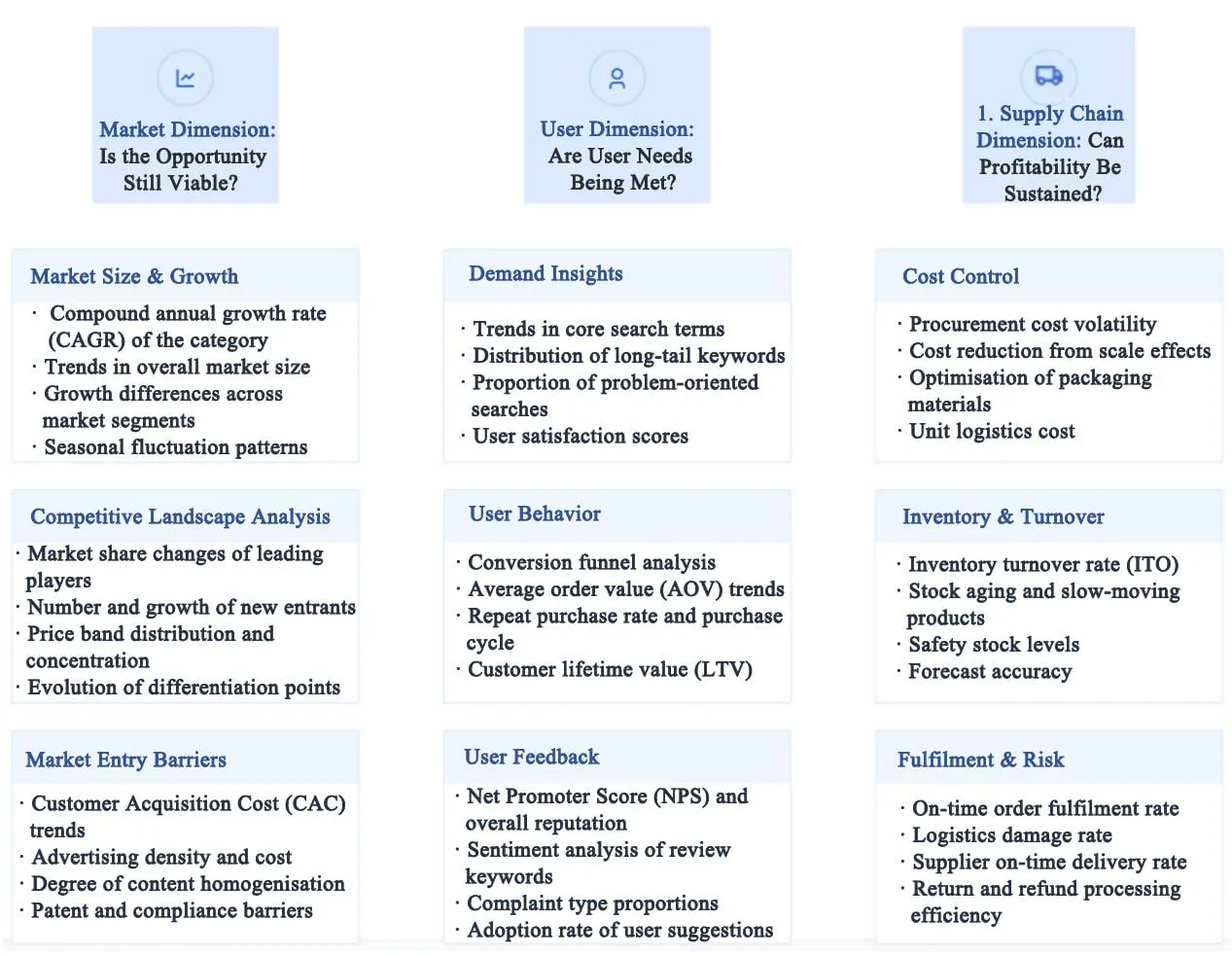
The market environment is constantly evolving. Continuous improvement in operational performance is not achieved through single-point interventions, but through dynamic, coordinated optimisation across three key dimensions: market, users, and supply chain.
- Market data (e.g., category growth, market size, competition intensity) helps assess “how big the opportunity pool is.”
- User data answers “what users truly want.”
- Supply chain data (e.g., procurement costs, inventory turnover, logistics speed, supplier reliability) determines “whether the business can sustainably generate profit.”
Merchants should first ensure they are in the right market, then continuously align with user needs, and finally achieve a profitable closed loop through an efficient and stable supply chain.
Independent Site Operational Optimisation Framework
Q11: How can I continuously optimise product selection in day-to-day operations?
In independent site operations, order and transaction data are not only used for routine reporting and reconciliation but also serve as a key foundation for product selection optimisation.
Merchants can analyse order volumes, transaction values, conversion rates, and cancellation or return ratios to assess the actual performance of different products across markets. For instance, by comparing sales quantities and revenue across SKUs, merchants can identify best-selling versus slow-moving products and understand which categories, styles, or price ranges resonate most with users in particular countries or regions.
During analysis, merchants must adhere to data privacy and compliance requirements, focusing only on aggregated order and product-level data without involving sensitive user information.
Order and sales performance data can also guide product mix and SKU structure optimisation:
- SKUs with low conversion or high return rates may indicate pricing issues, unclear product descriptions, misaligned use cases, or fulfilment problems. Merchants can adjust inventory allocation, reduce low-performing SKUs, and improve overall warehouse and logistics efficiency.
- Conversely, products with stable sales and low return rates should be pre-planned for replenishment to prevent stockouts and lost sales opportunities.
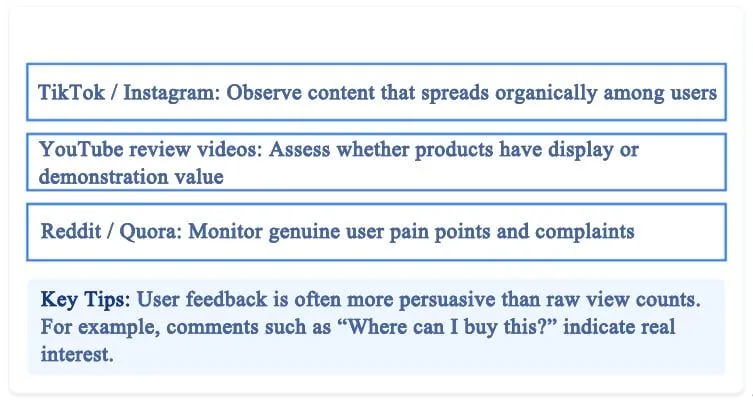
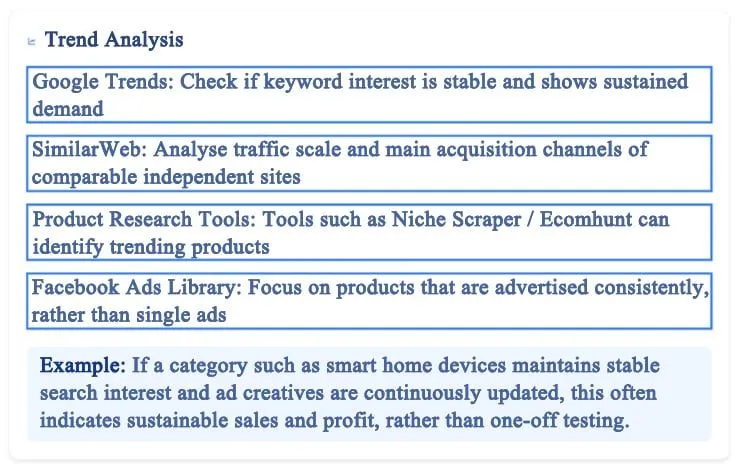
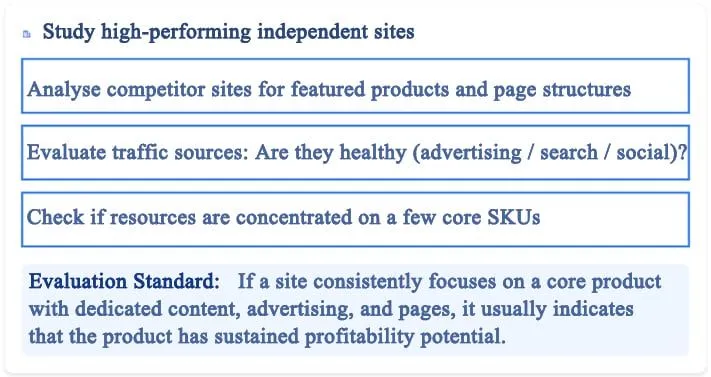
Independent Site Product Selection Optimisation Guide
Q12: After operating my independent site for some time, I notice a slowdown in sales. How can I optimise pricing strategy to boost performance?
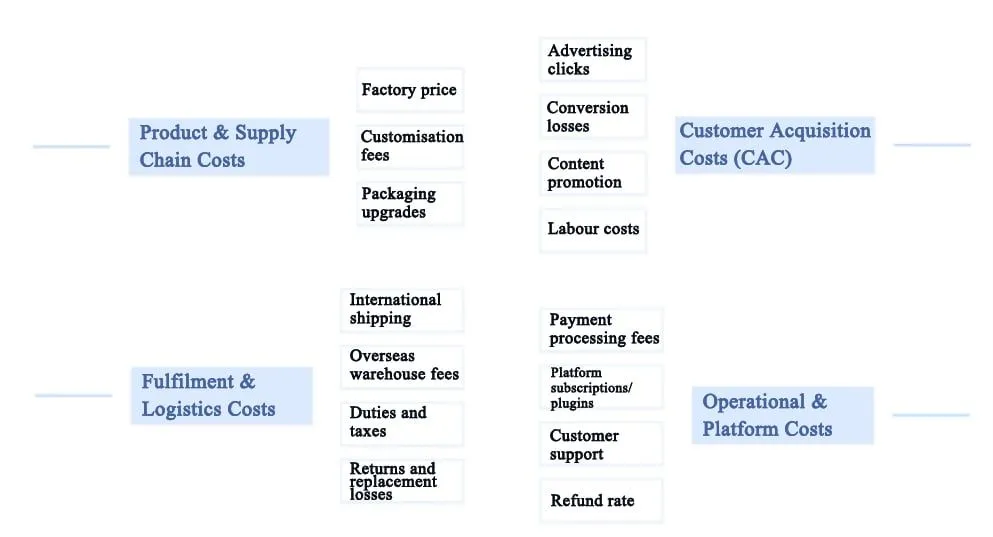
Once an independent site reaches a stable operational stage, the focus of pricing should shift from “how to set the price” to “how to continuously optimise it.”
In practice, merchants need to track the composition and fluctuations of operating costs. As previously mentioned, pricing is not a one-off decision; it is a dynamic management task that requires constant adjustment based on market feedback.
Merchants should observe sales performance, user feedback, and after-sales pressure at different price points to determine whether current pricing achieves a balance:
- Acceptable to the target customer
- Provides sufficient margin to support overall operations
It is important to note that pricing optimisation is not the same as frequent discounting. Rather, it involves fine-tuning price structures and presentation. For instance, the same product may encounter different price sensitivities across markets, seasons, or sales stages.
Merchants can conduct phased tests to identify:
- Situations where small price adjustments can significantly improve conversion
- Situations where adjustments may harm brand perception or profit margins
Additionally, optimising price tiers, bundles, or variant options can guide users to make selections favourable to overall merchant revenue, rather than competing solely on lowest price.
Independent Site Pricing Model Framework
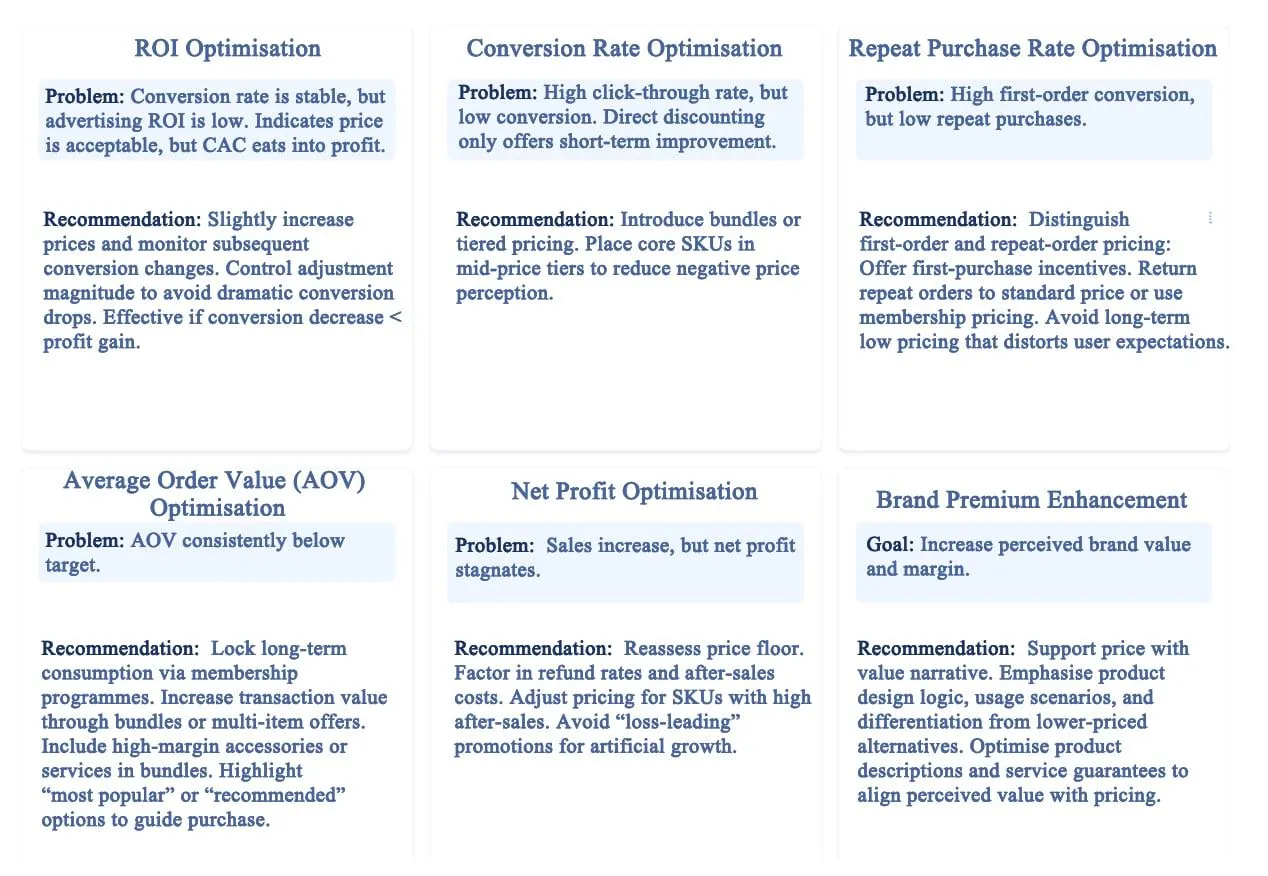
Targeted Pricing Optimisation Based on Performance
Q13: Which digital marketing touchpoints should I focus on in daily operations to enhance independent site performance?
In cross-border e-commerce, completed transactions and user order behaviours not only represent a sale but also serve as crucial triggers and data sources for digital marketing. Merchants can design automated marketing actions based on key events such as order placement, repeat purchase, or successful payment.
1. Order Placement
By analysing the relationship between completed orders and marketing activities, merchants can continuously optimise strategies. For example, upon completion of a first order, the system can automatically:
- Issue repeat purchase discounts
- Accrue loyalty points
- Send recommendations for new products or usage reminders via email or SMS
This approach, based on actual purchase behaviour, helps extend customer lifetime value by turning one-time buyers into long-term, engaged customers. Conversely, if promotions lead to higher cancellation or return rates, this may indicate misleading pricing or promotional messaging, signalling a need to adjust the offer or communication.
2. Repeat Purchase
Merchants can segment customers according to purchase frequency, average order value (AOV), and after-sales behaviour:
- High-value customers: Push new products, exclusive offers, or membership benefits
- Potential customers: Nurture via regular promotions and content engagement
- One-time customers: Monitor for future engagement opportunities
This data-driven approach improves marketing ROI, reduces ineffective outreach, and strengthens loyalty and repeat purchase intent.
3. Payment Completion
Payment events can trigger marketing actions, for example:
- Automatically issuing coupons or loyalty points
- Sending repeat purchase reminders via email or SMS
To implement this, merchants should integrate the payment status with the marketing system so that a successful payment automatically triggers the relevant marketing actions. This converts payment events into long-term customer value and improves repeat purchase probability.
4. Product & Market Insights
- By analysing sales feedback across products, markets, and time periods, merchants can:
- Identify products suitable for price-driven promotions
- Plan seasonal campaigns, bundle offers, or new product recommendations
- Optimise promotional timing and intensity
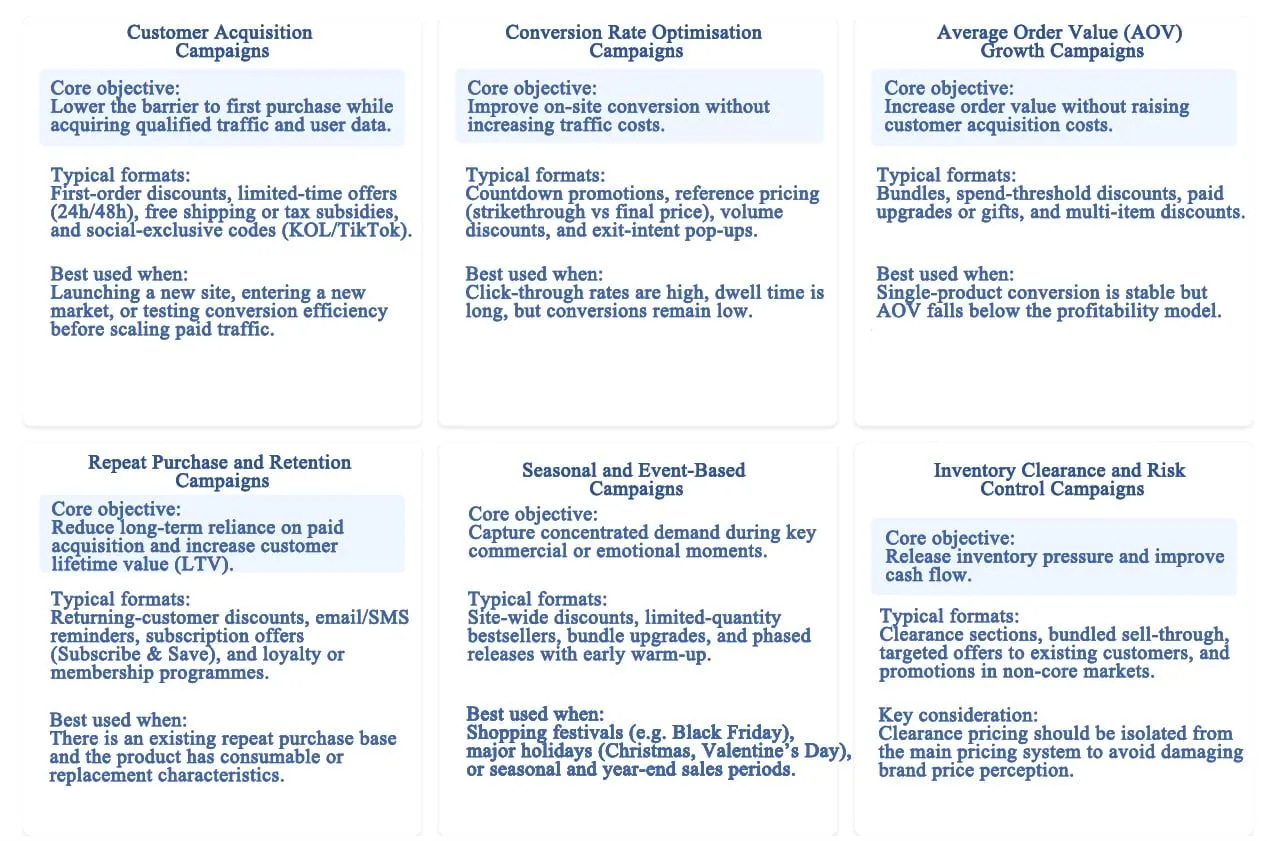
Common Digital Marketing Categories, Formats and Use Cases for Independent Sites
Tips
A+ Rewards, developed by Antom in collaboration with digital payment partners, is a one-stop digital marketing platform. It provides merchants with:
- Multi-channel engagement tools for mobile payment users
- Customisable brand zones, gamified interactions, and lead generation strategies
- Targeted campaigns, coupon distribution, subscription discounts, and loyalty rewards
These capabilities help merchants maintain user activity, drive conversions, and deepen engagement with global customers.
Q14: In the after-sales stage, what optimisation measures can be implemented in advance, and can after-sales become a new source of business growth?
The core of after-sales optimisation is the ability to match order data with customer feedback to identify the current order stage and detect potential risks early. This helps reduce disputes, lower return and refund rates, and stabilise operational performance. Effective after-sales management is therefore a proactive risk-control mechanism rather than a passive response.
First, prioritise information transparency and a stable communication rhythm.
For cross-border customers, dissatisfaction is often driven more by uncertainty than by the issue itself. Proactive updates on progress, timelines and next steps can significantly reduce anxiety and rebuild trust, even before a case is fully resolved.
Second, use payment data as a structural support for after-sales management.
Refund and return rules directly affect cash flow and customer confidence and should be clearly defined in advance. By embedding these rules into backend order logic and linking payment status to customer service workflows, merchants can respond faster to anomalies such as failed payments, duplicate charges or refund requests.
Third, build an after-sales system that feeds back into front-end optimisation.
By analysing recurring after-sales issues, merchants can identify structural problems related to products, content or fulfilment. When these insights are used to optimise pricing, product design or logistics strategy, the overall volume of after-sales issues gradually declines.
Common After-Sales Risk Checkpoints for Independent Sites
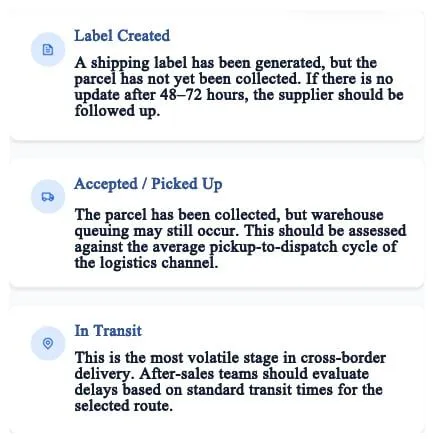
- Customs Clearance
The parcel is undergoing declaration and inspection. Extended delays may indicate documentation issues, incorrect declarations or address problems.
- Last Mile / Out for Delivery
The parcel is in the final delivery stage and is usually delivered within 1–3 days. Delays may result from address issues or courier mis-scans.
- Delivered
The parcel is marked as delivered. If the customer reports non-receipt, proof of delivery, address accuracy and alternative drop-off locations should be verified.
Q15: In cross-border tax and financial compliance, what planning should be done in advance to ensure business security and stable operations?
In cross-border commerce, tax and financial compliance is a foundational requirement that directly affects cash flow, profitability and scalability. Effective planning should be structured around two core dimensions.
- Overseas compliance and taxation
Merchants must clarify local registration requirements, VAT/GST obligations, revenue recognition rules and links with payments, logistics and overseas warehouses. Key risks include import duties, tax rate differences across product types, permanent establishment exposure and platform withholding obligations, all of which directly impact pricing and legality.
- Domestic tax and settlement compliance
This covers cross-border income repatriation, applicable corporate and indirect taxes, cost deductibility and compliant fund flows. A full-chain framework, from overseas filing to domestic accounting and tax reporting, is essential to mitigate financial and legal risk.
Operational guidance
Tax rules vary significantly by market, and compliance requirements depend on product category and business model. Merchants should assess target markets early and align finance and operations accordingly.
Tips
Tax systems vary significantly by country and region, such as Brazil’s ICMS or the EU’s distance-selling thresholds. Merchants should always conduct in-depth analysis based on their target markets and specific business models.
Looking ahead, Ant International (Antom) will continue working with global tax and compliance experts. Through market-specific case studies, sector-focused policy analysis and practical compliance strategies, Antom aims to support merchants in achieving sustainable and compliant cross-border growth.