

Share on
A card payment is the most familiar way people pay online and in store, yet for a business selling across borders it is also one of the most detailed flows to get right. Understanding how card payments work — the parties involved, why some transactions are declined, and what separates a smooth checkout from a lost sale — helps any merchant that wants to accept cards reliably in more than one market. This guide explains what a card payment is, the main types, the mechanics behind each transaction, and what to look for when you start accepting card payments globally.
What is a card payment?
A card payment is a cashless transaction in which a customer pays using a debit, credit, or prepaid card, either in person at a point of sale (POS) or online through a checkout. The funds are drawn from the cardholder's bank account (for a debit card) or against a line of credit (for a credit card) and, after a series of behind-the-scenes checks, settled into the merchant's account. To the shopper it feels instant; underneath, several financial institutions coordinate to authorise, clear, and settle every payment.
For merchants, cards remain a cornerstone of the payment mix because almost every consumer holds one. But card acceptance is not a single product — it depends on which card networks you support, which markets your customers sit in, and how well your setup handles authentication and declines. A merchant that wants to reach shoppers worldwide will often choose a platform that supports a wide range of global payment methods, so that cards and local alternatives can be accepted through one integration.
Types of card payments
Although "card payment" sounds like one thing, there are several distinct types, and each behaves differently in terms of cost, risk, and settlement timing.
Credit, debit, and prepaid cards
A debit card deducts money directly from the cardholder's bank account. A credit card lets the cardholder borrow from an issuing bank or card network and repay later, often with rewards. A prepaid or stored-value card holds a loaded balance that is spent down. Credit cards generally carry higher processing costs than debit cards because more intermediaries and risk are involved.
Card-present vs card-not-present
A card-present payment happens when the physical card is tapped, inserted, or swiped at a terminal. A card-not-present (CNP) payment happens online, over the phone, or through an app, where the card details are entered rather than read by a device. CNP transactions carry more fraud risk, which is why online card payments rely on additional verification such as 3-D Secure.
Contactless and tokenised payments
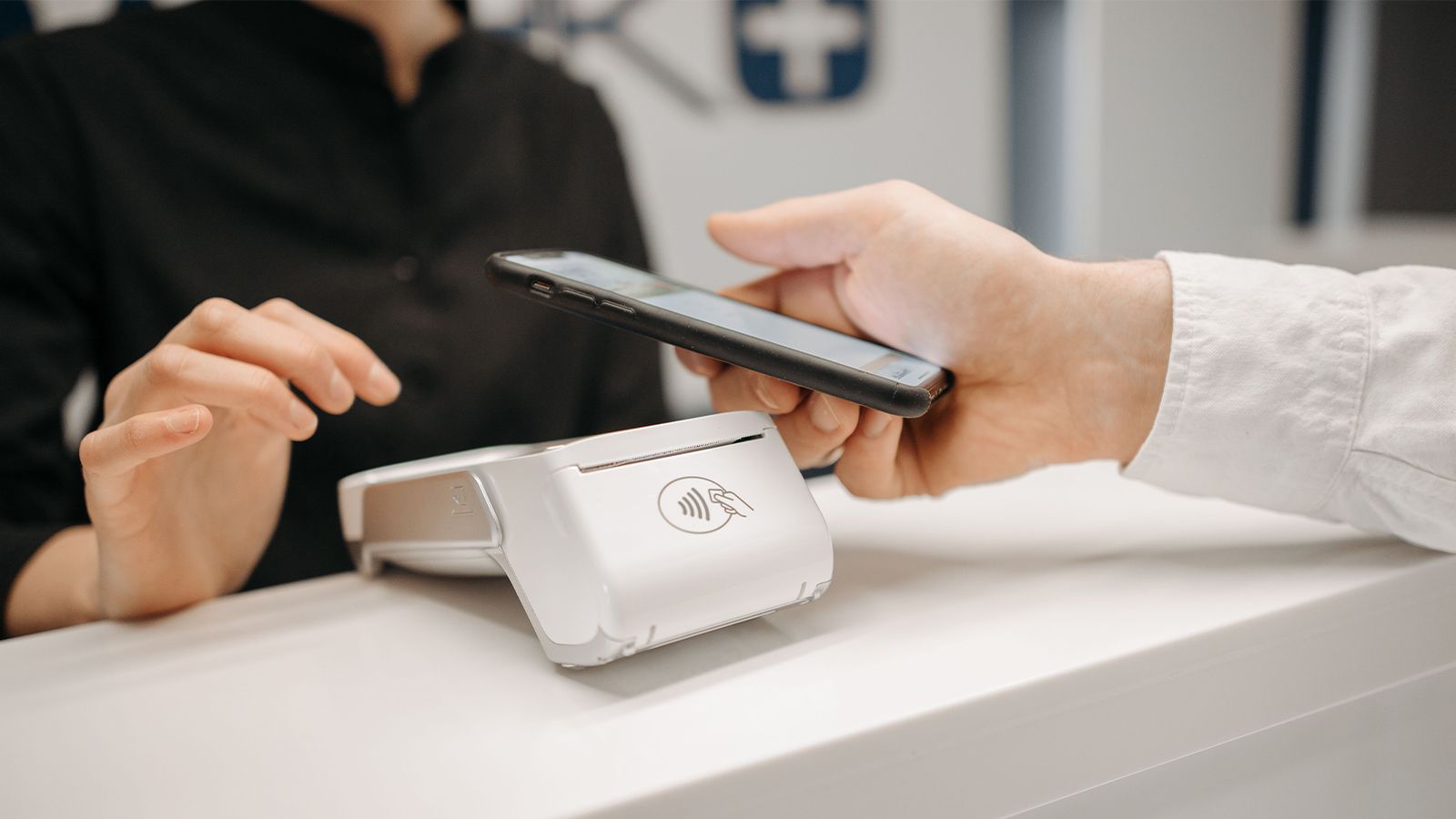
Contactless payments use NFC to complete a tap in seconds, while mobile wallets store a tokenised version of the card so the real number is never exposed. Tokenisation also underpins recurring and repeat billing: with tokenised auto-debit capabilities, a saved card can be charged again without the customer re-entering details, and the token can update automatically when a card is reissued.
How does a card payment work?
Every card payment moves through two broad stages — authorisation, then clearing and settlement — and involves the same core players: the cardholder, the issuing bank, the card network (such as Visa or Mastercard), the acquiring bank, and the payment gateway and processor that connect the merchant to the rest of the chain.
Authorisation
When a customer confirms a purchase, the card details pass from the merchant's checkout to the payment gateway, then to the acquirer's processor, and on to the card network. The network routes the request to the customer's issuing bank, which checks for sufficient funds, runs fraud and risk checks, and returns an approve or decline decision. That decision travels back along the same path to the checkout in seconds. For online payments, a 3-D Secure step may ask the shopper to confirm the payment through their banking app, a one-time code, or biometrics.
Clearing and settlement
Authorisation only reserves the money. Later, the merchant batches its approved transactions and sends them for clearing. The card networks debit the issuing banks and credit the acquiring bank, which then deposits the funds into the merchant's account, minus processing fees. Depending on the card type, market, and provider, settlement can take from one to several business days.
Card payments across borders: the approval-rate question
Where many guides stop at the domestic flow, the more nuanced topic for a growing business is cross-border card acceptance. When a shopper in one place pays a merchant based elsewhere, the transaction passes through more intermediaries and unfamiliar issuer risk rules, and is more likely to be declined even when the customer is genuine. Every avoidable decline is a paying customer turned away.
Several factors contribute: issuers may apply stricter checks to foreign transactions, message formats may not match issuer expectations, and authentication friction can cause shoppers to abandon. Improving outcomes means more than plugging in a gateway — it benefits from intelligent routing, adaptive message formatting, and automatic retries. An AI-powered card optimisation toolkit can steer each transaction to a better-performing channel, reshape messages to reduce avoidable declines, and recover temporary failures through smart retries. For merchants working with multiple acquirers and methods, a payment orchestration layer helps unify routing decisions across the whole stack.
Worth looking at early: if your roadmap includes selling into new markets, it helps to understand how authorisation, routing, and retries will be handled before avoidable declines start affecting revenue — reviewing your optimisation options at the planning stage is easier than retrofitting them later.
How to accept card payments as a global merchant
Accepting cards is straightforward domestically but deserves more scrutiny once you sell internationally. The table below outlines what to evaluate.
What to evaluate | Why it matters for a global merchant |
Card network and local method coverage | Support for major card networks is a baseline; local cards and wallets often decide whether a market converts, so choosing a platform with broad method coverage helps. |
Approval-rate optimisation | Smart routing and retries can recover otherwise-lost sales, especially on cross-border transactions. |
Fraud management | Real-time screening should reduce fraud while keeping legitimate buyers approved. |
Settlement and currency | Multi-currency acceptance and clear settlement timing help protect margins and cash flow. |
Integration effort | One integration for many markets is easier to maintain than a separate connection per market. |
In practice, most merchants reach these outcomes through a payment provider rather than by building acquiring relationships alone. A ready-to-use hosted checkout can handle card entry, 3-D Secure, and multiple currencies out of the box, while a real-time fraud management system screens each transaction so that security and conversion are balanced.
Summary
Card payments are the backbone of modern commerce: a customer pays with a debit, credit, or prepaid card, and a chain of issuers, networks, and acquirers authorises and settles the transaction in seconds. The mechanics are similar everywhere, but the outcomes are not — cross-border card payments tend to face more declines and friction, and that gap between "processed" and "approved" is where revenue is won or lost. For a business expanding internationally, card acceptance that combines broad coverage, approval-rate optimisation, and strong fraud control is what turns global reach into completed sales.
Getting started: businesses planning cross-border expansion can begin by mapping which card networks and local methods matter in each target market, then reviewing how a unified checkout would accept and optimise them across regions.
Frequently Asked Questions
Q: What is the difference between a debit card and a credit card payment?
A: A debit card payment draws money directly from the cardholder's bank account, while a credit card payment borrows from an issuing bank or network to be repaid later. Credit card payments usually cost merchants more to process because of the added risk and intermediaries.
Q: Why do card payments get declined?
A: Common reasons include insufficient funds, expired or cancelled cards, suspected fraud, and stricter issuer checks on cross-border transactions. Many declines affect legitimate customers, which intelligent routing, adaptive messaging, and automatic retries can help recover.
Q: How long do card payments take to settle?
A: Authorisation is near-instant, but settlement — when funds actually reach the merchant — typically takes one to several business days, depending on the card type, market, and payment provider.
Q: What is 3-D Secure?
A: 3-D Secure is a security layer for online card payments that asks the shopper to verify the transaction, often via a banking app, one-time code, or biometrics, helping reduce fraud on card-not-present payments.
Q: How can a business accept card payments from customers in other markets?
A: The most efficient route is a payment provider that supports major card networks and local methods through one integration, handles multiple currencies, and includes approval-rate optimisation and fraud screening so cross-border transactions convert as well as domestic ones.