

Share on
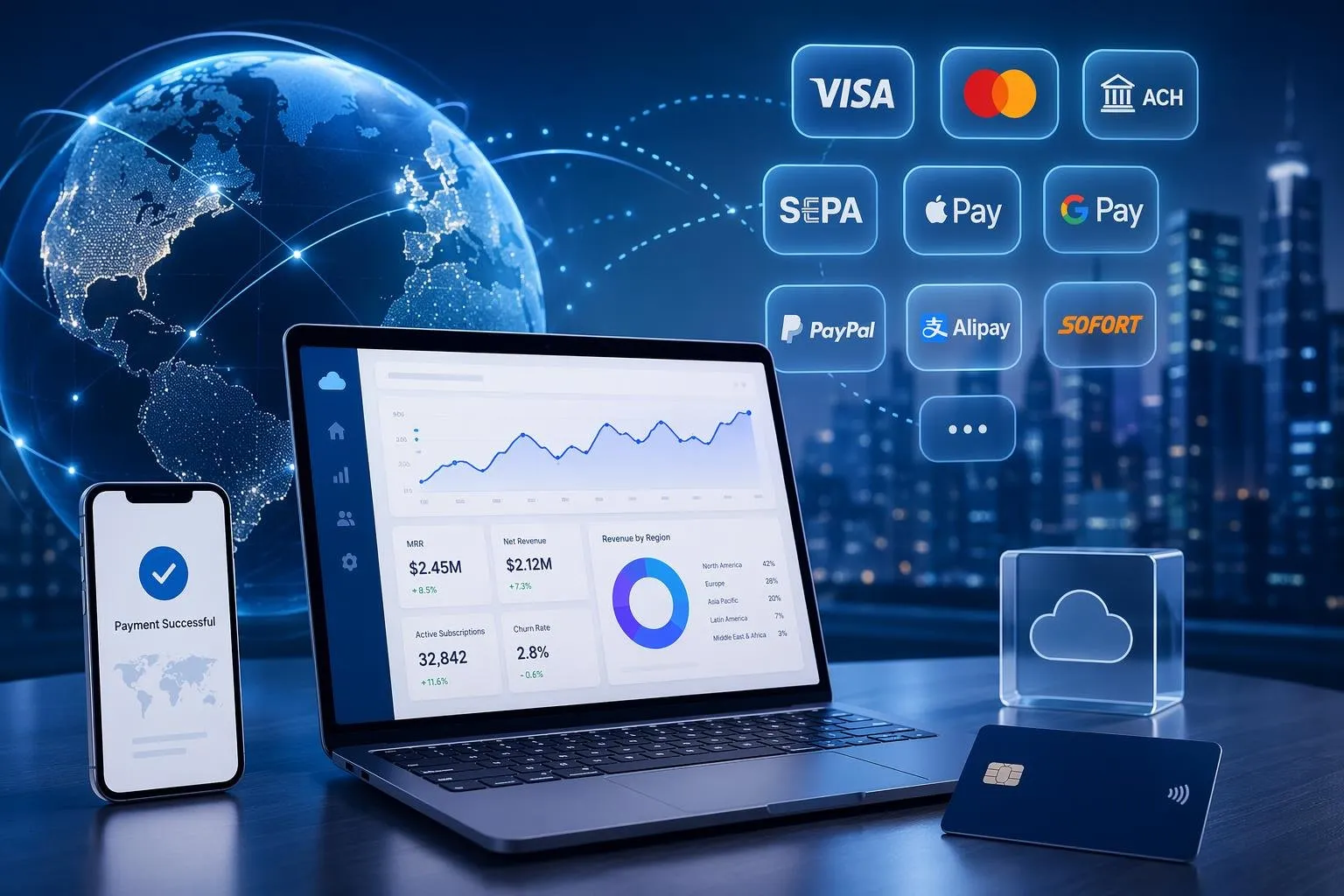
Payments are not a background noise for SaaS companies. Payments affect conversion, retention and margins. They also influence finance operations. The market for global payment services for SaaS is increasingly complex, driven by cross-border compliance and shifting local payment preferences. There are also pressures on unit economics. The finance team, the CFO, and founders need more than just card acceptance. Top-tier providers optimize recurring billing through advanced tokenization; for example, Antom's encrypted tokens support 19 global payment methods, boosting subscription success rates by up to 20%. Implementing the right B2B payment gateway early is critical to prevent fee leakage and reduce involuntary churn. The right provider will improve conversion rates, reduce failed payment, and help global expansion be less fragile. The wrong provider can lead to fee leakage, compliance issues, and reconciliation headaches that are late to appear. Built for global scale, Antom aggregates over 300 local payment methods and 140+ currencies across 50 markets, allowing SaaS companies to offer highly localized checkouts. Review Antom’s comprehensive localized payment methods or contact our expert team for a customized gateway fit evaluation.
In 2026, the evolution of global payment services for SaaS
From Card Processing Infrastructure to Revenue Infrastructure
Many SaaS companies chose a payment processor primarily for the basic card processing. This approach is no longer relevant. When evaluating the best global payments for SaaS, remember that modern payment infrastructure acts as a core revenue engine rather than just a back-office tool. Payment infrastructure is now closer to revenue operations rather than back-office finances. A SaaS company that sells project management software across North America, Southeast Asia and Europe might need different payment experiences for each region. Customers in different markets may use cards, wallets, or bank-based payment methods, while local currency is displayed almost everywhere.
Why localization affects conversion
Localization of payment means using the currencies, methods and checkout flows that are trusted by buyers in your market. This is basically speaking the customer's language. A card-only checkout severely hurts conversions in regions like Asia, where local payment preference reaches 72% in India and Indonesia. Offering localized wallets is critical for SaaS companies expanding into these hyper-growth markets.This is especially important in B2B SaaS, where larger ticket sizes make each lost transaction costly, making localized payment methods essential for companies expanding into multiple regions.
Core Payment Concepts
Three payment concepts are most important:
Payment Gateway Payment gateways securely transmit payment data between buyers, merchants, and financial institutions. A payment gateway is the digital link between settlement and checkout. Gateway performance impacts authorization rates, checkout speeds, and reliability.
Cross-Border Payments: Cross-border payment occurs when the buyer and seller are in a different country or currency. They involve usually more banks, rules and fees. This can lead to higher decline rates, FX fees, and reconciliation costs.
Merchant of Record vs. Gateway Model: The merchant is still responsible for tax, compliance and billing. The Merchant of Record model assumes more of this burden. Suppliers like PayPro Global Gateway-first providers might focus on orchestration and payment acceptance, while broader compliance is their main focus.
Key Factors When Choosing a B2B Payment Gateway for SaaS
Vendor Selection Framework
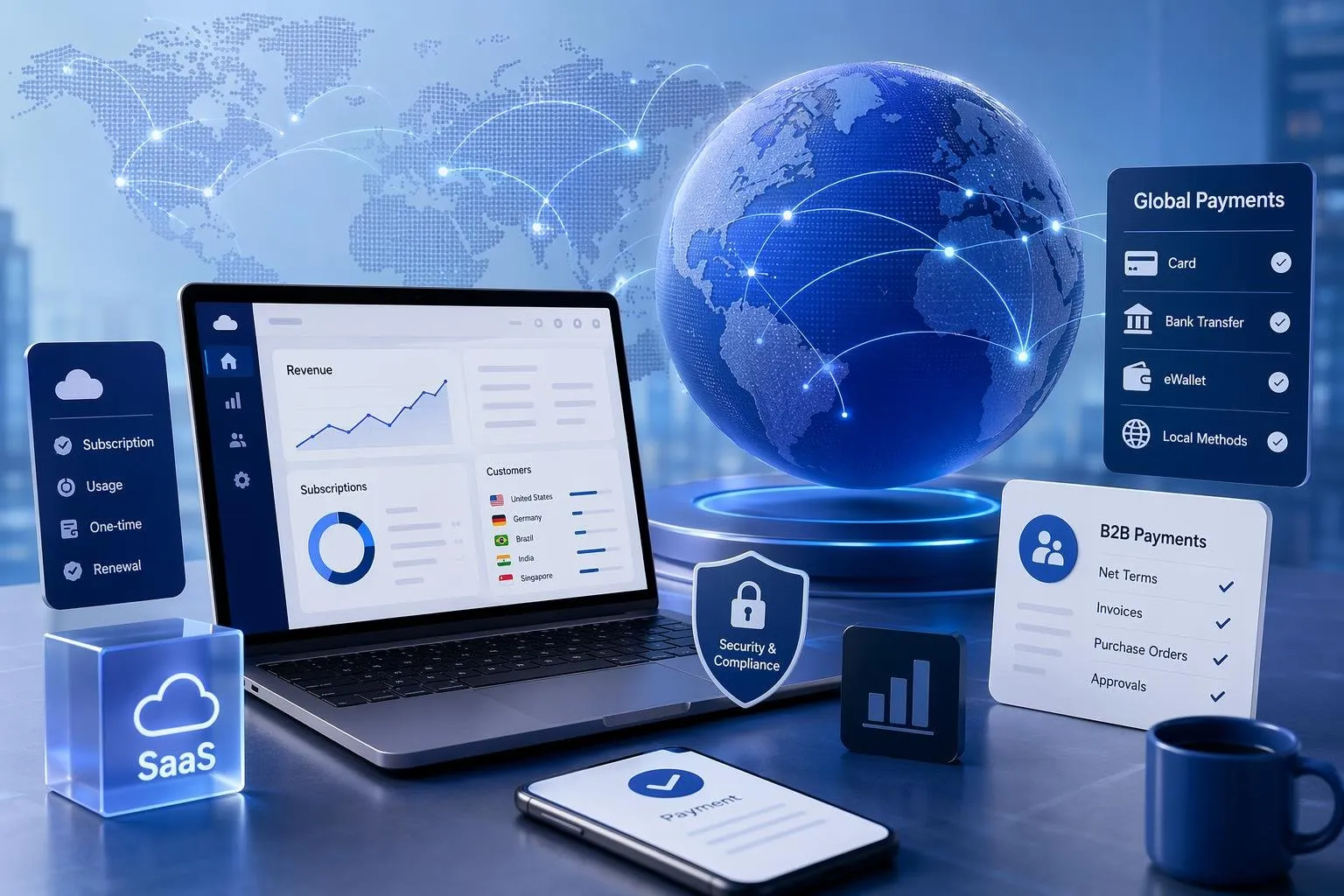
Choosing the best payment gateway for SaaS in 2026 requires a structured evaluation; use the framework below to compare vendors and avoid chasing low headline rates while ignoring operational pain.
Criterion | What To Look For | Common Pitfalls | Business Impact |
Global Coverage | Regional reach, local acquiring, local methods, multi-currency support | Assuming cards alone are enough | Higher conversion in target markets |
Recurring Billing Fit | Subscription support, retries, tokenization, account updater compatibility | Using tools built for one-time ecommerce | Lower involuntary churn |
Integration Flexibility | APIs, hosted checkout, documentation, sandbox quality | Underestimating engineering effort | Faster launch and lower implementation cost |
Fee Transparency | Clear pricing for processing, FX, refunds, chargebacks, payouts | Focusing only on base MDR | Better margin forecasting |
Reconciliation And Reporting | Finance-grade exports, settlement detail, tax-ready reports | Manual matching across systems | Faster close and fewer financial errors |
Risk And Compliance | Fraud tools, SCA support, data security, dispute workflows | Treating compliance as an afterthought | Lower fraud losses and smoother scaling |
Additionally, securing transactions with millisecond AI decision models, like Antom Shield, ensures you intercept fraud without declining legitimate buyers.
Unlike legacy systems that take months to deploy, Antom streamlines onboarding with its AI Copilot, enabling SaaS merchants to complete API integration and start testing in under 30 minutes.
Match the Gateway to Your SaaS Model
The right gateway depends on your SaaS model. A vertical SaaS platform serving SMBs may care most about embedded UX, broad payment method coverage, and self-serve onboarding. An enterprise SaaS vendor may care more about invoice-linked payment flows, stronger controls, and multi-entity reporting.
Use these practical filters:
Consider your average contract value.
- Map your top three expansion markets.
- Estimate recurring versus one-time revenue mix.
- Identify your finance team’s tolerance for manual operations.
- Review which payment failures hurt retention most.
Prioritized by Growth Market
Prioritize local acceptance and method depth if you plan to enter Asia or other diverse markets. Prioritize reporting and fee transparency if your finance team has a small size. If subscriptions are the main source of revenue, then optimize for recurring payments and billing. Evaluate your current payment infrastructure against local market needs—contact the Antom team to explore tailored routing and localized payment strategies for your SaaS.
How to decode B2B payment gateway fees
You Can Get More Than Just the Headline Rate
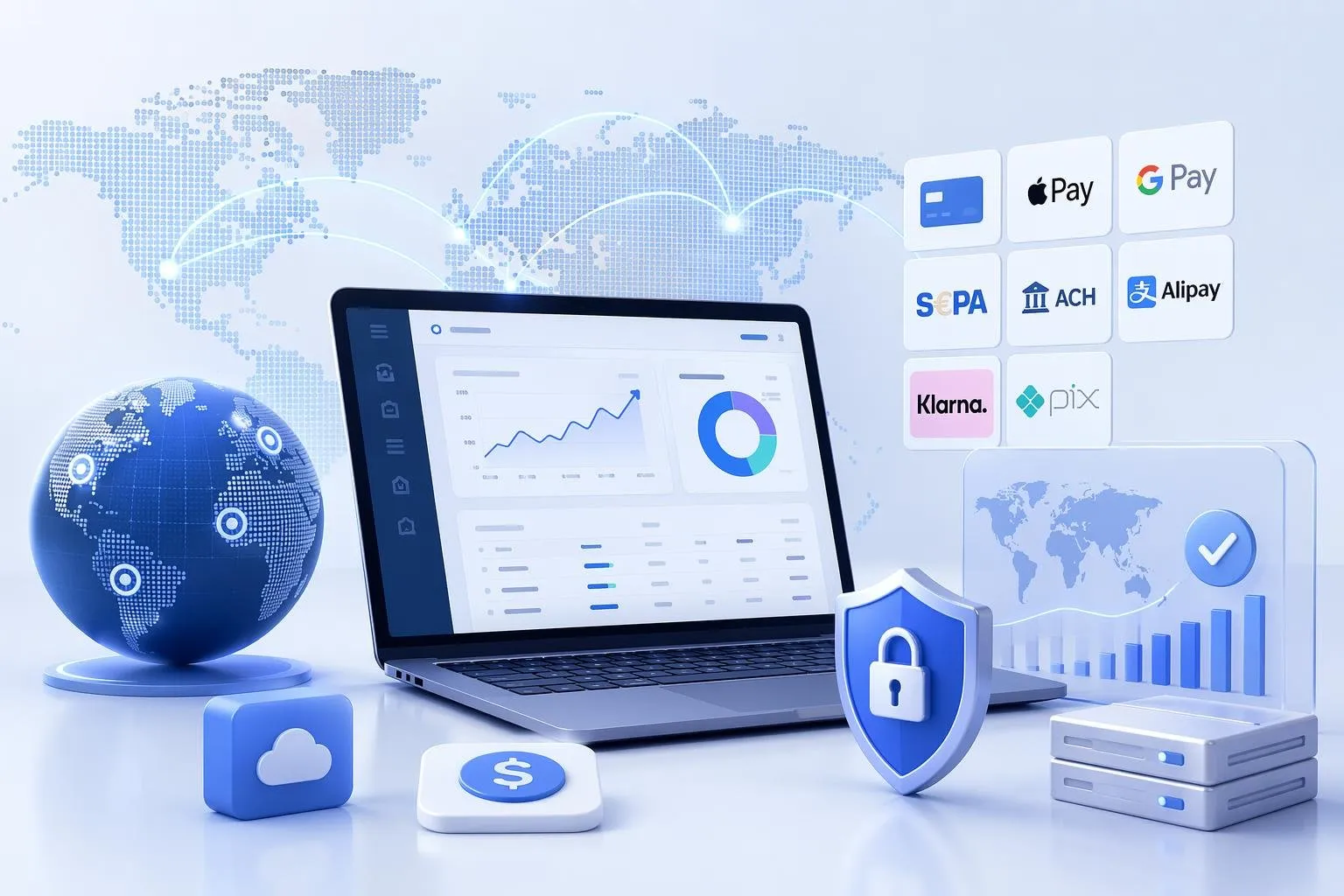
Most finance teams only compare providers based on a standard rate of processing. This creates blind spots. When evaluating B2B payment gateway fees, SaaS founders must look beyond headline processing rates to uncover hidden cross-border markups. Included in these fees are cross-border markups and currency conversion spreads. They also include chargeback fees, reimbursement costs, payout charges, setup fees or platform fees. Once volume increases, even a small percentage hidden can be important. For reference, public markets examples vary. Chargebee's overview Some providers, like GoCardless, use a percentage-based pricing system with caps. Paddle B2B Payments Guide Pay-as-you-go pricing is discussed in terms of 2.9% + $0.30. Pricing depends on geography and volume.
Main Cost Categories
The following are the key cost categories:
Processing Fees: Base charges for each transaction include a percentage or a fixed amount.
Cross-Border and FX fees: Charges that are applied when a buyer pays in a different currency or country. Charges that are applied when a buyer pays in a different currency or country.
Dispute And Chargeback Fees: Costs associated with transaction disputes. Even low dispute rates can add to B2B payments. Operational costs: Costs are not always charged by the gateway. Profitability is also affected by manual reconciliation, engineering maintenance and failed payment recovery.
Fee Area | Questions To Ask | Risk If Ignored | Margin Protection Move |
Base Processing | What is the rate by payment method and region? | Mispriced CAC-to-LTV assumptions | Negotiate by volume and geography |
FX Spread | Is conversion at mid-market or marked up? | Hidden revenue leakage | Ask for FX transparency |
Cross-Border Surcharge | Which markets trigger extra costs? | Expansion becomes unexpectedly expensive | Model fees by country mix |
Refunds And Chargebacks | Are fees returned or retained? | Support-heavy accounts become less profitable | Improve billing descriptors and dispute workflows |
Payout Timing | When are funds settled? | Cash flow pressure | Align payout terms with payroll and vendor cycles |
Quarterly Fee Audit Process
Auditing SaaS Payment Costs:
Export Monthly settlement reports can be used to gather transaction data from gateways and billing tools. You should be able to see the payment volume by market, as well as refunds and disputes.
Segment Spreadsheet modeling or BI tools can be used to model payments by region, currency and customer type. This chart shows how failed payments and cross-border fees reduce margin.
Compare A true-cost model can be used to compare rates between providers or payment methods. This will reveal if your blended real cost is higher than your target threshold.
Prioritize This matrix will help you identify optimization opportunities for finance and product teams. This will create an action plan to address routing, localization or contract renegotiation. Run this audit quarterly and not annually. Market expansion and payment mixes change more quickly than most teams anticipate, and stale assumption can be costly.
Antom is a strong global payment partner for SaaS expansion
What SaaS teams need in 2026
If you are searching for the best payment gateway for SaaS in 2026, Antom provides the localized coverage, intelligent routing, and unified reporting required to scale safely. It allows businesses to access local and global payment methods, facilitate cross-border transactions and create a customer-friendly experience in new markets. This combination is ideal for SaaS businesses expanding internationally. It can help them improve their operational readiness and conversion rates.
Capability | Antom | Generic Card-Only Gateway | MOR-Focused Provider |
Local Payment Methods | Strong emphasis | Limited | Varies |
Cross-Border Reach | Designed for international growth | Moderate | Strong |
SaaS Localization Support | High | Low to medium | Medium |
Finance Visibility | Depends on implementation, but enterprise-oriented | Often basic | Medium |
Compliance Scope | Payment-focused support | Limited | Broadest in MOR model |
Best Fit | Global SaaS expansion | Early domestic SaaS | Teams wanting outsourced commercial ops |
Where Antom Can Create Advantage
Antom has three strategic advantages:
Localized Checkout: To eliminate cross-device checkout friction, Antom’s "Scan to Link" feature compresses the typical 40-second manual entry process into a 6-second, zero-jump experience.
Cross-Border Readiness: Antom was designed for companies that serve customers in multiple countries, which is important for SaaS teams with rapid growth.
You can pay by any method you choose: If localized payment acceptance for your business is important, review the current system. Review Antom’s payment methods or use our contact page to discuss your expansion plan.
Case Study: Scaling cross-border SaaS revenue with Antom
Expansion Challenge
Imagine a SaaS workflow automation company with headquarters in the US. It begins selling in Hong Kong, Singapore and Germany. The company receives a lot of demo requests, but the checkout conversion rate is low outside its home market.
In some regions, card-only checkouts are not as popular.
It is difficult to predict the cost of FX and other cross-border fees.
Manual multi-currency reconciliation drains finance teams. Utilizing a unified Global Payment Orchestration (APO) platform like Antom automates reporting, increasing reconciliation efficiency by 90%.
Rollout Plan
The company evaluated providers using the above criteria and chose Antom because of its cross-border capability and broader local support for payments.
Add market-relevant payment options
Where possible, display local currency prices.
Metrics for tracking authorization, dispute and settlement by country.
Standardizing the monthly financial reporting
Business outcome
In just two quarters the company will see:
Priority regions should have better checkout completion.
Increased visibility of blended payment costs
Reduced finance workload at the monthly close.
Launching in new markets is easier with a clearer plan.
This example illustrates why choosing the right global payment services for SaaS strategy early is vital for business growth. Do not wait until expansion friction starts to appear and steal time.
FAQ
B2B Payment Basics
Q: What sets a B2B payment gateway apart from standard ecommerce processors?
Unlike standard retail checkout portals, a dedicated B2B payment gateway handles higher transaction limits, complex multi-entity reporting, and invoice-linked recurring payments essential for enterprise SaaS.
Q: How should SaaS companies evaluate B2B payment gateway fees?
Do not just compare baseline processing rates. A true evaluation must include FX spreads, cross-border surcharges, dispute resolution costs, and the internal operational overhead of manual reconciliation.
Global SaaS Payment Strategy
Q: What is the best payment method for SaaS globally in 2026?
The best solutions combine localized methods with global reach, recurring bill compatibility, robust reporting and predictable economics. Your growth markets and financial maturity will also determine the right fit.
Q: Is Antom the best choice for SaaS cross-border expansion?
Antom can be a good option for businesses that require a wide range of payment methods and want to support their international expansion. This is particularly important when conversion depends on localization.
Q: When is it time for a SaaS provider to rethink their payment provider?
If you notice that your margins are being affected by fee creep, rising failures to pay, problems with reconciliation or a rise in failed payments, reevaluate.
Final Recommendation
If you are looking for the best payment gateway for SaaS in 2026, your evaluation must prioritize market fit, recurring billing capabilities, and true fee transparency. Antom is an ideal partner for founders and CFOs looking to scale internationally without sacrificing local buyer trust. Explore Antom's supported payment methods, or contact our team to build a tailored global expansion strategy today. Explore supported payment methods Or contact Antom to discuss your expansion plan.