
Share on
What Is the Primary Purpose of a Digital Wallet? How It Powers Modern Payments
Digital wallets are no longer niche tools for early adopters. In the United States, they have become a core payment interface across retail, e-commerce, and mobile commerce. According to the Federal Reserve Financial Services’ 2025 Diary of Consumer Payment Choice, 23% of U.S. consumer payments were made via mobile phones in 2024—a share that has increased each year since 2021. This trend highlights continued growth in digital-initiated transactions as mobile payment methods become a larger part of overall payment behavior.
Understanding what is the primary purpose of a digital wallet matters because these tools are not just “apps that hold cards.” They are infrastructure. They sit at the intersection of security, speed, authentication, and commerce optimization. When used correctly—by consumers and businesses—they reduce friction and strengthen transaction integrity simultaneously.
The point is not novelty. The point is control, efficiency, and trust in digital transactions.
What Is the Primary Purpose of a Digital Wallet?
At its core, the answer to what can a digital wallet be used for is straightforward:
A digital wallet exists to enable secure, fast, and seamless digital transactions—online, in-app, and in-store—without requiring users to expose or repeatedly enter sensitive payment credentials.
Everything else is secondary.
Enabling Fast and Convenient Digital Payments
The most visible function of a digital wallet is transaction initiation. It replaces the physical wallet and eliminates repeated data entry.
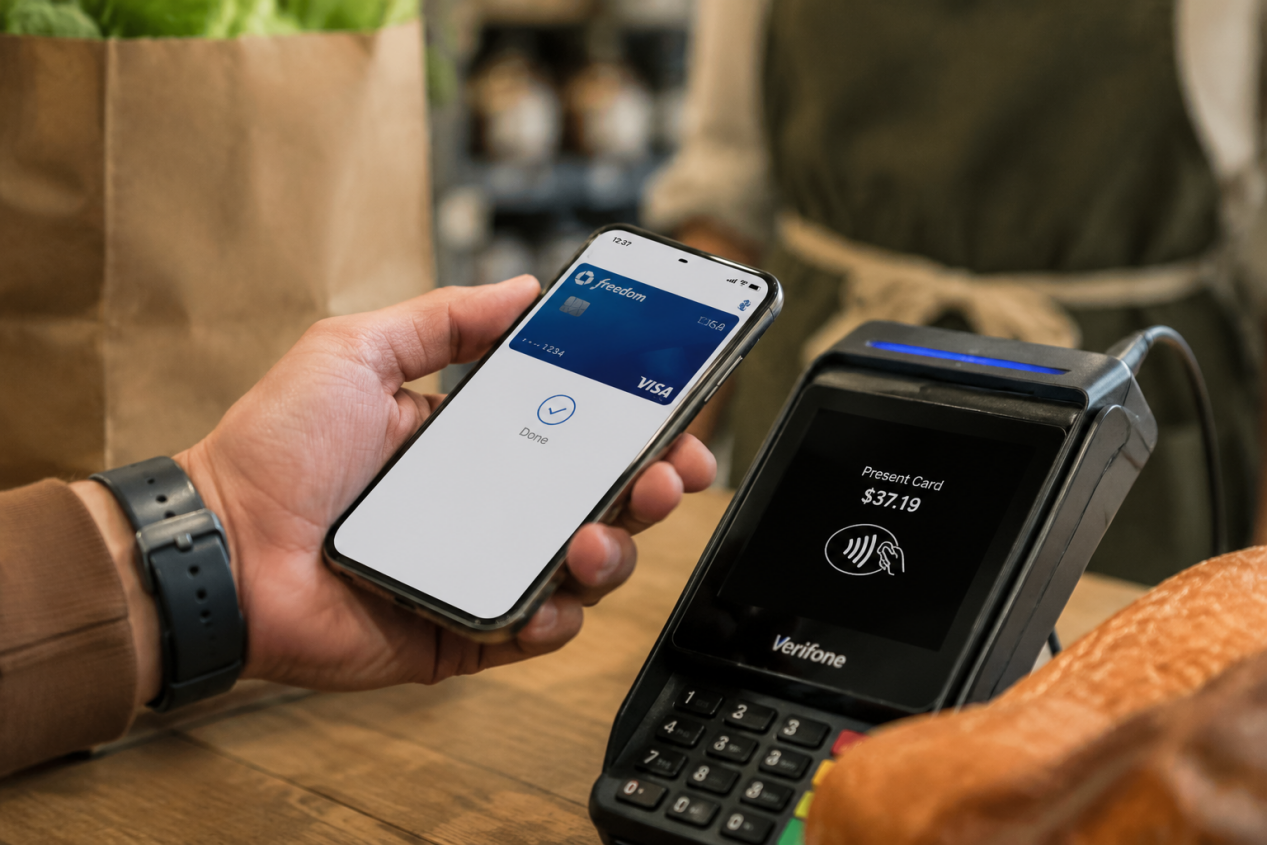
In physical retail, a mobile wallet enables tap-to-pay using NFC (near-field communication). Online, it eliminates manual card number input. In-app, it allows one-tap authorization.
Speed here is not cosmetic. It is structural. According to Baymard Institute (2024), the average cart abandonment rate remains above 70%, and complicated checkout processes are a major driver. Streamlining checkout through wallet-based payment options directly reduces friction at the most fragile point of conversion.
In real use, digital wallets shorten transaction time, reduce cognitive load, and minimize input errors. That is their primary job.
They compress the payment experience into an authenticated confirmation rather than a data-entry event.
Enhancing Payment Security Through Encryption and Tokenization
Convenience without security would be irresponsible. Security is not a side feature; it is central to the purpose of a digital wallet.
Modern digital wallets rely on tokenization. Instead of transmitting the actual card number, the wallet generates a unique token tied to that specific device and transaction context. Even if intercepted, that token cannot be reused.
Biometric authentication—fingerprint, facial recognition—adds another layer. The wallet does not just store credentials; it controls access to them.
It’s clear in real use that digital wallets narrow the attack surface compared to repeated card entry across multiple websites.
Simplifying Online and Mobile Checkout Experiences
E-commerce performance is unforgiving. Every additional form field increases drop-off risk.
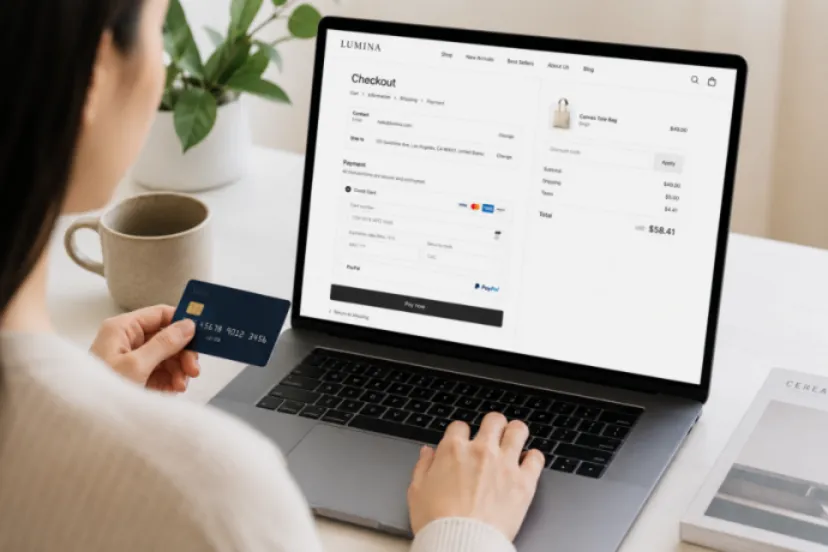
Digital wallets reduce checkout from a multi-step process to a single authentication event. Shipping information, billing credentials, and stored preferences can be securely auto-filled.
For merchants, what is a digital wallet used for? The most immediate operational answer is improving conversion rates.
At Antom, we’ve seen merchants improve authorization rates and reduce abandonment simply by offering wallet-native checkout options. It is not about adding more buttons. It is about reducing friction at scale.
Beyond Payments: Secondary Functions of a Digital Wallet
Payments are the foundation. But businesses and users often ask: what else can a digital wallet be used for beyond transactions?
Storing Non-Payment Digital Assets
Digital wallets now store boarding passes, event tickets, digital IDs (in select states), and access credentials.
The design principle remains the same: authenticated, secure, mobile-first access to digital assets.
Supporting Loyalty and Rewards Programs
Wallets increasingly integrate loyalty credentials and reward balances.
For businesses, this matters because it connects payment with retention strategy. The wallet becomes not just a transaction tool but a customer lifecycle tool.
From a commerce perspective, loyalty integration reduces the gap between payment and engagement.
Enabling Peer-to-Peer (P2P) Transfers
P2P transfers are another extension.
According to the Consumer Financial Protection Bureau (2023), more than three-quarters of U.S. adults have used a payment app with peer-to-peer capabilities, enabling instant transfers between individuals without exposing bank details.
Again, the purpose remains transactional efficiency—just between individuals rather than consumer and merchant.
Budgeting and Transaction Tracking
Transaction histories, spending categorization, and alerts allow users to monitor behavior in real time.
This is not full financial planning. But it is functional transparency.
Supporting Cross-Border and Multi-Currency Payments
Cross-border e-commerce continues to grow. According to the OECD (2024), digital transformation has significantly reduced the costs and barriers of participating in international trade, reshaping what and how goods and services are traded globally.
Wallets that support multi-currency settlement simplify cross-border purchasing without requiring users to manage currency conversions manually.
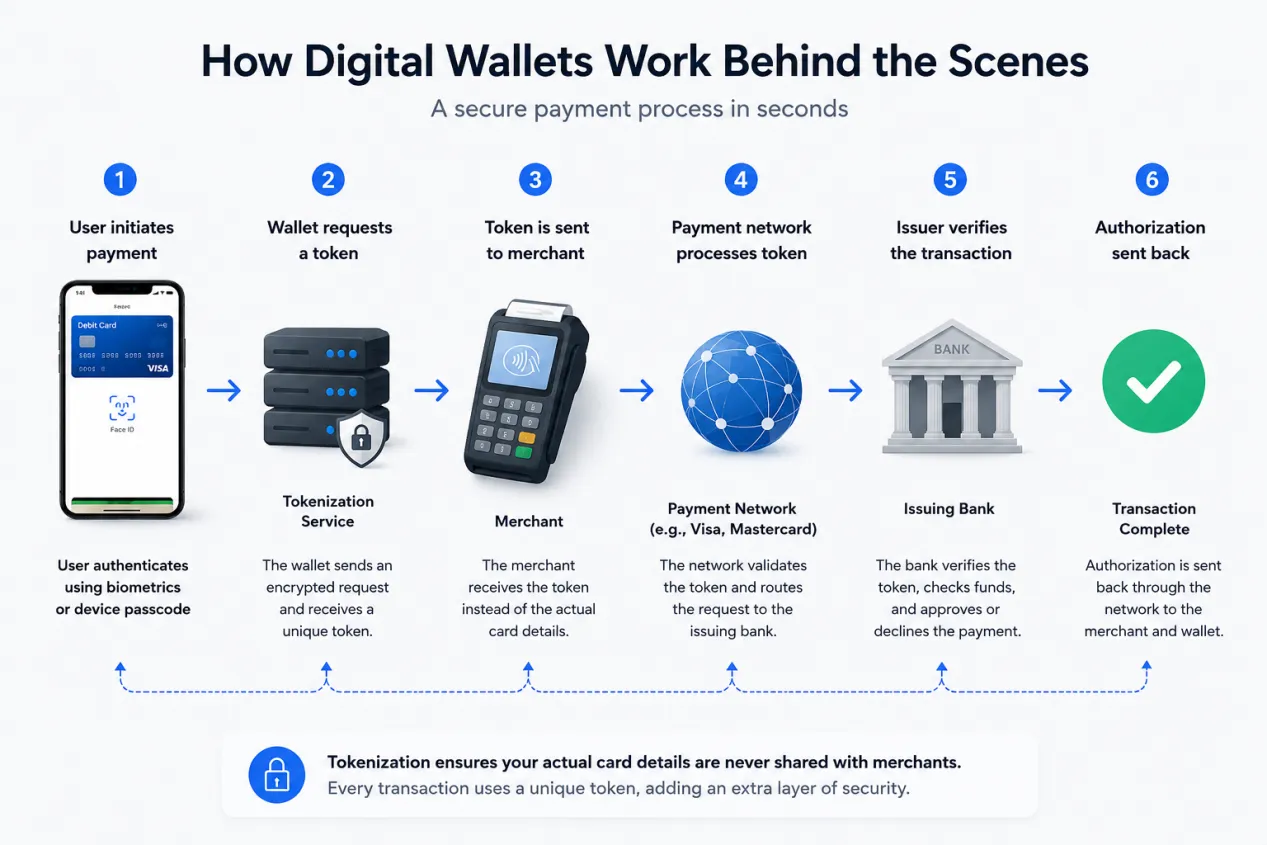
How Digital Wallets Work Behind the Scenes
Users see a tap. Businesses see a confirmation. Underneath, there is infrastructure.
Linking Payment Methods to a Wallet
Users connect credit cards, debit cards, bank accounts, or stored-value balances.
The wallet does not physically “store” the card number in plain text. Instead, it registers credentials with a secure vault environment.
Tokenization and Secure Data Transmission
When a payment is initiated:
- The wallet requests a transaction token.
- The token replaces the real card number.
- The merchant receives the token.
- The payment network maps the token back to the original funding source securely.
This is why digital wallets reduce exposure. Sensitive credentials are not repeatedly transmitted.
Authentication Methods: Biometrics, PINs, and Multi-Factor Security
Authentication ensures the wallet holder is the authorized user.
Biometrics reduce reliance on static passwords. Multi-factor authentication adds layered protection.
Security here is dynamic. It adapts to risk context—device trust, transaction amount, behavioral signals.
Types of Digital Wallets and Their Different Purposes
Not all wallets serve identical objectives.
Closed Wallets (Retailer-Specific Wallets)
Closed wallets are issued by a single merchant and usable only within that brand’s ecosystem.
Examples include Starbucks Rewards and many airline or gaming platform wallets. Users preload funds or earn stored value that can only be redeemed with that company.
The purpose is retention and balance control. Preloaded funds reduce payment friction and increase repeat purchasing. For merchants, this model lowers transaction costs and strengthens customer lock-in. It is designed for ecosystem depth, not broad interoperability.
Semi-Closed Wallets
Semi-closed wallets operate across a limited network of merchants but are not universally interoperable.
Examples include certain marketplace wallets or regional super-app ecosystems where users can pay multiple affiliated merchants without full banking integration.
The purpose here is controlled flexibility. Businesses expand acceptance while maintaining oversight of fund flows and settlement structures. This model works well where regulatory constraints or network strategy require boundaries.
Open Wallets
Open wallets connect directly to banks and card networks.
Examples include Apple Pay, Google Pay, and PayPal. These wallets can be used across most merchants that support card network payments.
Their purpose is universal enablement—online, in-store, cross-border. They prioritize interoperability, tokenization, and scale.
If the objective is broad commerce participation rather than ecosystem confinement, open wallets are the structural solution.
Benefits of Digital Wallets for Consumers
Speed and Convenience
Tap, authenticate, confirm. That description is accurate—but incomplete.
Digital wallets compress multiple layers of friction: no manual card entry, no repeated billing forms, no physical wallet retrieval, no signature verification. In e-commerce, they eliminate 12–16 fields of input. In-store, they reduce transaction time and minimize terminal interaction.
Digital wallets reduce both time and cognitive load. The experience becomes authorization—not data entry.
Reduced Fraud Risk
Tokenization replaces static card numbers with device-specific credentials. Biometric authentication limits unauthorized access even if a device is lost.
This shifts security from “protect the number” to “control the authentication layer.” For consumers, that means fewer compromised credentials circulating across merchant databases. Risk does not disappear, but exposure narrows meaningfully.
Contactless and Mobile-First Payments
Mobile-first behavior is dominant among younger U.S. demographics. Wallets align with that behavior instead of forcing fallback to plastic cards.
Contactless capability also reduces terminal friction and improves checkout throughput—an operational advantage that consumers feel immediately.
Integration with Loyalty Programs and Rewards
Wallets centralize payment credentials and loyalty IDs. Points accumulation, digital coupons, and stored balances apply automatically. Consumers do not need separate apps or physical cards. Payment and engagement converge.
Why Digital Wallets Matter for Businesses in the US
The consumer benefit is only half the story. Wallets reshape merchant economics.
Improving Checkout Conversion Rates
Every additional form field increases abandonment risk. Wallet checkout reduces friction at the exact moment purchase intent peaks. At scale, even modest percentage improvements translate into material revenue lift.
Expanding Global Payment Acceptance
Open wallets allow U.S. merchants to accept internationally preferred payment methods without forcing customers into unfamiliar bank transfers. At Antom, we’ve seen wallet-native flows significantly improve cross-border authorization rates.
Reducing Fraud and Chargebacks
Tokenized payments and strong authentication lower dispute frequency. Fraud prevention becomes structural—embedded in the transaction layer—rather than dependent solely on post-transaction review.
Supporting Cross-Border E-commerce Growth
Cross-border commerce introduces currency, settlement, and trust complexity. Wallet infrastructure simplifies multi-currency handling and standardizes authentication logic across markets.
For U.S. businesses, digital wallets are not cosmetic payment options. They are infrastructure that influences conversion, fraud exposure, and international scalability.
Merchants can streamline global payments and unlock growth using AI-powered platforms like Antom, supporting hundreds of payment methods(including global and local digital wallets), multiple currencies, and real-time fraud protection, enabling secure, seamless transactions worldwide.
Digital Wallets vs. Traditional Payment Methods
Digital Wallet vs. Credit Card
A digital wallet is not a replacement for a credit card—it is a different control layer on top of it.
The credit card is the funding instrument. The digital wallet is the authentication and security interface.
When a physical card is used, the card number is transmitted to the merchant (even if encrypted). When a wallet is used, a token replaces the card number, and biometric authentication verifies the user. That reduces credential exposure and limits reuse risk.
From a consumer perspective, the difference is subtle. From a fraud and data-security perspective, it is structural.
Digital Wallet vs. Bank Transfer
Bank transfers often require manual routing details, delayed settlement, and limited buyer protection depending on the rail used.
Wallet-based transfers typically abstract those details. Authorization is near-instant, confirmation is immediate, and the user experience is simplified. The wallet manages the complexity behind the interface.
Are Digital Wallets Replacing Physical Wallets?
Not entirely.
Physical cards remain relevant in offline environments and among demographics less inclined toward mobile-first behavior. But payment initiation is increasingly digital-first.
The shift is not about eliminating plastic—it is about shifting control from static credentials to authenticated digital access.
Conclusion
So, what is the primary purpose of a digital wallet? It is to enable secure, fast, and seamless digital transactions through authenticated, tokenized payment infrastructure.
Everything else—loyalty integration, P2P transfers, budgeting tools—is secondary. The wallet’s real value lies in reducing friction while strengthening security at the transaction layer.
For consumers, that means speed and protection. For businesses, it means higher conversion, lower fraud exposure, and scalable cross-border capability.
Digital wallets are not cosmetic payment options. They are foundational commerce infrastructure in a mobile-first economy.
FAQs
What is the main purpose of a digital wallet?
The main purpose of a digital wallet is to enable secure, fast, and seamless digital transactions while minimizing exposure of sensitive payment credentials. Instead of repeatedly sharing card numbers or bank details, users authenticate once through a secure interface. The wallet manages encryption, tokenization, and authorization behind the scenes, reducing friction and strengthening transaction control.
Which is safer: credit card or digital wallet?
A digital wallet typically adds an extra security layer on top of a credit card. While the credit card remains the funding source, the wallet replaces static card numbers with tokenized credentials and requires biometric or device-level authentication. This reduces the risk of credential theft and unauthorized use, particularly in online and contactless environments.
How do digital wallets make online payments faster?
Digital wallets streamline checkout by eliminating manual data entry. Billing details, shipping information, and payment credentials are securely stored and retrieved instantly. With one-tap authentication—often biometric—the transaction shifts from a multi-field form process to a confirmation step. This shortens checkout time and reduces input errors that commonly interrupt purchase completion.
What is the difference between a mobile wallet and a digital wallet?
A mobile wallet is a subset of digital wallets, specifically accessed via smartphones or wearable devices. A digital wallet is broader in scope and can function across web platforms, desktop environments, or integrated payment systems. The distinction is about access channel, not capability—both facilitate secure, digital-first payment initiation.