
Share on
Consider two shoppers reaching the final stage of an online purchase.
Shopper A is asked to authenticate with a one-time passcode (OTP), such as an SMS OTP, email OTP, or push notification. The message is delayed, the checkout process is interrupted, and the shopper eventually gives up.
Shopper B is presented with passkey authentication. Instead of waiting for a code, the shopper authenticates using the same familiar method used to unlock their device, such as a fingerprint, facial recognition, or device PIN. Authentication is completed, and the checkout journey continues.
For merchants, authentication friction is more than a user-experience issue—it can translate directly into lost sales. One industry analysis estimates that SMS delivery failures can increase cart abandonment by 15-25% for businesses using SMS-based checkout authentication. [1]
Traditional payment authentication methods can introduce friction into checkout. One-time passcodes require shoppers to receive, retrieve, and enter a code before authentication can be completed.
The challenge for merchants is therefore not simply how to make authentication more secure. It is how to strengthen security without making legitimate shoppers work harder to complete a purchase.
Payment passkeys offer an alternative approach, replacing one-time passcodes with cryptographic credentials securely stored and protected on the shopper’s device. For merchants, this creates a compelling proposition: less authentication friction for legitimate shoppers and stronger protection against phishing and credential theft.
This is where solutions such as Visa Payment Passkey can play a role, bringing passkey authentication into the online payment experience.
1. How Does a Payment Passkey Work?
A payment passkey is a digital credential based on public-key cryptography that can be used to authenticate a shopper during a payment transaction.
When a payment passkey is created, a pair of secure authentication keys is established for authentication. A private key is securely stored and protected on the shopper’s device, while a corresponding public key allows the service to verify the authentication.
When the shopper confirms their identity using a fingerprint, facial recognition, or device PIN, a unique digital signature is generated and verified without the private key being transmitted over the network.
This is an important distinction from one-time passcodes: authentication relies on a unique digital signature rather than a code that the shopper must receive and enter.
As a result, payment passkeys are highly resistant to phishing and credential theft.
2. What Does the Visa Payment Passkey Experience Look Like?
Visa Payment Passkey applies passkey technology to online card payment authentication, bringing a familiar device-based authentication experience into the checkout journey.
For shoppers, this can make authentication feel like a natural part of checkout rather than an additional security hurdle. Eligible Visa cardholders can authenticate using a familiar device-unlock method, such as a fingerprint, facial recognition, or device PIN.
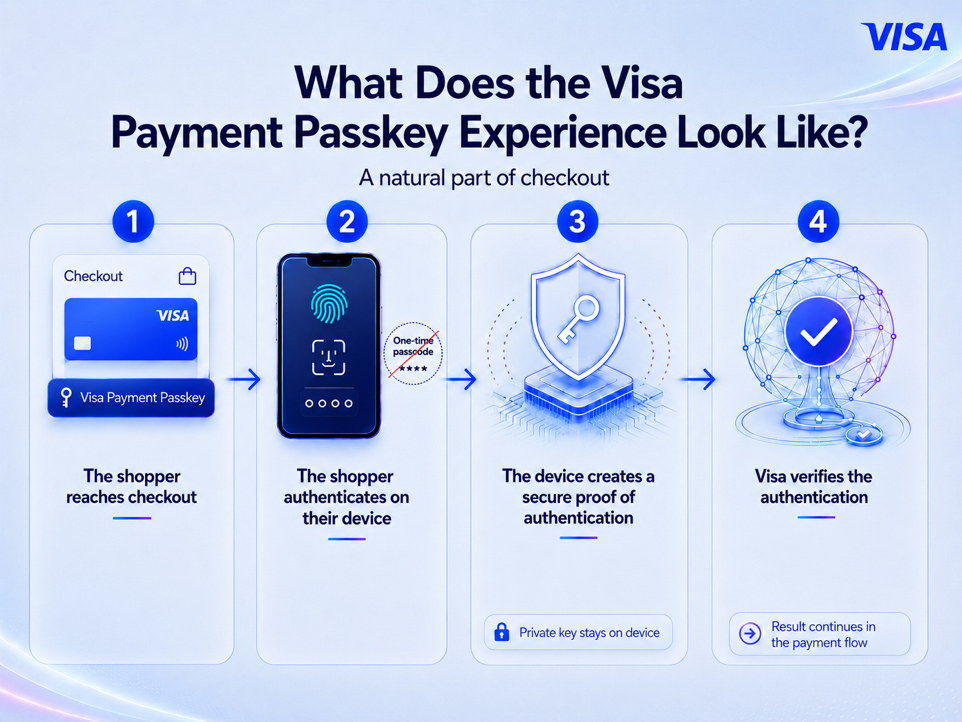
The experience can be understood in four steps.
1. The shopper reaches checkout
During an eligible online purchase, an enrolled Visa cardholder is prompted to verify their identity using Visa Payment Passkey.
2. The shopper authenticates on their device
Using a familiar method such as a fingerprint, facial recognition, or device PIN, the cardholder confirms it's really them.
3. The device creates a secure proof of authentication
After the cardholder authenticates, the device generates a unique digital signature for that transaction. The private key remains securely protected on the device and is never transmitted.
4. Visa verifies the authentication
Visa verifies the unique digital signature using the corresponding public key and returns the authentication result, which can then be used as part of the payment process.
Much of this complexity remains invisible to the shopper, who simply follows a familiar authentication interaction on their device.
For merchants, that means authentication can become a more seamless part of the purchase journey rather than an interruption to it.
3. What Are the Benefits of Visa Payment Passkey for Merchants?
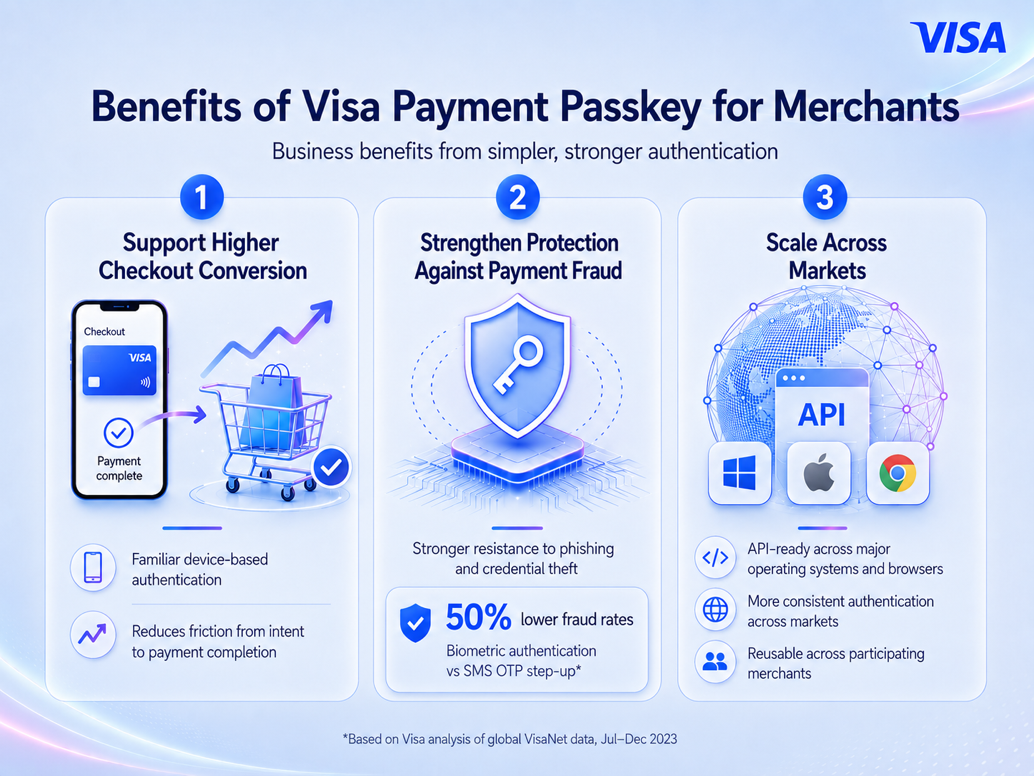
For merchants, Visa Payment Passkey can translate a simpler, more secure authentication experience into tangible business benefits.
Support Higher Checkout Conversion
By replacing one-time passcodes with familiar device-based authentication, Visa Payment Passkey can make it easier for eligible shoppers to complete payment authentication. Reducing friction at this critical stage of checkout can help create a smoother path from purchase intent to payment completion.
Strengthen Protection Against Payment Fraud
By strengthening resistance to phishing and credential theft, Visa Payment Passkey can help merchants reduce exposure to payment fraud. Visa’s analysis of global VisaNet data from July to December 2023 found 50% lower fraud rates with biometric authentication compared with step-up authentication using SMS OTPs.
Scale Across Markets
Designed for API integration and compatibility across major operating systems and browsers, Visa Payment Passkey can help merchants deliver a more consistent authentication experience across markets. Once enrolled, cardholders can use their Visa Payment Passkey across participating merchants without needing to register again.
4. Antom and Visa: Bringing Passkey Authentication Into the Checkout Experience
Antom and Visa are collaborating to accelerate the adoption of Visa Payment Passkey across global markets, helping merchants integrate passkey authentication into their payment journeys.
As payment passkey adoption grows, merchants that modernize their authentication strategies can be better positioned for the next generation of digital commerce.
Ready to explore what passkey authentication could mean for your checkout experience? Contact Antom or Visa to learn more about integrating Visa Payment Passkey into your payment journey.