


Share on
AI is reshaping the foundations of global commerce, from traffic acquisition to customer interaction, content creation, merchandising, and dynamic storefronts. Yet amid this wave of automation and intelligence, one truth remains unchanged: AI can attract customers, but only payments convert them. This final step is the “golden mile” where all upstream innovation must translate into real revenue.
Today, merchants face an accelerating shift in consumer expectations. AI-driven content, 24/7 virtual agents, and hyper-personalised shopping journeys dramatically increase front-end traffic, but also expose weak links in checkout flows, cross-border settlement, and risk management. As acquisition costs rise and attention spans shrink, every failed payment becomes a lost opportunity that no AI model can recover.
This is where Antom comes in. With deep expertise across payments, risk, FX, and global infrastructure, Antom ensures that AI-generated demand can be captured efficiently and securely. By optimizing authorisation, simplifying user flows, and accelerating cross-border settlement, Antom turns the “golden mile” from a bottleneck into a competitive advantage, helping merchants convert intelligence into income, and traffic into true business growth.
AI Is Reshaping Commerce, But Not Revenue
AI has rebuilt the front end of e-commerce at unprecedented speed.
Digital humans host multilingual livestreams. AI Agents deliver 1:1 personalised consultations. AIGC generates product visuals and videos in seconds. Traffic is bigger, cheaper, smarter.
But there’s a hidden paradox:
AI can create demand, but it cannot complete a transaction.
Many merchants now face a new bottleneck: massive AI-driven engagement, yet a drop-off in the payment step.
If traffic explodes while conversion stalls, merchants are left with the illusion of prosperity: high views, high clicks, low revenue.
This is why the “golden mile” , the point where the customer tries to pay, becomes the single most critical part of the AI commercial loop.
AI Is Rewriting the Core Logic of People, Product, and Place
People: Interaction Is Becoming Infinite, Personal, and Fully Autonomous
AI has redefined how brands communicate with customers.
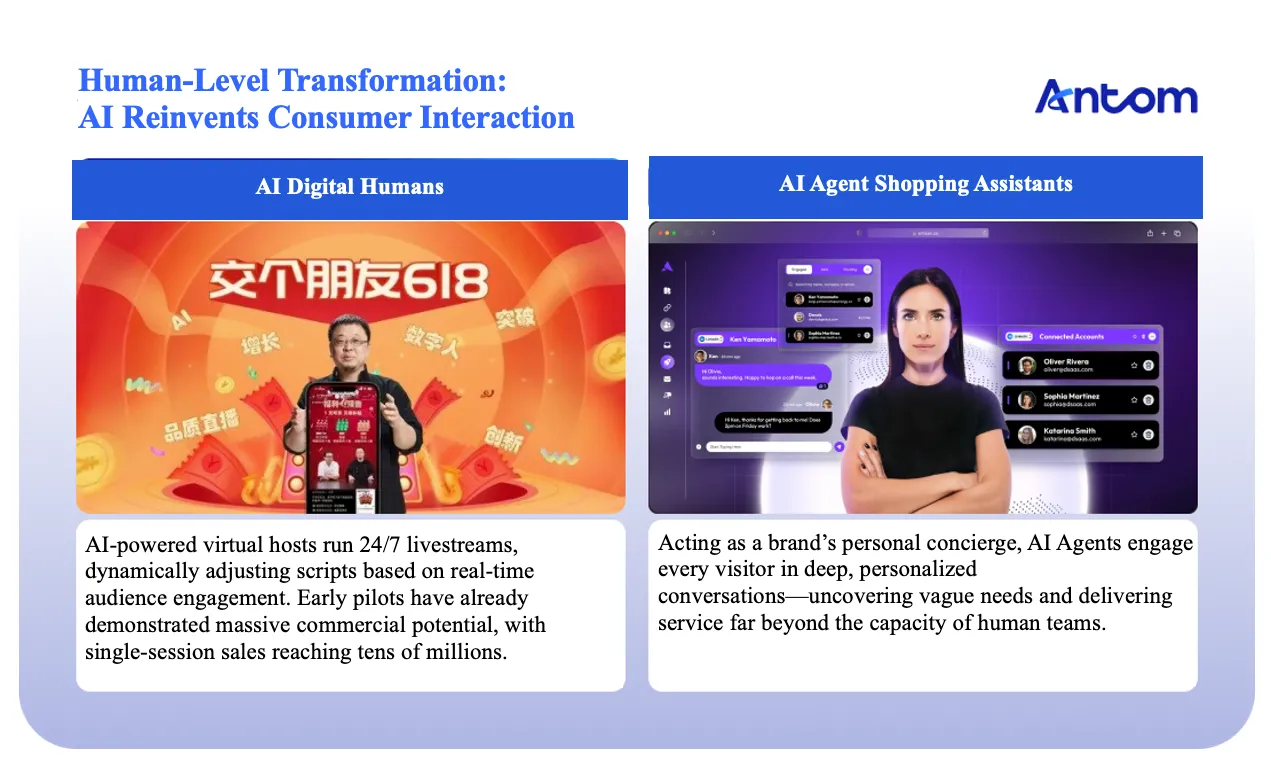
Digital humans can now host multilingual livestreams 24/7, adapting scripts in real time based on viewer reactions, unlocking engagement at a scale no human team can match.
At the same time, AI Agent sales assistants act as personal consultants, holding 1:1 conversations at depth, surfacing latent needs, and delivering service quality that exceeds traditional customer support.
The result:
Engagement is no longer constrained by time, manpower, or geography.
Product: AI Is Rebuilding Content, Creation, and Commerce Economics
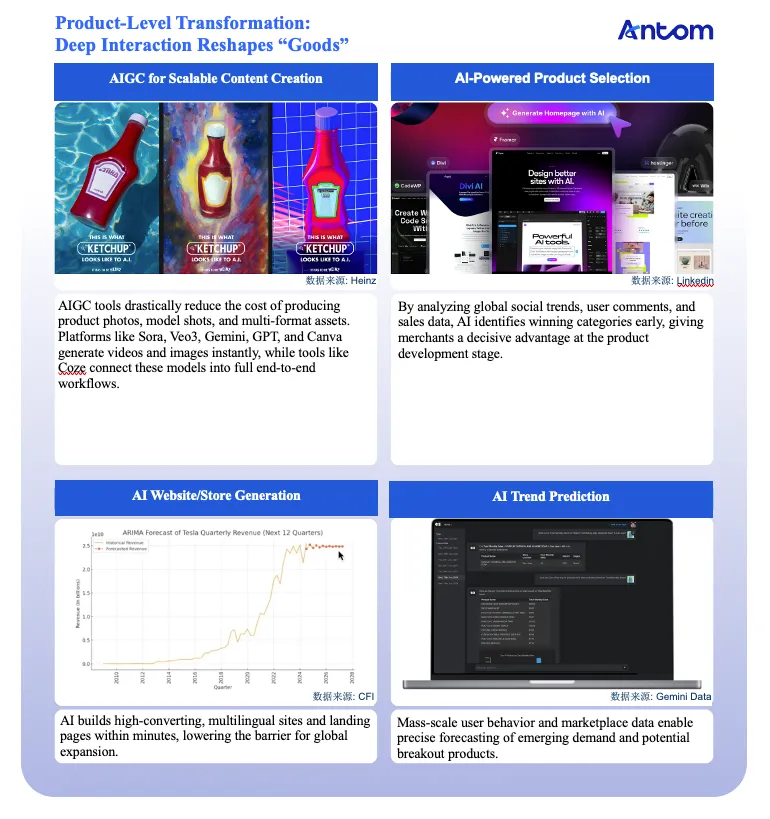
AIGC is collapsing the cost structure of product content creation.
Tools like Sora, Veo 3, or Runway can generate on-demand videos; GPT, Canva, and similar platforms produce product images in seconds; workflow engines like Coze seamlessly chain these tools together into automated production lines.
Meanwhile, AI-driven product selection engines analyse global social trends, reviews, and sales data to identify emerging demand, allowing merchants to spot breakout products before the market does.
The result:
Merchants can create, test, and localise products faster than ever before.
Place: AI Is Turning Every Touchpoint Into a Dynamic, Self-Optimizing Commerce Space
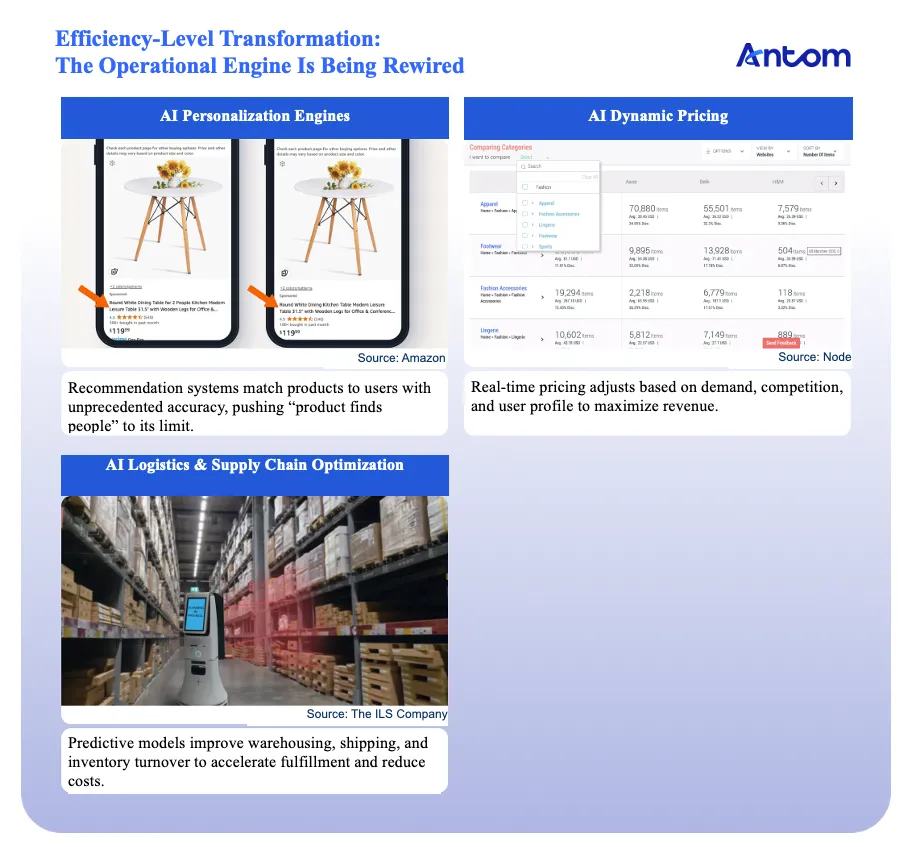
Recommendation engines now tailor product discovery at the individual user level, reshaping “search” into “match.”
Dynamic pricing models adjust in real time based on competition, inventory, and user behavior to maximise margins.
And across logistics and supply chains, AI systems optimize inventory movement, warehousing, and fulfilment.
The result:
Commerce becomes a living system, continuously adjusting to maximize efficiency and conversion.
Three Fundamental Transformations AI Brings to E-Commerce
I. AI Changes the Nature of Traffic: Turning Attention into Revenue
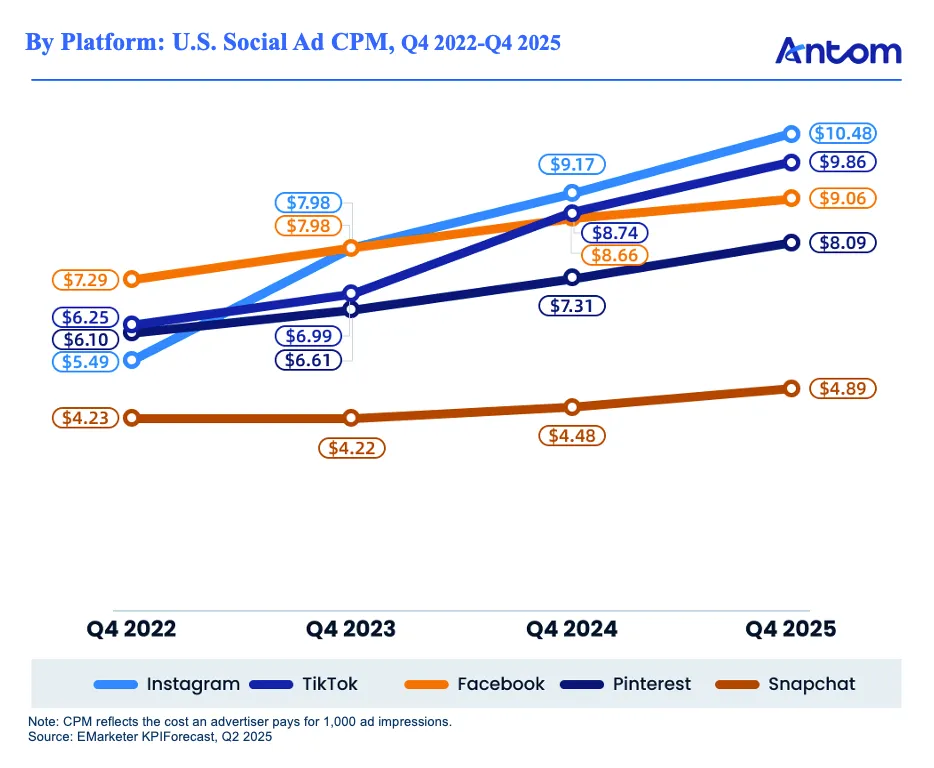
Over the past decade, business growth has relied on traffic acquisition. Brands have pushed products to potential customers through broad advertising campaigns. But this approach is losing effectiveness: costs are rising, ROI is declining, and consumers are increasingly immune to generic messages.
With AI Agents, a new paradigm has emerged: Conversational Commerce. By enabling deep, personalised interactions at scale, it is transforming the traditional marketing funnel.
AI Agents serve as the ultimate tool to scale personalisation:
- For consumers, AI delivers unprecedented convenience. Users simply express their needs in natural language, and the AI understands, recommends, compares, and even uncovers latent desires, saving time and simplifying decision-making.
- For merchants, operational focus shifts fundamentally. Beyond designing visually appealing websites, brands must ensure that product information is clearly understood by AI Agents, returning to the core of commerce: communicating value effectively.
Checkout: The Critical Last Mile
No matter how intelligent the front-end experience is, the payment step remains the most fragile. Any friction, long checkout flows, mandatory account creation, or manually entering coupon codes, can cause users to abandon their purchases.
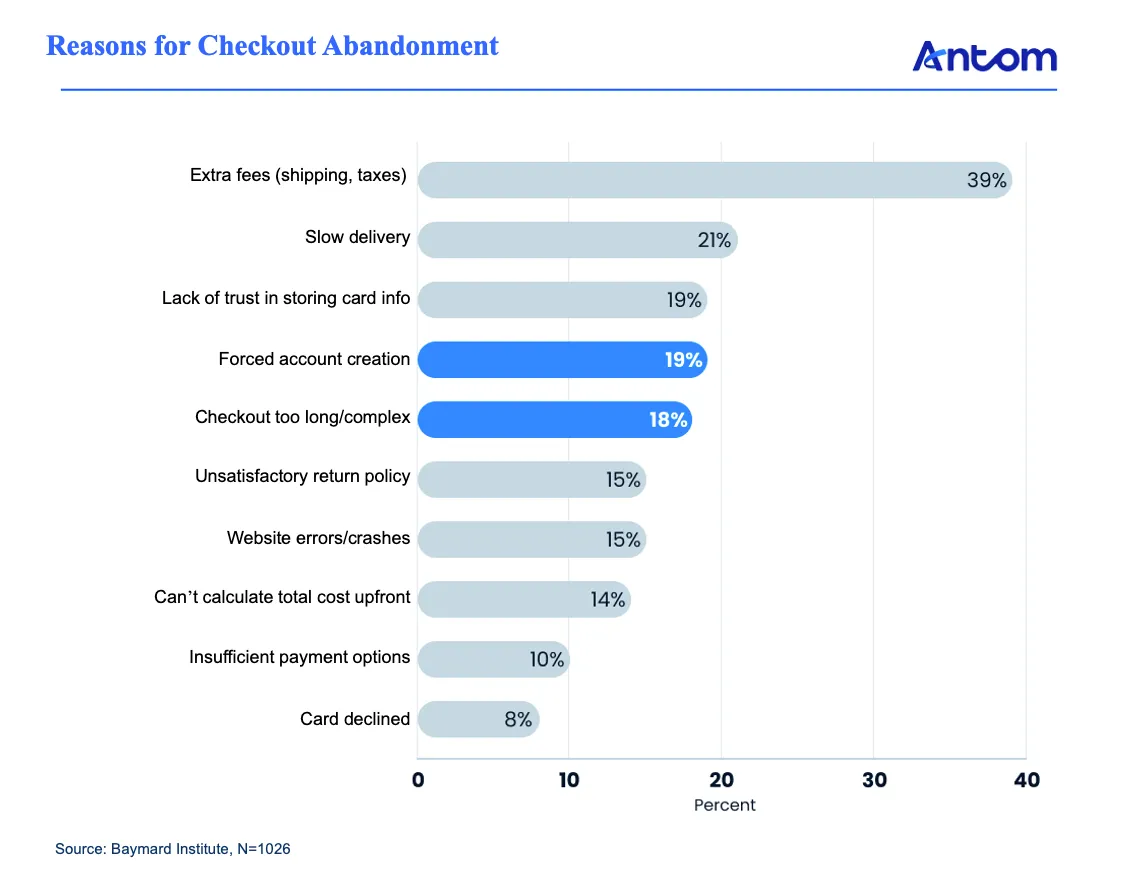
AI Agents can bridge this gap by seamlessly completing the payment process. They can automatically apply discounts, choose the most suitable payment method, and minimise required actions, creating a fast, intelligent, and frictionless experience.
Solutions like Antom A+ Rewards are exploring this frontier: integrating coupons directly into digital wallets so that promotions are applied automatically at checkout, turning interest into completed sales.
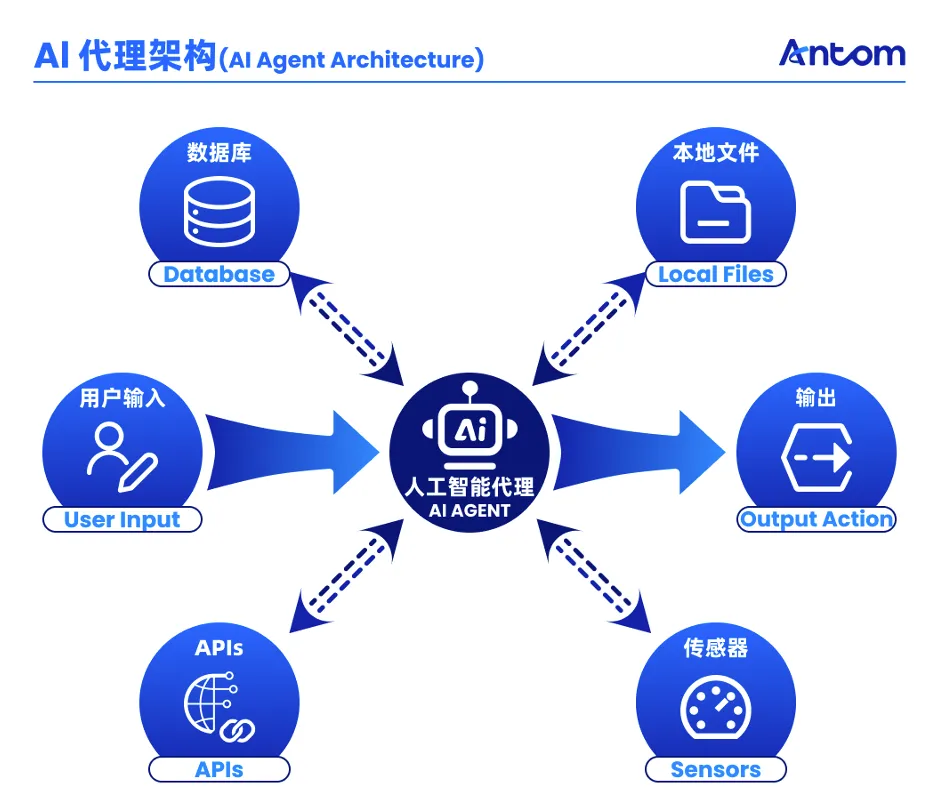
Core Capabilities of AI Agents
AI Agents are intelligent systems that can perform tasks on behalf of users. They combine reasoning, planning, memory, and autonomy, continuously learning and optimising to simplify workflows.
Key technical capabilities include:
- Advanced Understanding and Planning: Using large language models (LLMs), AI Agents comprehend natural language and make decisions.
- Tool Access: They can call APIs, access the web, and interact with apps to execute complex actions.
- Memory and Learning: They remember user preferences and past interactions to deliver increasingly personalised experiences.
When integrated with payments (AI Agent Payment), they create a full, seamless commerce loop: from need identification and product recommendation to automated checkout and discount application, efficient, intelligent, and secure.
II. AI Reshapes Market Boundaries: Solving the Complexity of Global Payments
Traditional global payment systems are often slow, fragmented, and costly to comply with. Expanding into new markets used to require heavy investment: localised teams, in-depth regulatory research, and cultural adaptation. Now, AI is making these functions lighter, smarter, and faster.
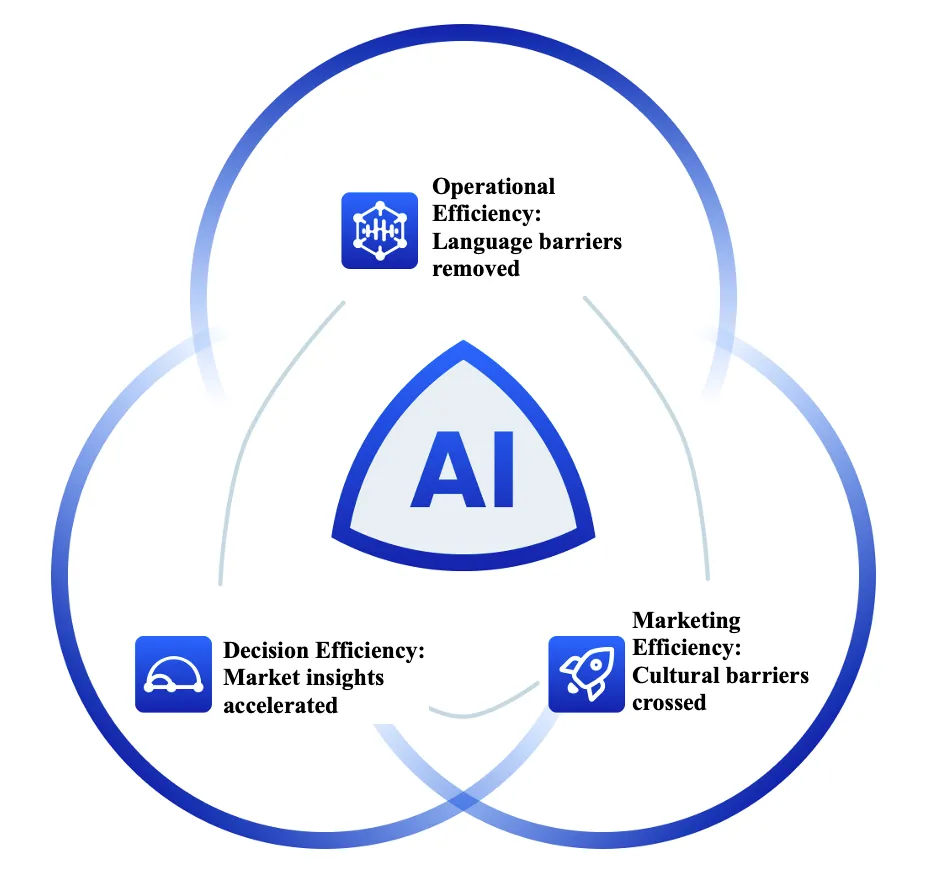
Even with AI-driven expansion, payment friction remains a major barrier. Consumers in each market have unique preferences and cultural expectations: if the payment experience doesn’t match these expectations, merchants risk losing the sale.
To understand these hidden payment barriers, it helps to look at the three main types of local payments:
- Real-Time Bank Transfers: Instant and Inclusive
Examples: Brazil’s PIX, India’s UPI
Central bank–driven systems link directly to bank accounts or national IDs, bypassing complex card networks to provide broad, low-cost access. These systems enable instant payments and are increasingly dominant in online transactions.
- Cash & Offline Networks: Trust and Security
Examples: Japan’s Konbini, Latin America’s Boleto/OXXO
Customers generate a payment code online and pay with cash at local stores. In cash-oriented markets, this method satisfies consumers’ need for anonymity, security, and physical confirmation.
- Local E-Wallets: Ecosystem Integration and Convenience
Examples: Indonesia’s DANA, Philippines’ GCash, Thailand’s TrueMoney
These wallets are embedded in local super-apps, enabling seamless payments without extra registration or card binding. They provide a smooth, integrated experience across daily life.
Managing these diverse payment systems individually is complex and costly, but AI can help. Platforms like Antom offer global acquiring services, aggregating major payment methods worldwide. This allows customers anywhere to pay using the method they trust and prefer.
Open Banking: Direct Bank Payments
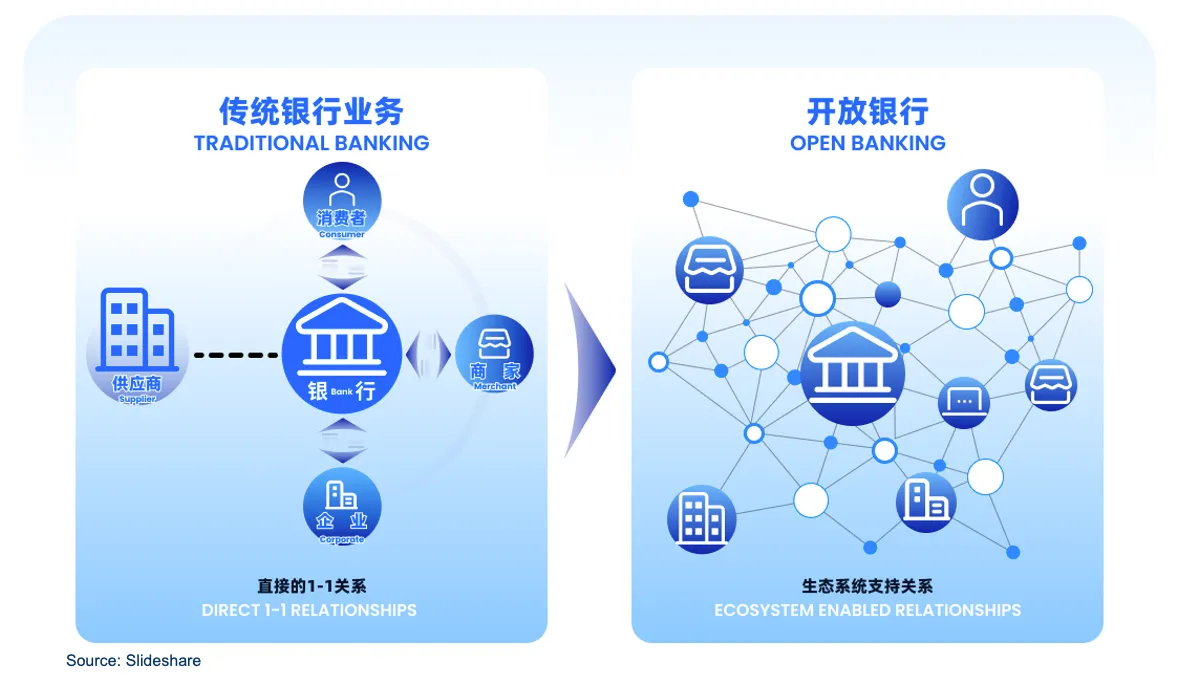
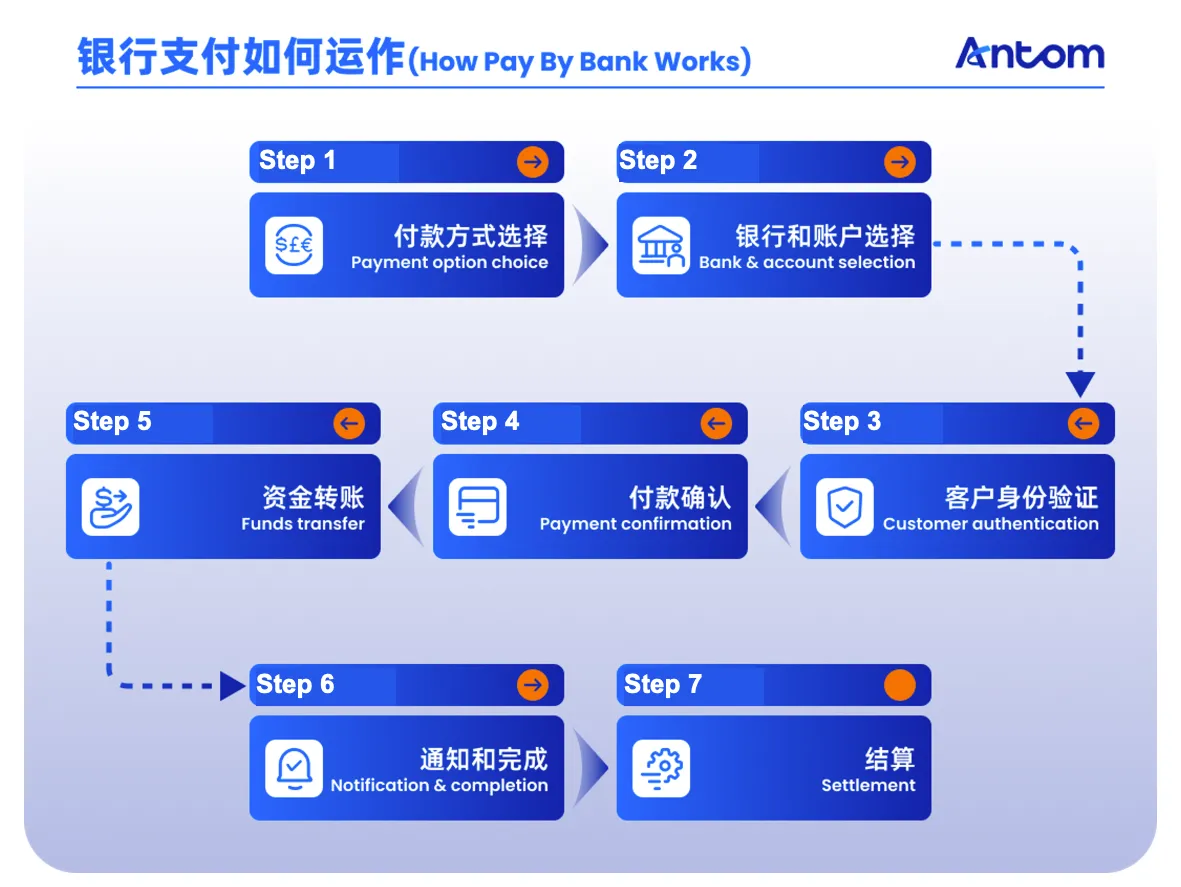
Open Banking allows authorised third parties to access users’ bank accounts via standardized APIs, with explicit user consent. It enables Pay by Bank (A2A) payments, letting consumers pay directly from their bank accounts without card networks. Benefits for merchants include lower fees, faster settlements, and higher security through bank-level authentication.
Buy Now, Pay Later (BNPL): Redefining Consumer Credit
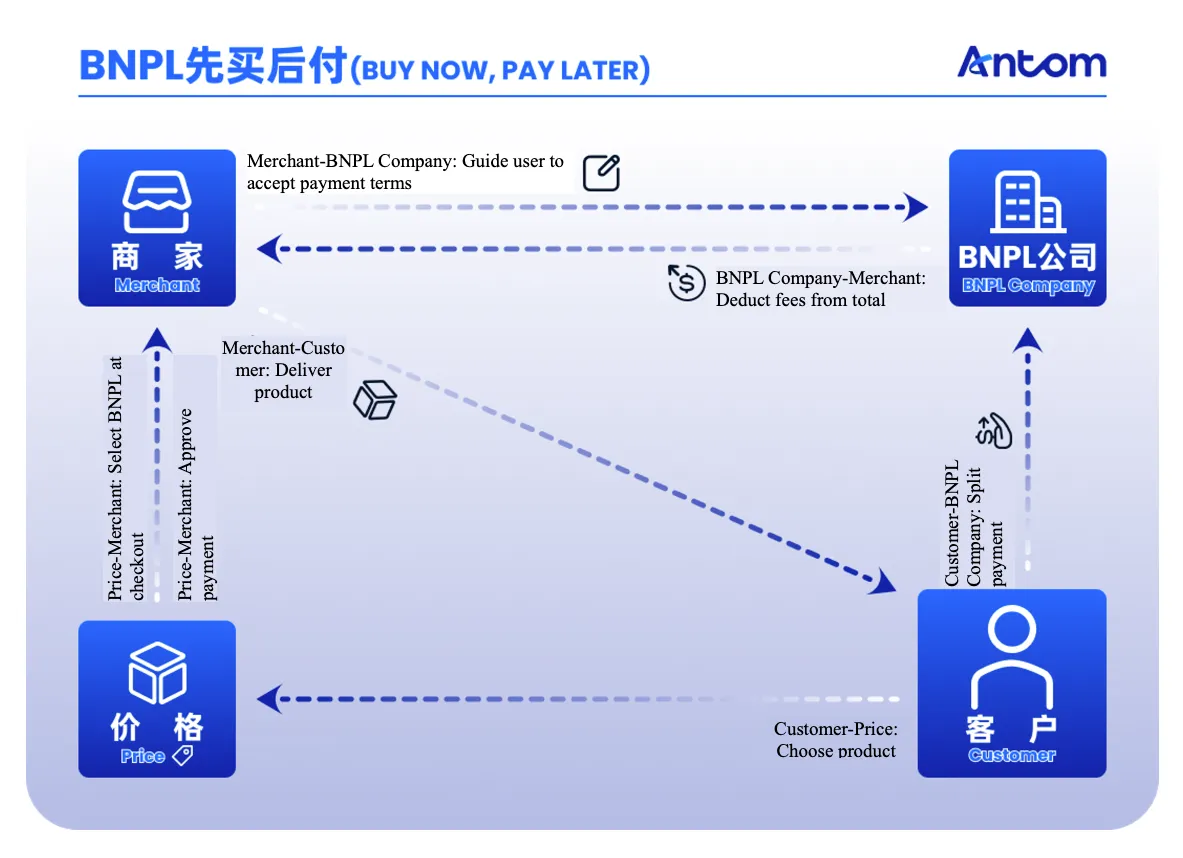
BNPL allows customers to receive goods immediately while splitting payments into interest-free instalments. Modern BNPL is fast, often approved at checkout, and increasingly mainstream. Offering BNPL can be a key factor in competitive advantage for merchants expanding globally.
III. AI Makes E-Commerce More Profitable: Managing Global Funds to Protect Margins
In the AI-driven e-commerce era, fund management is evolving. When your sales are spread across multiple currencies, USD, EUR, JPY, BRL, how can you efficiently manage and optimise these funds globally?
Trend 1: FX Risk Intensifies: Precision Management is Essential

As AI blurs market boundaries, global expansion becomes easier, but it also brings complex multi-currency operations. Currency fluctuations can significantly impact profits.
AI enables proactive FX management rather than reactive responses. By predicting currency exposures and using financial tools like hedging, merchants can lock in rates and reduce risk, turning uncertainty into strategic advantage.
Trend 2: Efficient Global Fund Flows Become a Competitive Edge
AI-powered supply chains and marketing networks are inherently global: suppliers in Vietnam, marketing agencies in Europe, cloud servers in the U.S.
Yet traditional cross-border settlements are slow and costly:
- Exchange inefficiencies: Converting revenue from one currency to another multiple times increases fees and wastes opportunities.
- Time zone delays: Long settlement cycles tie up working capital, slowing reinvestment and expansion.
To solve this, industry innovations like Tokenised Deposits (e.g., Antom partnered with HSBC) enable real-time, 24/7 cross-border settlements, accelerating cash flow and potentially reducing in-transit capital by up to 50%.
AI-Powered FX Management
AI models can now forecast cash flows with high precision, allowing merchants to plan currency hedges confidently. For example, Antom’s AI-Powered FX Solutions use Time-Series Transformer (TST) models to predict multi-currency cash flows and optimise hedging strategies, potentially reducing FX costs.
Key FX risk management tools include:
- Spot Rate: The current market rate for immediate currency conversion.
- Forward Rate: A pre-agreed rate for currency conversion at a future date.
- Hedging / Rate Lock: Locking a future transaction at a known rate to protect profits from currency swings.
AI’s predictive power allows merchants to anticipate future currency needs and implement hedging strategies effectively, ensuring more stable margins and financial certainty.
Conclusion
AI transforms traffic, product, and place into a fully intelligent commerce ecosystem. However, revenue depends on the “golden mile,” where intent becomes payment. Antom completes the AI commercial loop, providing global payments, FX management, and risk control.
Together, AI and Antom enable merchants to scale globally with confidence. They convert attention into revenue and manage complex, multi-currency operations efficiently. Every innovation is turned into measurable business growth and sustainable profit.