
Share on

For cross-border sellers, payments can either support growth or slow it down. If checkout feels unfamiliar, risky, or inconvenient, customers may leave before completing the purchase. That is why payment aggregation has become a practical model for SMEs, startup founders, and global e-commerce brands that want to expand without building payment infrastructure market by market.
Instead of opening a separate merchant account with an acquiring bank, businesses can use a provider that groups many merchants under one master account. That is the basic logic of the payment aggregator model. It reduces onboarding friction, shortens setup time, and helps merchants accept multiple payment methods across regions.
For international growth, this can simplify access to local payment methods, card processing, settlement support, and operational tools. Antom supports this kind of expansion through solutions available on the Antom homepage and its payment methods offering.
What is Payment Aggregation? Defining the Model
Core Definition
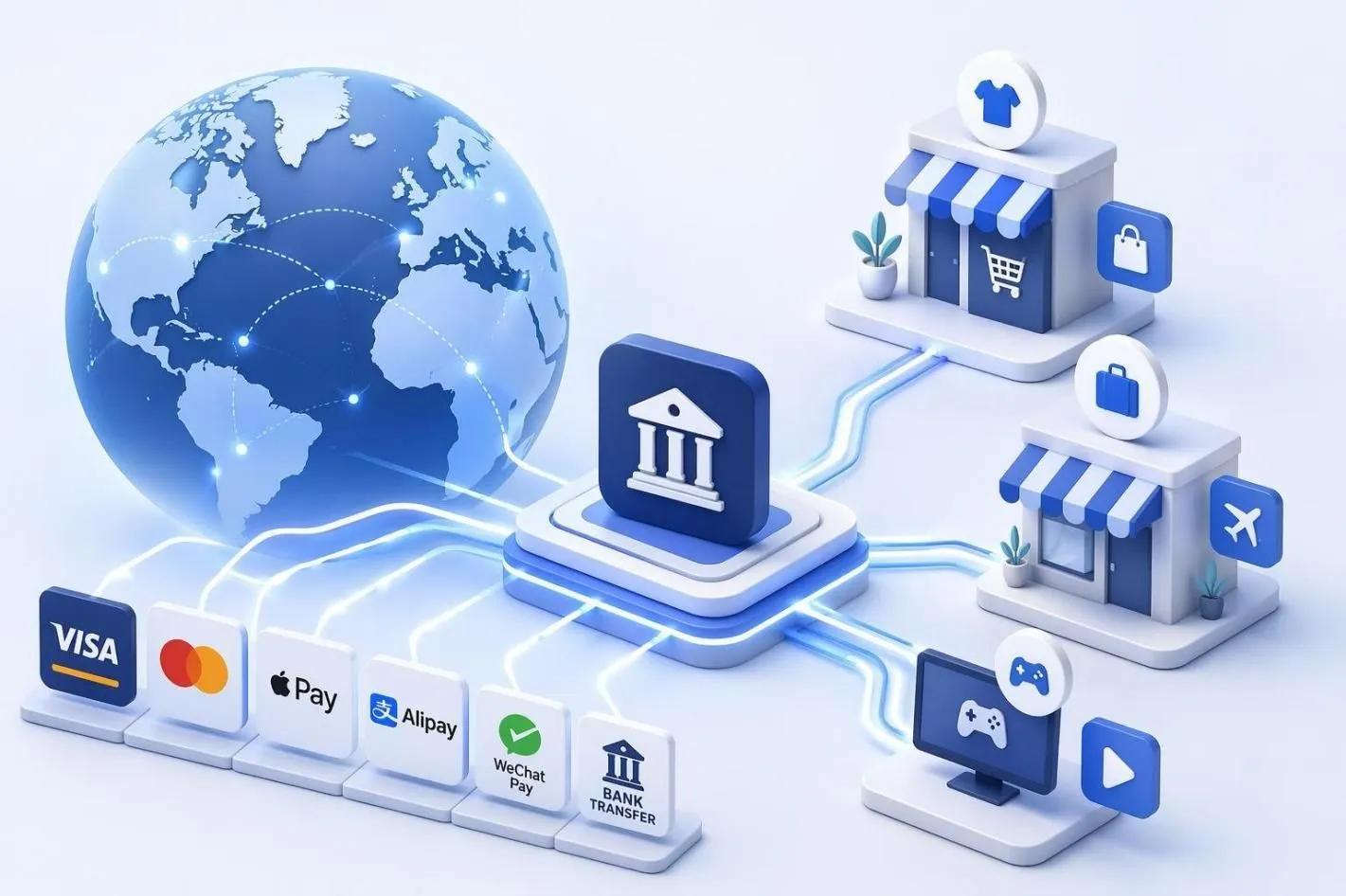
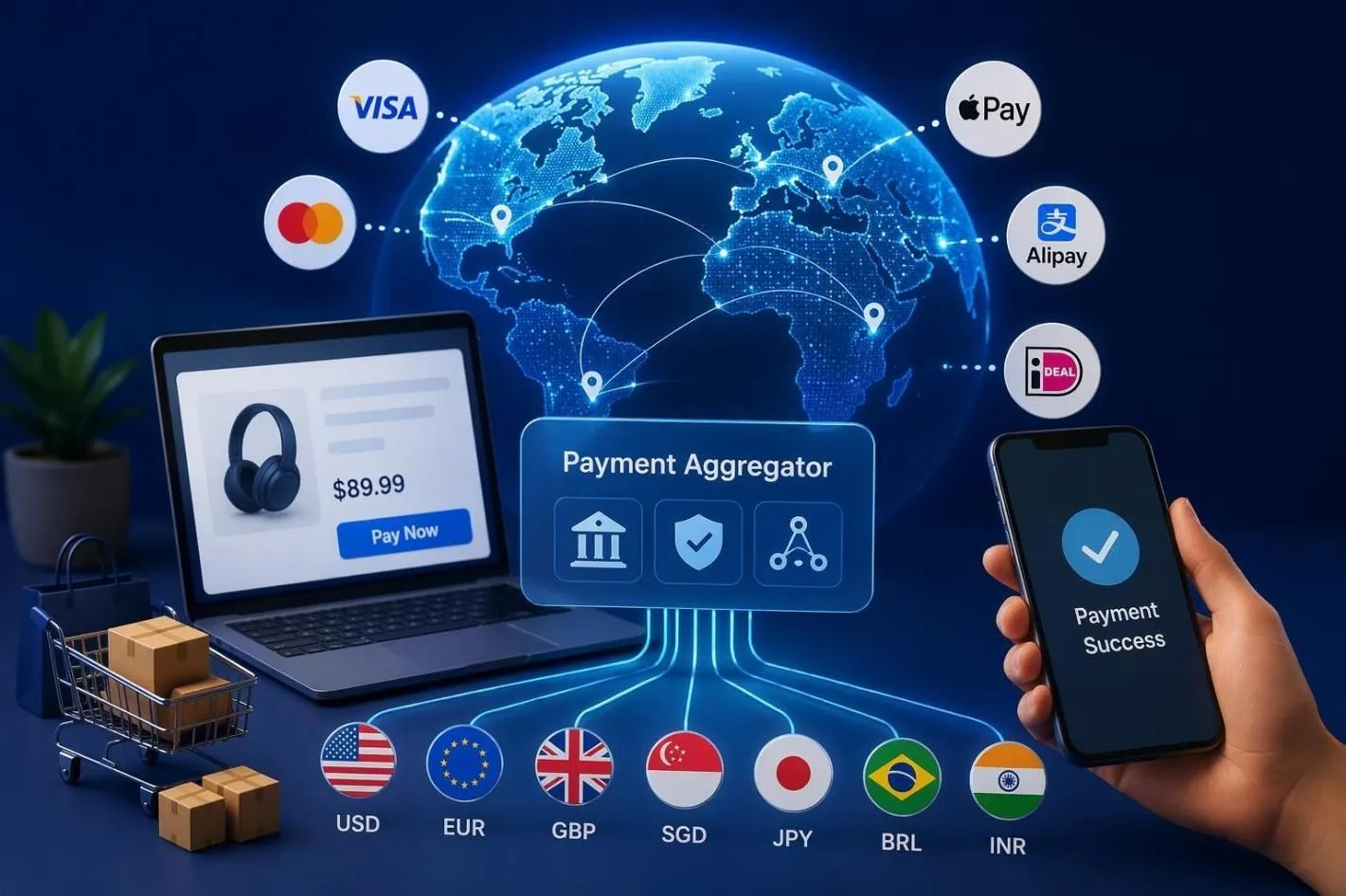
Payment Aggregation is an e-payment processing model in which one provider processes transactions for a number of merchants using a master merchant account. The aggregator is the intermediary between the merchant, the processor, banks, payment schemes, and payment methods. Instead of each seller establishing direct relationships with multiple acquiring banks and payment networks, the aggregator serves as the single intermediary.
An analogy is helpful. Imagine a payment aggregator as a coworking office. Instead of leasing an entire building, each business can use ready-made infrastructure. You can enjoy faster access, less setup friction and fewer operations.
The Key Terms You Need to Know
Merchant account: The merchant account is an account that's backed by a bank and allows a company to accept credit card payments. In the traditional setup, each business has its own dedicated account. It can give you more control but often comes with more documentation, contracts, and technical work.
Payment Aggregator A payment aggregator allows multiple businesses to accept payments through one umbrella account, while managing onboarding and routing. An aggregator can be used by a startup that sells internationally to accept local payment methods, cards, and wallets without having to open separate merchant accounts for each market.
Payment gateway: The payment gateway is a technology layer that securely transmits transaction data from the merchant to the customer. It encrypts the payment data before sending it to be authorized. A gateway is different from an aggregator, even though many providers bundle the two services.
How the Payment Aggregator Model Works
Transaction Flow
The payment aggregator model usually follows a structured flow:
1. The customer selects a payment method at checkout.
2. The aggregator captures and encrypts the payment data.
3. The transaction is routed to relevant processors, schemes, wallets, or banks.
4. The payment is authorized or declined.
5. Approved funds are settled to the aggregator.
6. The aggregator pays out the merchant based on the agreed schedule.
The merchant does not need to manage every direct relationship in the chain. That is the main operational advantage.
Market and Method Planning
To start using a payment aggregator, begin by assessing market needs. Use web analytics, cart abandonment data, customer geography, and sales reports to identify priority countries, currencies, and payment methods. A merchant selling into Europe may need cards and wallets, while Southeast Asia may require bank transfers, QR payments, or local wallets.
Next, compare providers with a requirements matrix. Review onboarding speed, payment method coverage, fees, payout terms, settlement currencies, fraud tools, and integration flexibility. You can explore Antom’s supported payment methods as a starting point.
Integration and Optimization
Merchants can usually integrate checkout through APIs, plugins, hosted payment pages, or sandbox testing. Many aggregators support faster deployment through prebuilt options, helping lean teams go live without building every payment component from scratch.
After launch, monitor dashboards, dispute reports, approval rates, and risk alerts. Payment performance varies by country, issuing bank behavior, payment method, and fraud settings. A setup that works well in one market may need adjustment in another.
Pro Tip: Start with your top two target markets, optimize approval and payout flows there, then expand once operational metrics stabilize.
Feature | Payment Aggregator Model | Traditional Merchant Account |
Onboarding speed | Faster | Slower |
Underwriting | Provider-led, umbrella structure | Merchant-specific |
Technical setup | Often simpler | Often more complex |
Market expansion | Easier to test new regions | More setup in each region |
Control over acquiring | Moderate | Higher |
Best for | SMEs, startups, fast-growing brands | Larger merchants with specialized needs |
Cross-Border Merchants, SMEs, and their Key Benefits
Faster market entry
Speed is important for global sellers. Payment aggregators can help reduce the time to launch by bundling payment acceptance and settlement support in one solution. This can be useful for founders or SMEs who want to test demand in different regions before investing heavily in local infrastructure.
Wider Payment Choice
Access to local payment methods is another major benefit. Payment familiarity is often a factor in cross-border conversion. Local buyers may not make a purchase if they do not trust the payment method. An aggregator that is strong can help merchants to support all payment methods including cards, wallets and bank-based options.
Due to the rapid adoption of e-wallets in emerging markets, cart abandonment increases when you rely solely on foreign cards. The payment aggregation system of Antom integrates 140+ Asian payment methods to ensure that buyers can always access their native wallets.
Simpler Operation
Payment aggregators may also reduce operational costs. Direct acquiring relationships can require additional internal resources in the areas of finance, legal, compliance and technology. Aggregators centralize certain aspects of onboarding and reconciliation. They also provide support. This frees up SME exporters' time to focus on marketing, customer service and fulfillment.
This model creates an ideal testing environment for any new market. If you're unsure if a country is going to scale, Payment Aggregation provides a way for you to validate the checkout demand without friction.
Benefit | What It Means | Why It Matters |
Faster launch | Quicker setup and activation | Reduces time to revenue |
Broader payment choice | More methods in one integration | Improves checkout conversion |
Simpler operations | Fewer direct banking relationships | Helps lean teams scale |
Market flexibility | Easier to test new geographies | Supports phased expansion |
Centralized support | One provider for multiple needs | Speeds issue resolution |
Payment Aggregator vs. Traditional Merchant Account: Which One Do You Need?
Choosing Based on Business Stage
Not every business needs the same payment setup. Startups and SMEs usually value speed and simplicity. Larger enterprises may prioritize negotiating power, dedicated acquiring relationships, or customized risk frameworks.
If you are a startup or SME entering new international markets, the payment aggregator model is often the best first step. It balances speed, access, and lower complexity. If you process high volume, need direct acquiring control, or have a mature payments team, a dedicated merchant account may offer more optimization room.
When a Hybrid Model Makes Sense
A hybrid path also exists. Many brands start with aggregation, then add direct acquisition in selected markets later. This lets merchants move quickly first, then optimize once payment volume, risk patterns, and market priorities become clearer.
Use the following framework when evaluating options:
Evaluation Criterion | What to Look For | Common Pitfalls | Decision Impact |
Onboarding speed | Fast approval and clear requirements | Hidden documentation delays | Affects launch timeline |
Payment method coverage | Strong local and cross-border mix | Too much focus on cards only | Impacts conversion by region |
Pricing structure | Transparent fees, FX, and chargeback costs | Overlooking settlement and refund fees | Changes the total payment cost |
Risk tools | Fraud screening, dispute support, and monitoring | Weak controls that raise losses | Affects margins and approval rates |
Settlement options | Reliable payout timing and currency support | Limited local currency settlement | Impacts cash flow |
Integration flexibility | APIs, plugins, and hosted checkout options | Choosing a rigid stack | Affects developer workload |
Pricing and Total Cost
Pricing deserves special attention. The lowest headline rate is not always the lowest total cost. FX fees, settlement fees, refund fees, chargeback costs, payout timing, and failed transaction rates can affect margins. Approval rate performance also matters because a slightly higher processing fee may be acceptable if it produces better conversion and fewer failed payments.
Risk Management and Compliance in Aggregated Payment Systems
Fraud and Chargebacks
Although aggregated systems are convenient, they also require strict controls. Fraud monitoring and compliance must be reliable since the provider supports sub-merchants.
Due to the distance, unfamiliarity, and diverse consumer behavior, fraud is more likely to occur in cross-border sales. Payment convenience can become a costly operation if you rely on poor risk controls. Antom Shield uses AI-driven millisecond scanning to detect fraud without blocking genuine buyers. This maximizes your approval rates.
KYC and Merchant Underwriting
KYC is an acronym for Know Your Customer. It refers to checks that providers conduct on merchants both before and during services. Strong underwriting maintains ecosystem quality and helps reduce disruptions in downstream payments. Weak underwriting increases fraud, chargebacks, and account instability.
Data Security and Provider Review
The providers should be able to support the secure handling of data and comply with all relevant regulations. This can include local regulatory requirements, payment data standards, and anti-money laundering processes, depending on the market.
Don't choose a provider solely based on the headline fees. Poor approval rates, fraud tools that are weak or delayed payouts can offset a lower advertised rate.
Ask these questions before signing:
- Which payment methods are strongest in my target markets?
- How are reserves, refunds, and chargebacks handled?
- What triggers account reviews or payout holds?
- What support is available during payment incidents?
- How transparent are FX and settlement terms?
For additional context, see Stripe’s guide on payment aggregator vs payment gateway, PayPal’s overview of what a payment aggregator is, and Checkout.com’s comparison of payment service provider vs payment aggregator.
FAQ
Common Questions
Q: What is payment aggregation in simple terms?
It is a model where a provider processes payments for many merchants under one master merchant account, making setup faster and simpler.
Q: How is a payment aggregator different from a payment gateway?
A gateway transmits payment data securely. An aggregator manages the broader merchant payment setup, processing flow, and settlement structure.
Q: Who should use the payment aggregator model?
It is ideal for startups, SME exporters, and cross-border merchants that want quick market entry and simpler operations.
Q: Are payment aggregators good for international growth?
Yes. They can help merchants access multiple payment methods, markets, and currencies through one provider relationship.
Q: What are the trade-offs of payment aggregation?
You may have less direct control than with your own merchant account. Pricing, settlement terms, and risk controls also vary by provider.
Q: How can Antom help merchants expand globally?
Antom’s Global Payment Orchestration (APO) cuts reconciliation time by 90% and connects you to 300+ local payment methods via one integration, transforming your checkout into a high-converting growth engine. Contact our team to customize your global payment strategy.
Next Step
Payment aggregation gives cross-border merchants a practical way to launch faster, support more payment methods, and reduce operational drag. For startups and SMEs, it is often an efficient route to validating and scaling global demand.
If your team is looking to streamline international expansion, contact Antom to transform your checkout into a growth engine using our 300+ alternative payment methods and an APO platform that boosts reconciliation efficiency by 90%.