
Share on
The digital economy in the Philippines is reshaping its commercial landscape at an unprecedented pace. By 2023, electronic payment penetration reached 51%, with total transaction volumes approaching USD 30 billion and more than 46 million users actively using e-wallets. According to the e-Conomy SEA Report 2025, the e-commerce market in the Philippines is projected to reach USD 21 billion in 2025, leading the Southeast Asian region.
Against this backdrop, Maya, with a user base exceeding 50 million and a strong appeal among younger consumers, has become an indispensable payment gateway for merchants. More than that, it serves as a strategic channel for reaching the Philippines' core young consumer segment and capitalising on the entertainment-driven shopping trend.
The success of Maya lies in its precise positioning around the country's "digital natives". 88.9% of the country's e-commerce shoppers are aged under 45. With the rollout of the national QR code standard QR Ph, which is interoperable with multiple Southeast Asian payment systems, including Singapore's PayNow and Thailand's PromptPay, Maya, a key component of the system, enables seamless online and offline payment experiences across various scenarios.
At the same time, e-commerce consumers in the Philippines are increasingly seeking shopping experiences that go beyond simple transactions. They are used to completing purchases with a simple scan, and are also impulsive spenders that buy products featured in livestreams and interactive entertainment. In response, Maya has evolved from a pure online payment tool into a central hub that links high-frequency offline QR payments with immersive online commerce. By integrating Maya through Antom, merchants gain more than an additional payment option. They embed their operations directly into the digital life journey of Filipino consumers from product discovery to payment, building a strong, scenario-driven growth advantage.
Properties
The following table lists the product properties supported by Maya:
Payment type | Digital wallet | ||
Funding source | Wallet balance | ||
Acquirer | AntomSG, AntomUS | Merchant entity location | SG, HK, US |
Payment flow | Redirect | Refund | ✔️ |
Buyer country/region | Philippines | Partial refund | ✔️ |
Processing currency | PHP | Chargeback/Dispute | ❌ |
Minimum payment amount | 1 PHP | Refund period | 365 days |
Maximum payment amount | 100,000 PHP | Time to return payment result | Real-time |
Default timeout | 14 minutes | ||
User experience
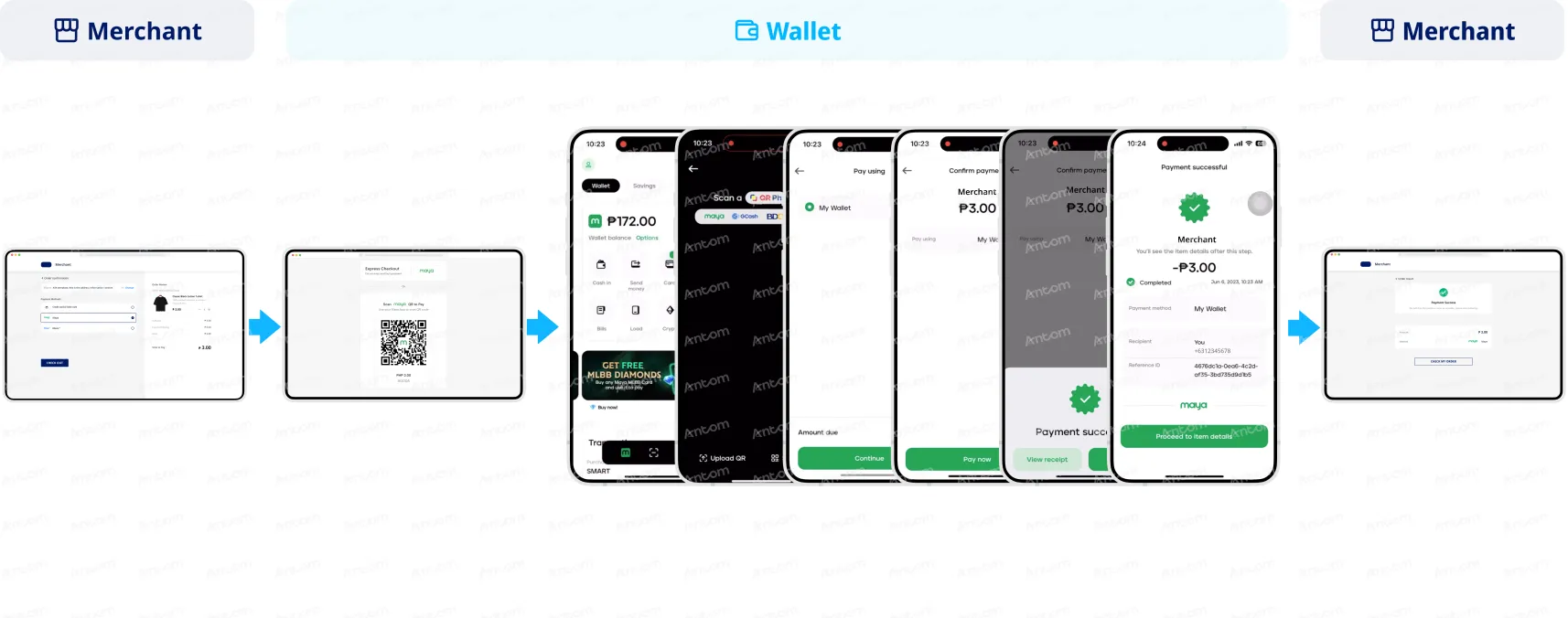
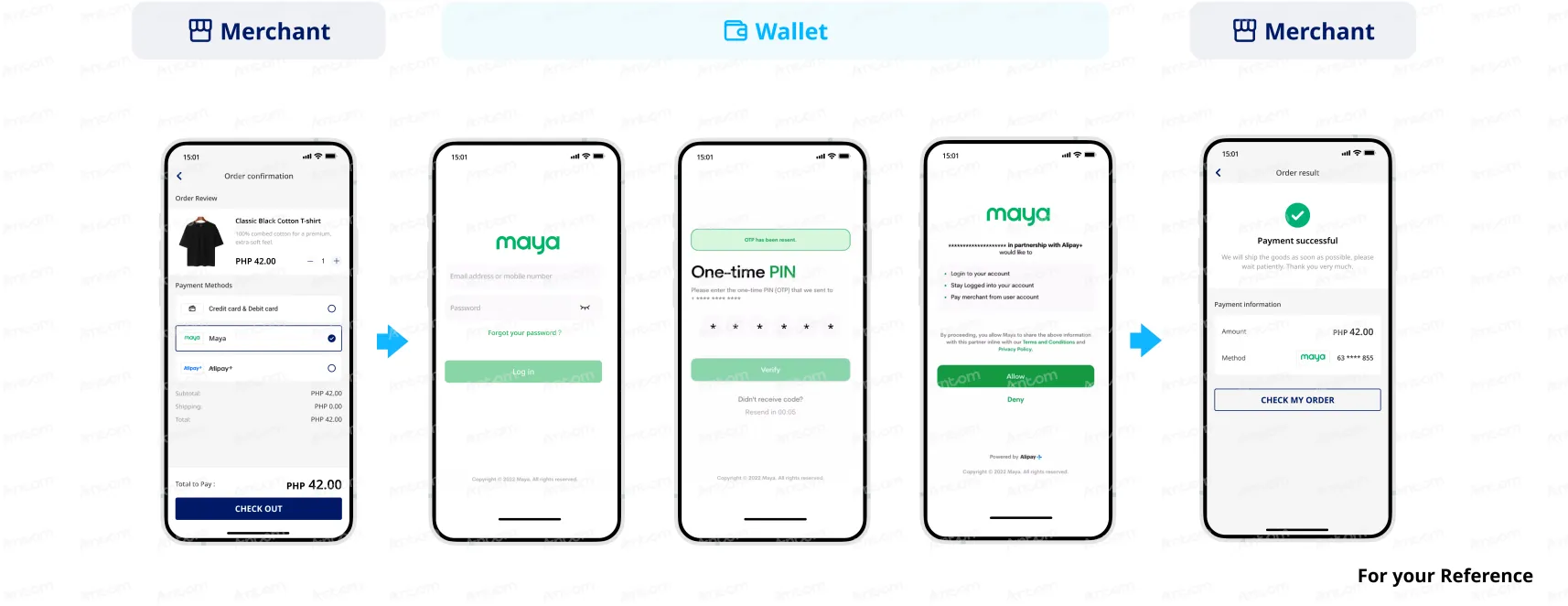
Note: The following payment flows on different terminals are for reference only. For supported merchants' terminal types, consult Antom Technical Support.
The following screenshots show the journey of paying with Maya:
Web
App
FAQ
Given that the Philippines is an archipelago, how extensive is the coverage of Maya in second- and third-tier island cities?
This is exactly Maya's advantage over international online payment platforms. Leveraging its parent company's abundant local resources, Maya has built an extensive agent network that effectively reaches areas with limited access to banking services. In many provinces, residents can top up their Maya wallets at neighbourhood convenience stores. This "on-ground agent network + digital wallet" model allows you to tap into the real consumer market beyond Metro Manila with just one integration.
Could Maya become less competitive if the Philippine government promotes other payment methods in the future?
Ultimately, the payment market landscape is shaped by user habits. The national QR code standard QR Ph promoted by the Central Bank of the Philippines (BSP) is an open and interconnected system. Maya, as a core participant of the system, has gained recognition from both the government and the market through its high compatibility and widespread adoption. More importantly, Maya has established strong brand recognition and habits among the younger audience because it is already deeply embedded in everyday scenarios. Therefore, integrating Maya is essentially accessing the widely proven user preferences and payment traffic in the Philippine digital consumer market.
How can I ensure users choose Maya at checkout if they have installed multiple e-wallets?
This is why you need to partner with Maya. Data shows that 87% of Southeast Asian e-wallet users use multiple wallets, and their choices are often driven by scenarios and incentives. By setting Maya as the default option and launching exclusive campaigns targeting Maya users, such as payment discounts, you can effectively shape user preferences. Antom also provides targeted marketing tools to help you precisely engage Maya users and improve payment conversion through this channel.
Is Maya widely used in offline scenarios across the Philippines?
Yes. As a key component of the Philippines' QR code standard QR Ph, Maya has been adopted by millions of offline merchants nationwide, from chain convenience stores to street stalls. By integrating Maya through Antom, you not only extend your business operation to online e-commerce but also seamlessly connect with mainstream offline consumption scenarios in the country for an effortless omnichannel presence.
Integrate Maya through Antom to precisely engage younger consumers in the Philippines and add a critical payment engine to drive sustainable business growth.