


Share on
Key Insights
- Population size and structure: Latin America (the region of the Americas south of the United States) has a total population of approximately 662 million, of which the four countries of Brazil, Mexico, Argentina and Chile have a population of 408 million, accounting for 61.66% of the total population of Latin America. The working-age population aged 15-64 accounts for 60% to 70%, the urbanization rate is 58%, and the middle class continues to expand. The four countries of Brazil, Mexico, Argentina and Chile constitute the core markets with the highest concentration of population in Latin America.
- Largest and wealthiest countries: Brazil is the largest economy in Latin America, with its Gross Domestic Product (GDP) reaching USD 2.17 trillion in 2024. Chile is the wealthiest country in Latin America, with its GDP per capita reaching USD 17,067.8 in 2024.
- Macroeconomic divergence: Inflation performance among core Latin American countries varied significantly. Affected by the sharp devaluation of its local currency, Argentina’s inflation rate reached as high as 117.5% in 2024, falling into an “inflation-devaluation” spiral; meanwhile, inflation levels in Brazil, Mexico, and Chile remained relatively moderate, with an average inflation rate of approximately 4.5% in 2024. Exchange rates in Brazil, Mexico, and Chile remained relatively stable, while the exchange rate in Argentina (Argentine Peso against the US Dollar) continued to rise significantly due to economic and political factors.
- Retail market overview: Total social retail sales in Latin America reached USD 2.3 trillion in 2025, with an expected CAGR of 8.2% from 2025 to 2031. The total physical retail market amounted to approximately USD 2.17 trillion, accounting for approximately 94% of the total retail sales, and continued to dominate the retail market.
- Composition of physical retail: Core formats include large-scale modern retail (such as Carrefour, Cencosud and other large supermarket chains), convenience and traditional retail, and specialty stores; food, daily necessities, beauty products, and household appliances are key categories; major cities such as São Paulo and Mexico City serve as core consumption hubs.
- Highly fragmented payment market: digital payment penetration is 45.25%, credit cards account for 30%, Brazil’s Pix instant payment and BNPL (Buy Now, Pay Later) are rising rapidly, the proportion of cash payments in Mexico remains high, and the growth of digital wallets in Argentina is surging. Installment payment has become a “nationwide” consumption habit covering all product categories.
- Emerging new consumption trends: the younger demographic is driving the growth in demand for technology, digital, and health-functional products; social e-commerce and conversational commerce (WhatsApp) have become mainstream customer acquisition channels; and the consumption potential of the silver economy is being unleashed.
- Coexisting market opportunities and challenges: regional trade integration (MERCOSUR) has lowered cross-border barriers, but significant differences in the laws and tax systems of various countries result in high compliance costs; logistics infrastructure is uneven; currency swap agreements with China may contribute to the development of the Latin American retail market.
Latin America (the region of the Americas south of the United States) possesses a massive population base and unique developmental advantages. Often regarded as the “backyard” of the United States, it has fostered a distinctive political, economic, and cultural atmosphere, forming a market full of opportunities yet fraught with challenges.
To achieve success in Latin America, it is necessary to have a profound understanding of its unique retail market, consumer behavior, and the critical payment landscape, and to be adept at leveraging the digital transformation trends of the Latin American market.
Let’s deconstruct the key nodes of the Latin American market and map out a clear practical “roadmap” to move forward steadily together in this vibrant market.
Overview of Latin America
Market Overview
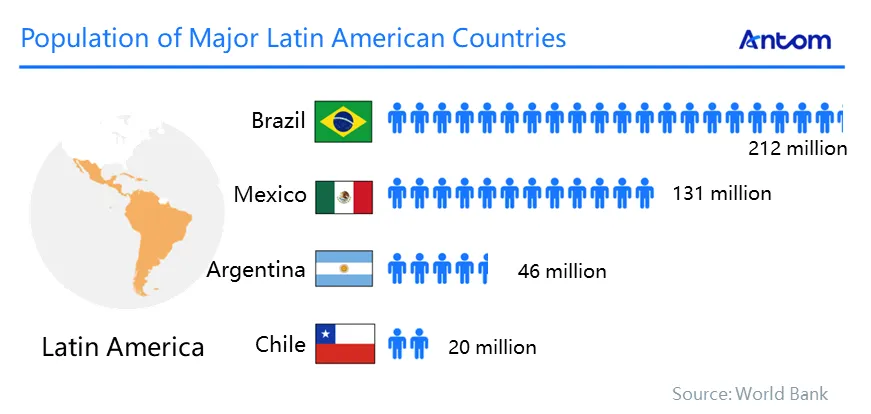
In 2024, the population of Latin America (the region of the Americas south of the United States) was approximately 662 million, accounting for 8.13% of the world’s population, forming a vast consumer market. Among the major economies in Latin America, Brazil ranks first with a population size of 212 million. The total population of the four countries of Brazil, Mexico, Argentina and Chile reached 408 million, accounting for 61.66% of the total population of Latin America. These four countries constitute the core markets with the highest concentration of population in Latin America.
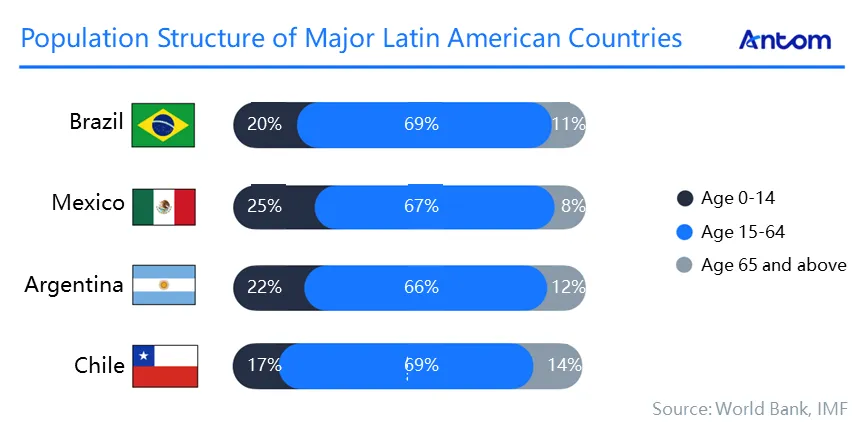
The urbanization rate in Latin America is approximately 58%, and the middle class continues to expand, constituting a robust consumption base. In Latin America, the core force of consumption comes from the working-age population aged 15 to 64. The demographic structure of Latin America is very young; in Brazil, Mexico, Argentina and Chile, the population aged 15 to 64 accounts for 60% to 70%. Latin America, by virtue of its massive population base, demonstrates unique developmental advantages and potential, possessing significant potential for consumption growth.
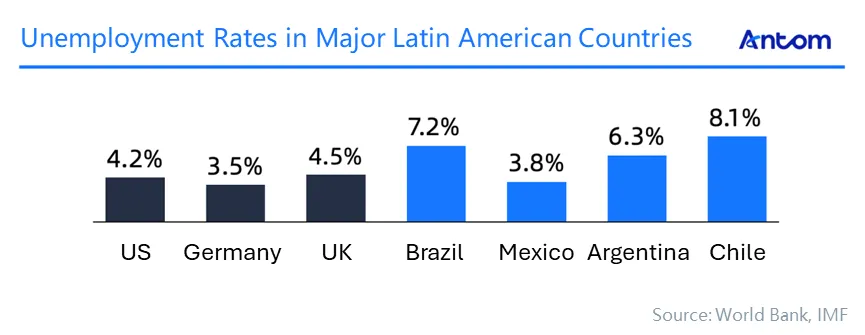
In 2025, in terms of the employment market, with the exception of Mexico where the unemployment rate was relatively low, the unemployment rates of other countries were all higher than the average level of the world’s major economies. The official language of most Latin American countries is Spanish, while Portuguese is used in Brazil; in addition, indigenous languages such as Quechua, Guarani and Aymara are still used in various regions.
Fitch Ratings expects consumer confidence in Latin America to show a mixed trend in 2025, with retailers in Argentina and Colombia benefiting from macroeconomic improvements, while companies in Brazil, Chile, and Peru may face a slowdown in growth. In Mexico, the risk of a mild recession is dampening consumer spending, particularly among low-income groups and within discretionary consumer categories. Refinancing risks remain controllable, thanks to favorable local markets and the increasing interest of international investors in Latin American credits. Online retailers from Asia have intensified competition in the Latin American e-commerce market, particularly in the non-food retail sector. This has prompted local retailers to improve their services and enhance their overall shopping experience. In the food retail sector, hard discounters and cash-and-carry formats are rapidly gaining market share from traditional supermarkets.