
Share on
Konbini (derived from the Japanese word for "convenience store") payments are a highly popular payment method in Japan, commonly used for everyday transactions in convenience stores. In Japan, cash has long been regarded as the safest and most trusted means of payment. Konbini payments build seamlessly on this preference, allowing consumers who rely on cash to transition smoothly while retaining a familiar payment experience.
Konbini payments align well with Japan's continued dependence on cash. Data shows that approximately 70% of daily transactions in Japan are still paid in cash. Consequently, Konbini payment provides a viable pathway for demographics that do not frequently use credit cards or digital payments to participate in e-commerce. Japan's extensive network of more than 57,000 convenience stores, of which 7-Eleven accounts for roughly 40%, provides a strong foundation for the widespread adoption of this payment method.
Japanese consumers are accustomed to paying utility bills, online orders, gaming services and cinema tickets at convenience stores. As a trusted cash-based payment option, Konbini is accepted at more than 20,000 7-Eleven locations.
For businesses, offering Konbini payment helps reach a broader customer base in Japan. This is particularly valuable for companies entering Japan, as the method not only lowers the purchasing threshold for consumers but also demonstrates an understanding of local payment habits. Strategically, it serves both as a supplementary payment channel and as a key element of localisation.
As the retail landscape evolves, Konbini payment continues to develop. Some convenience stores have begun supporting QR code payments and e-money top-ups. While retaining the advantages of cash-based payments, they are gradually building a more diversified payment ecosystem. This balance between tradition and innovation respects Japan's trust in cash while providing merchants with an almost barrier-free route to localisation, which is a key reason Konbini payments remain relevant in the digital age.
Properties
The following table lists the product properties supported by Konbini (7-Eleven):
Payment type | Cash payment | ||
Acquirer | AntomSG, AntomUS, AntomEU, AntomUK, AntomJP | Merchant entity location | SG, HK, US, EU, UK, JP |
Payment flow | Redirect | Supported brands | 7-Eleven |
Buyer country/region | Japan | Refund | ❌ |
Time to return payment result | Real-time | Partial refund | ❌ |
Processing currency | JPY | Chargeback/Dispute | ❌ |
Minimum payment amount | JPY 1 | Default timeout | 7 days |
Maximum payment amount | 1. General merchants: JPY 300,000 2. Game/top-up merchants: JPY 30,000 | ||
User experience
Note: The following payment flows on different terminals are for reference only. For supported merchants' terminal types, consult Antom Technical Support.
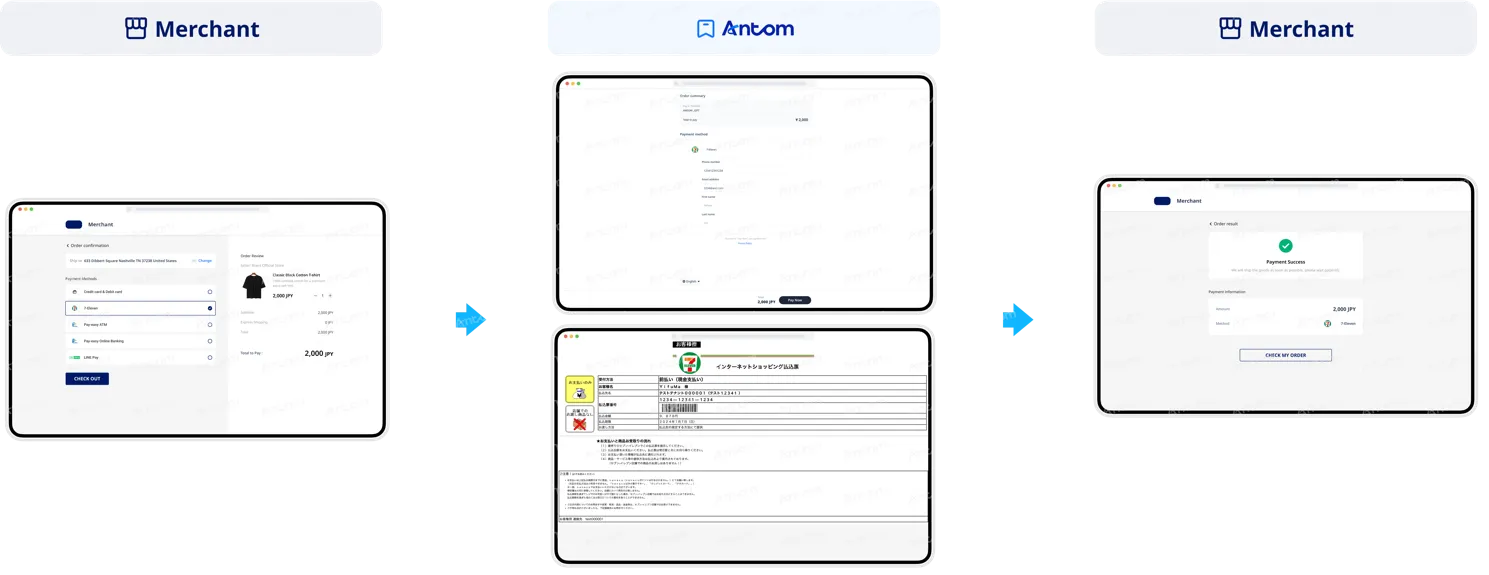
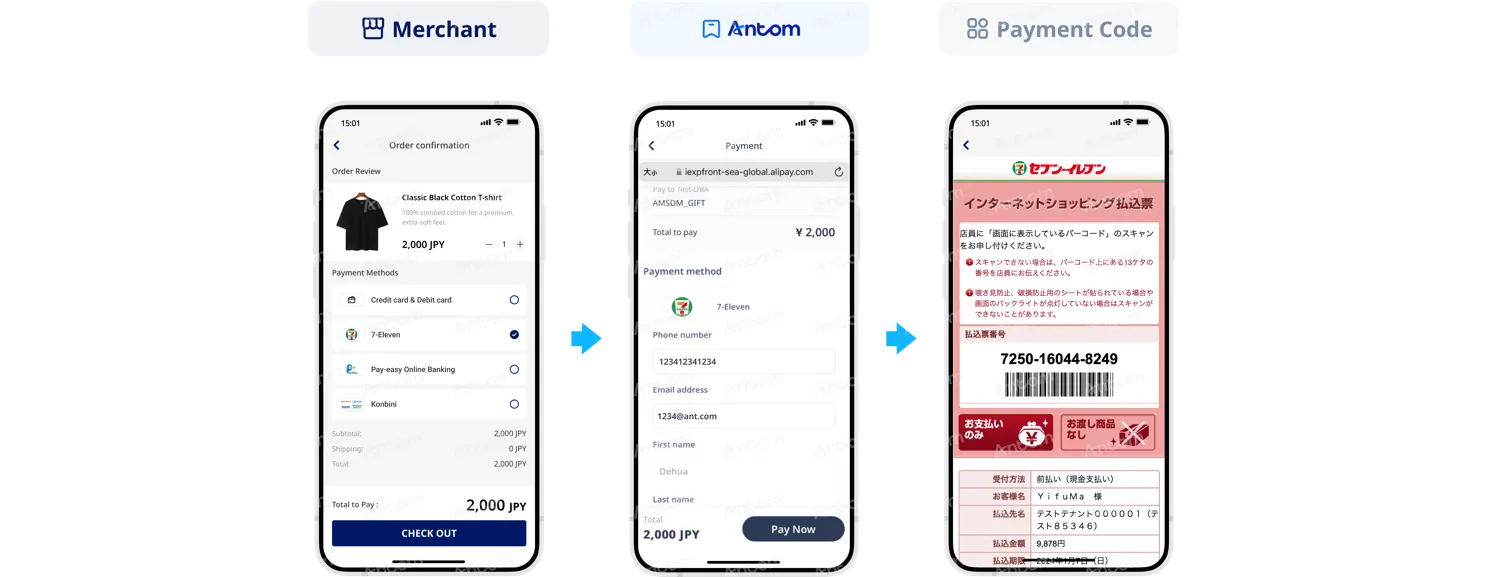
The following screenshots show the journey of paying with Konbini (7-Eleven) in different scenarios:
Pay on the Antom page
By default, buyers are redirected to the Antom page for information collection during each transaction.
Web
WAP
Bypass the Antom page
You can also bypass the Antom page. In this scenario, during the first-time payment, the buyer provides the required information on the merchant page and can save the information for subsequent payments.
First-time payment
The buyer is redirected to the merchant page for information collection.
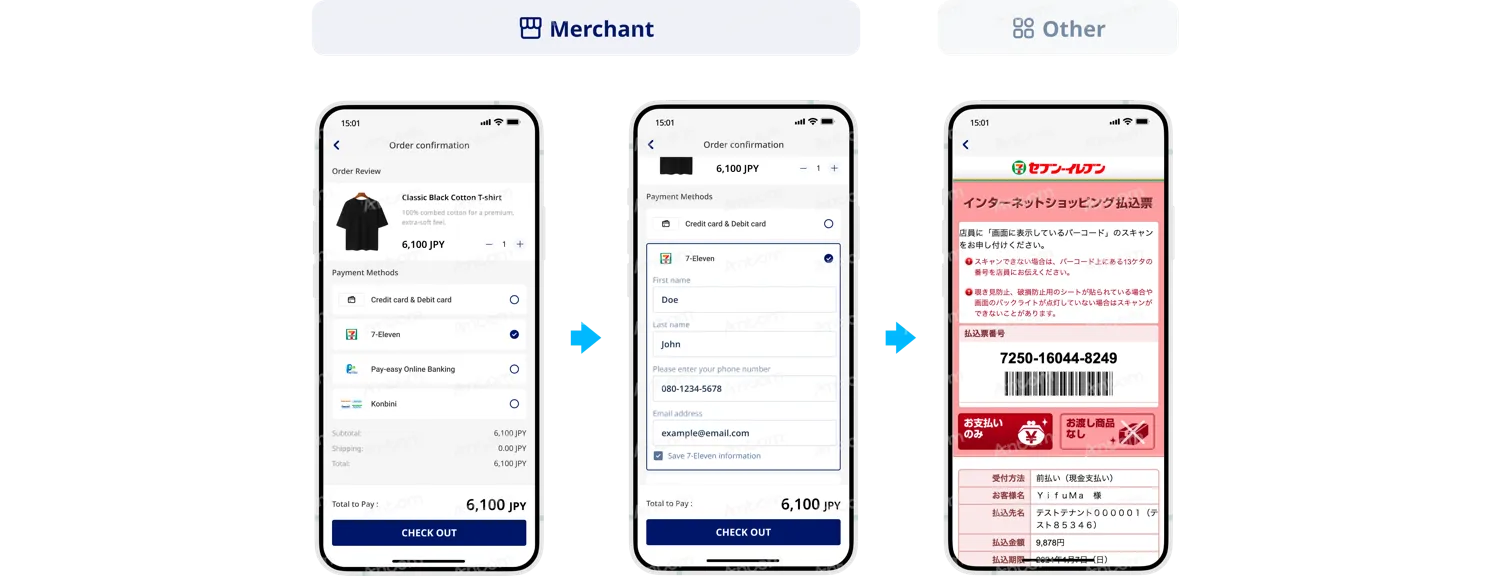
Figure 2. Payment process with Konbini (7-Eleven) (First-time payment)
Subsequent payments
Subsequent payments can be made by buyers who saved their information during the first-time payment, allowing them to bypass the information collection step to make quick payments.
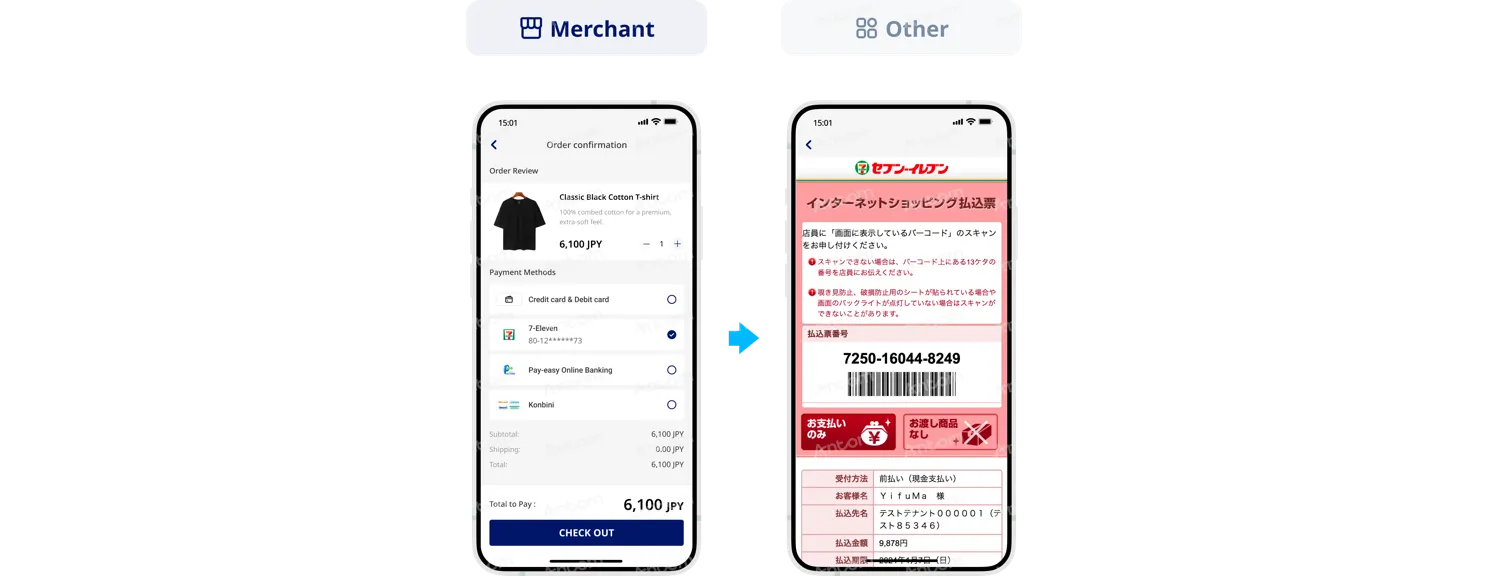
Figure 3. Payment process with Konbini (7-Eleven) (Subsequent payments)
FAQ
1. How extensive is 7-Eleven's coverage in Japan?
7-Eleven is Japan's leading convenience store chain in terms of scale. As of the end of February 2025, it has more than 21,000 stores covering all 47 prefectures in Japan. Store density is particularly high in major metropolitan areas such as Tokyo, Osaka, and Kanagawa Prefecture. For example, Tokyo alone has more than 2,800 stores. Even in remote regions such as Okinawa and Kagoshima, 7-Eleven maintains a strong and comprehensive presence. This extensive network ensures exceptional accessibility and accessibility for offline cash payments.
2. Compared with other Konbini options, what is the core advantage of Konbini (7-Eleven)?
Konbini (7-Eleven) benefits from the brand's largest and most widespread store network in Japan, giving merchants significantly higher offline payment completion rates. Consumers are more likely to find a nearby store to make their payment, which helps reduce order expiry. In addition, the integration process is lighter and more streamlined, making it particularly suitable for merchants targeting mainstream Japanese consumers and prioritising high payment convenience.
3. Why do Japanese consumers who prefer cash payments tend to choose Konbini (7-Eleven)?
Konbini (7-Eleven) aligns closely with the habits of Japan's cash-oriented consumer base. It requires no bank card binding and no digital payment account registration. After placing an online order, customers simply visit a 7-Eleven store and pay in cash, with no additional barriers. Furthermore, 7-Eleven has the most extensive store network in Japan, including a large number of 24/7 outlets, making it the most convenient option for consumers who prefer to "order online and pay in cash nearby". As a result, it has become a mainstream choice for cash-preferring consumers when paying for online purchases.