

Share on
Selecting the ideal international trade payment methods in today's globalized economy is more than a security decision: it also impacts cash flow efficiency and the expansion speed of your B2B enterprise. Unfortunately, traditional wire transfers and letters of credit often entail hidden fees and delay settlement for weeks. This creates significant trust friction between buyers and sellers.
This guide will comprehensively address core settlement options. As an innovative digital trade payment infrastructure, Antom can demonstrate how aggregating over 300 global local payment methods through one integration can completely replace ineffective legacy chains, helping B2B platforms and cross-border e-commerce brands reduce costs while increasing efficiency.
What Are International Trade Payment Methods?
At their core, international trade payment methods are financial agreements created between buyers and sellers in order to settle funds for cross-border goods or services. Their primary function is balancing out risks on both sides of a transaction - such as currency fluctuations, nonpayment of invoices due to delivery failure or fraud.
Since buyers wish to receive goods prior to making payment, and sellers wish to receive payment before shipping goods out, selecting suitable international trade payment methods requires engaging in risk negotiation.
What Affects International Trade Payment Terms?
Your international trade payment terms have a direct bearing on the health of your working capital. Traditional terms like Net 30 or Net 60 place all the financial strain on sellers. If you accept poor terms, your cash gets tied up in transit, severely restricting your future growth. Thankfully, modern payment tools provide near-instantaneous settlement options that allow businesses to offer flexible international trade payment terms without jeopardizing their own liquidity reserves.
The 5 Traditional Methods of Payment in International Trade

Global commerce has relied heavily on five traditional international trade payment methods in order to fulfill cash flows and manage risks effectively. Each method presents different cash flow and risk control opportunities.
1. Cash in Advance (Prepayment)
This payment option offers sellers the greatest level of protection as payment is received prior to ownership transfer; however, this method poses significant risk to buyers, often creating significant friction in B2B conversions.
2. Letters of Credit (LC)
According to the International Chamber of Commerce (ICC), Letters of Credit are among the safest financial instruments available, as a bank guarantees payment from buyers to sellers. However, these instruments can be costly and cumbersome in their requirements; furthermore, they can present significant barriers for modern lightweight B2B trade transactions.
Profit Boundary of Letters of Credit: While Letters of Credit offer peace of mind, their costs can be hefty. Banks typically charge issuance fees of 0.75% to 1.5% of the transaction value, plus complex document discrepancy fees. As a strict benchmark, using an LC for orders under $50,000 will significantly destroy your profit margins. Modern B2B platforms have thus increasingly turned away from using them and toward digital payment orchestrators which offer similar security guarantees but without exorbitant banking overhead costs.
3. Documentary Collections (D/C)
Under Documentary Collections, documents sent from the seller's bank to their buyer's bank will only be released (allowing the buyer to claim goods) once payment has been made or promised - making this solution less expensive but offering less protection than an LC.
4. Open Account (O/A)
An Open Account agreement means goods are shipped and delivered before payment is due (often tied to standard international trade payment terms like 30, 60, or 90 days). This is highly advantageous for the buyer but maximizes the seller's risk. (Risk Benchmark: Only execute O/A terms if you have comprehensive commercial credit insurance or a 5+ year flawless trading history with the buyer.)
5. Consignment
Consignment is a variation of open account where payment to the seller only happens once goods have been sold by their foreign distributor to an end customer. This requires immense trust between parties involved and should only be employed within established relationships.
The Shift from Traditional Banks to Digital B2B Cross-Border Payments
For modern cross-border e-commerce, SaaS subscriptions, and platform enterprises, traditional five methods for B2B payments no longer suffice as their legacy infrastructure becomes too cumbersome; today, digitization and local payment methods (APMs) have become standard practice for B2B cross-border payments.
Legacy Cross-Border Interbank Payment System
For decades, global funds were predominantly moved through an established cross-border interbank payment system such as the SWIFT network. But its limitations have become evident.
While traditional cross-border interbank payment systems may be reliable, they also present three significant drawbacks:
- Multiple Intermediary Banks: According to data provided by the Society for Worldwide Interbank Financial Telecommunication (SWIFT), correspondent banking is heavily reliant on complex node jumps.
- Hidden Fees and Exchange Markups: Every time money passes through one of the nodes in this cross-border interbank payment system, fees are deducted, and exchange rates marked up accordingly.
- Lack of Real-Time Tracking: Modern B2B merchants without complete visibility find themselves guessing when their invoices will actually clear.
Relying solely on traditional cross-border interbank payment systems no longer suffices when dealing with large volumes and digital-first B2B businesses.
Why Digital Wallets are Redefining Global Trade?
Edgar Dunn & Company's (EDC) forecasts indicate that non-card payment alternatives in regions like Asia-Pacific and Latin America are quickly overtaking traditional credit cards as payment methods of choice. Digital wallets have quickly become essential tools for cross-border B2B payments in these emerging markets; buyers increasingly expect invoices to be settled using local apps rather than having to visit banks for initiating slow wire transfers.
How Antom Can Improve Your International Trade Payment Strategy
Antom goes beyond simple wire transfers or legacy credit card gateways. By leveraging innovative payment orchestration and AI-powered risk management, Antom transforms complex global fund flows into a streamlined growth engine.
Antom's architecture is supported by AICPA SOC 2 Type 2 certifications to guarantee enterprise-grade data security and privacy when handling large B2B fund transfers.
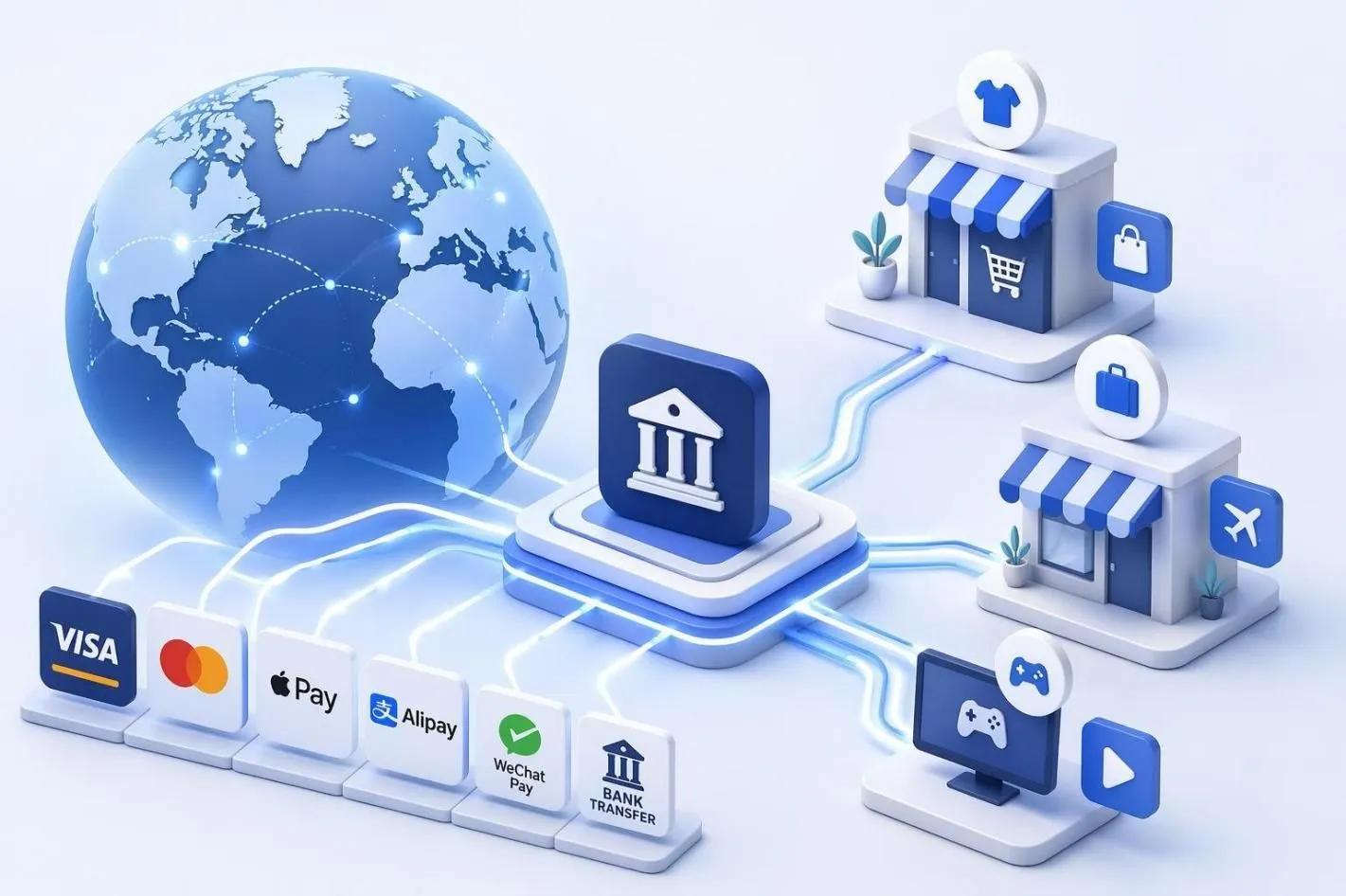
Accept Over 300 Payment Methods Globally
"In our experience working with fast-growing cross-border B2B platforms, relying solely on wire transfers can often result in a 30% drop-off at checkout due to buyer friction. By switching to Antom and activating local e-wallets instead, many clients have seen invoice settlement times decrease drastically from weeks down to mere minutes, significantly improving working capital." — Antom Payment Experts Team
Antom's API integration enables your Southeast Asia or Latin American buyers to pay using the e-wallets or local bank transfer apps that they already trust - instantly increasing conversion rates. Furthermore, Antom Shield helps protect you against Chargeback Risk and Fraud with innovative Chargeback Management features.
Mitigate Chargeback Risk and Fraud with Antom Shield
Ventures entering new markets often face steep chargeback risks and fraud-prevention challenges.
"We have seen first-hand how chargeback risk paralyzes merchants entering new emerging markets. By employing AI-powered engines like Antom Shield, businesses are now able to confidently approve legitimate local transactions while protecting themselves from sophisticated fraud syndicates." — Antom Payment Experts Team
Antom Shield provides millisecond-level AI decisions supported by billions of data points, helping businesses recover revenue and save hours with intelligent dispute defense.
Navigating Complex FX Controls and KYC/AML Compliance
Expanding into lucrative yet highly regulated emerging markets such as Latin America or Southeast Asia requires accepting local funds; however, taking them can often prove futile due to stringent foreign exchange controls or failing Anti-Money Laundering checks (AML checks). B2B finance teams frequently face the nightmare scenario where funds get frozen due to FX restrictions or AML checks that have gone undetected.
Antom's global financial entity status allows it to navigate regulatory complexities seamlessly, offering built-in KYC (Know Your Customer) and AML compliance checks that automatically run. Furthermore, Antom effortlessly manages complex fund repatriations. You can accept volatile local currencies like the Brazilian Real with transparent, locked-in exchange rates. This shields your enterprise from sudden currency depreciation and eliminates compliance bottlenecks.
Antom's Payment Orchestration Dashboard Simplifies Reconciliation
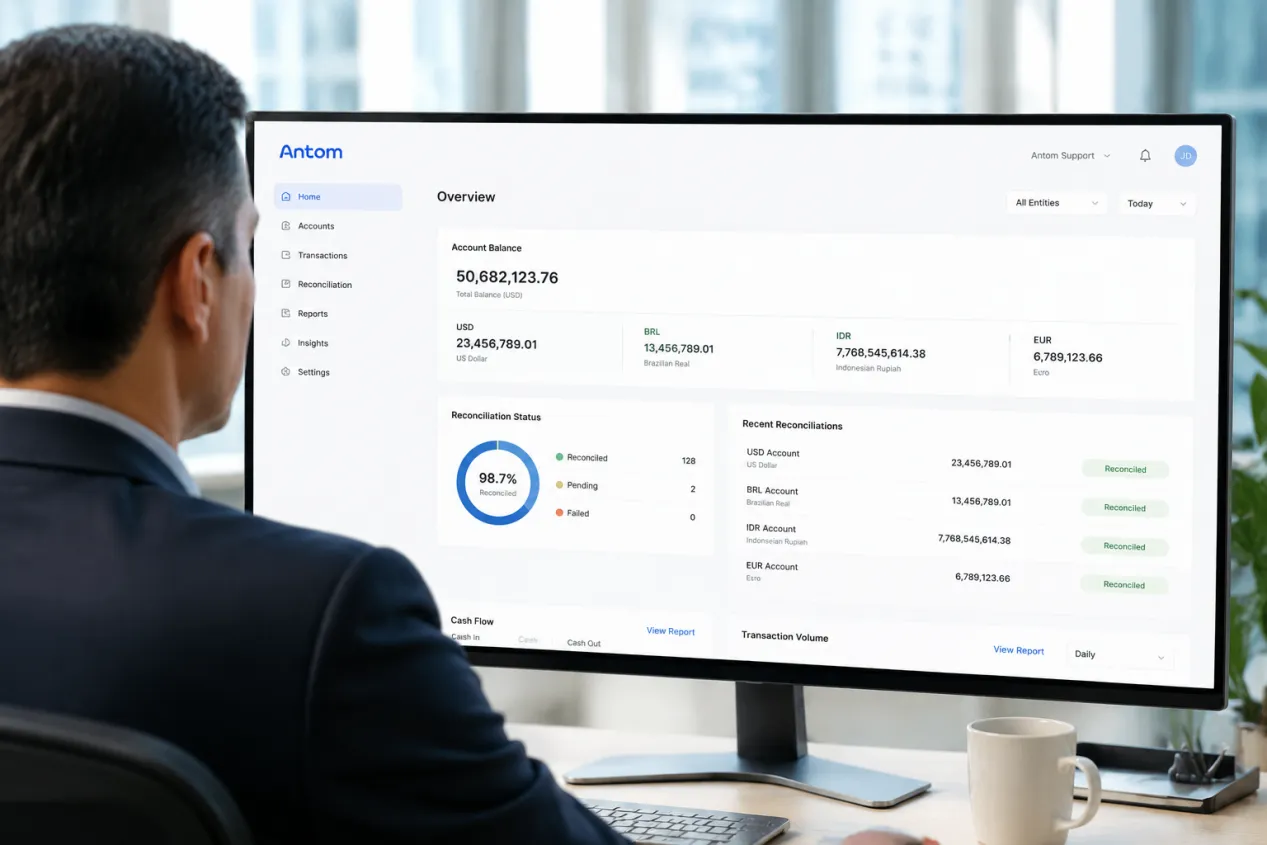
Finance teams face the daunting challenge of reconciling fragmented global payouts. Antom's multi-currency settlement dashboard effortlessly handles this complex process for them. Rather than spending six to eight months hard coding individual connections to dozens of local banks, your engineering team can deploy Antom's RESTful API in two weeks - cutting development costs by up to 70% while increasing reconciliation efficiency by 90%.
"The integration with Antom significantly enhanced payment success rates and eliminated cross-border friction, creating a vastly superior B2B experience." — Ren Fei, Head of Operations for SF Express Intra-city.
Use Case: Eradicating Involuntary Churn for SaaS & Subscriptions
When it comes to global SaaS and subscription-based B2B services, payment failure on recurring billing (involuntary churn) due to expired corporate cards or cross-border issuer declines can be the greatest threat. Antom directly addresses this threat with advanced Network Tokenization. It replaces sensitive card data with real-time dynamic tokens. This ensures uninterrupted recurring billing, salvaging up to 15% of otherwise lost subscription revenue.
Use Case: Pay By Link for Social Commerce and B2B Wholesale
Modern B2B trade often happens outside the traditional storefront; numerous wholesale negotiations take place via email, WhatsApp and social channels such as LinkedIn. Antom makes this process seamless; merchants generate secure, localized Pay By Link invoices which enable buyers to instantly pay with OXXO or Mercado Pago using secure links sent via WhatsApp—cutting payment cycles from days-long wire transfer wait times down to just 10 seconds for mobile checkout!
FAQs
Q1: What are the primary international trade payment methods?
A: Cash in Advance, Letters of Credit, Documentary Collections, Open Account and Consignment are currently the five traditional international trade payment methods, while digital wallets and local payment methods are increasingly being added as digital B2B trade occurs.
Q2: Which payment methods for international trade are safest?
A: Traditionally, Cash in Advance has been considered the safest payment method. Modern businesses may achieve increased safety without compromising conversion by employing AI-powered risk engines such as Antom Shield for chargeback risk management/fraud prevention.
Q3: Can digital wallets be used as international trade payment methods?
A: Absolutely. For modern e-commerce and B2B platforms, using a rigid cross-border interbank payment system is becoming outdated; digital wallets have become an increasingly popular solution; Antom aggregates over 300 local payment options to support seamless global trade.
Q4: How do international trade payment terms affect cash flow?
A: Preferring favorable payment terms can ensure your capital doesn't get tied up in inventory or transit costs, giving you more liquidity to negotiate better terms with suppliers. Modern payment orchestration platforms enable faster settlement times, giving you the liquidity to negotiate better supplier payment terms.
Choose Payment Methods That Help Drive Cross-Border Trade
Payments and billing terms are key components of international markets, determining your profit margins. Don't allow an outdated banking network to limit your global expansion; take advantage of modern payment orchestrators to turn checkout and settlement processes into competitive advantages!
Contact Antom's Payment Experts Today to get a customized cross-border payment diagnostic report tailored to your specific business regions.
Written by the Antom Payment Experts Team
As Ant International's global payment and digital solutions brand, Antom's Payment Experts team offers over 10 years of hands-on expertise in B2B cross-border payments, local payment orchestration, and AI-driven fraud prevention for enterprises worldwide. We assist them in navigating complex international trade payment terms and systems while connecting them with 300+ local payment methods and 250 million digital wallet users in 50+ markets.