

Share on
Many businesses expanding into new markets follow a checklist that is not too different from this:
- Market research
- Review regulatory requirements
- Logistics
- Translate website and design new landing pages
- Adapt pricing and choose international payment solutions
- Invest in regional marketing campaigns
These are essential steps, but they can create a blind spot. Once the regional websites or stores get up and running, traffic flows to the website as shoppers browse products and add items to their carts. However, conversion rates fall short of expectations. What did they miss? More often than not, it is payment localisation.
Why Payment Localisation Is Imperative for Global Expansion
According to a Baymard Institute study, 10% of online shoppers abandon their carts because their preferred payment method is not available. Conversely, merchants offering local payment methods saw an average revenue increase of 12% and conversion improvements of 7.4%, according to a study by Stripe. These figures may seem negligible, but apply them across thousands of transactions and multiple regions, and they could mean millions of dollars in revenue lost or gained.
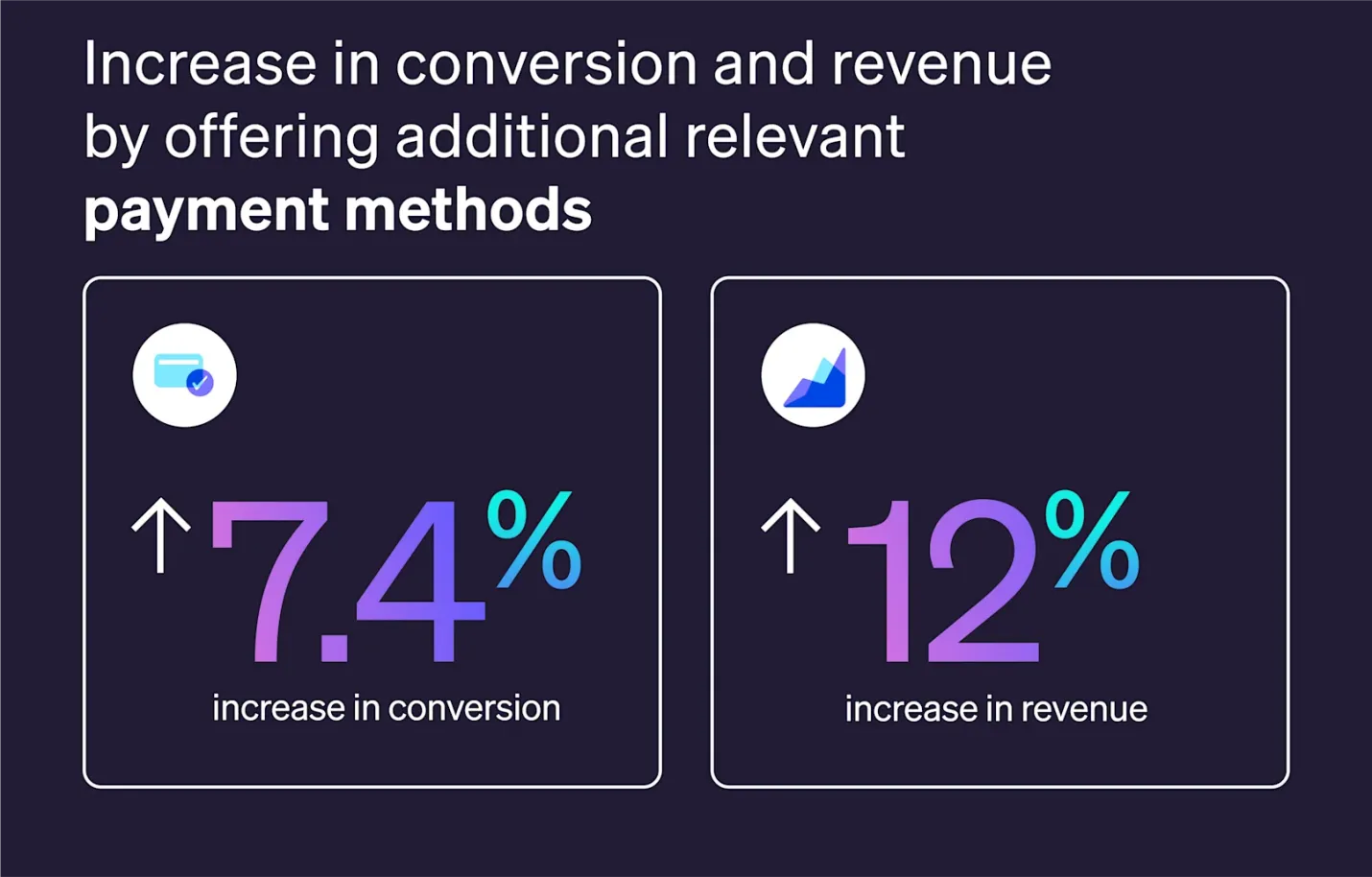
The statistic also highlights an important lesson for US businesses expanding internationally. Reaching customers halfway across the world is only half the puzzle; enabling them to pay in ways they already know and trust is the other half. That is why payment localisation has become a key component of successful expansion strategies.
Many businesses view payment strategy as an operational concern. They assume that once they have successfully attracted international customers, the hardest part of the sales journey is over. In reality, payment strategy has become a growth consideration. Research by PYMNTS Intelligence found that 70% of shoppers consider payment-method availability influential when deciding where to shop. That shows how payment preferences can shape purchasing decisions long before shoppers reach checkout.
Industry research has also found that offering local payment methods can improve both conversion rates and revenue. The phenomenon is largely linked to trust. Customers are more likely to complete purchases when the merchant offers payment methods that they trust. That familiarity extends in the merchant’s favour. Thus, payment localisation is increasingly becoming an integral part of expansion planning itself. Businesses that align their international payment experiences with local expectations build stronger foundations for international growth by reducing friction and building trust.
The challenge here is that payment preferences in international markets vary widely from those in the US. Mobile wallets are widely used across Southeast Asia, bank-based payment methods are popular in parts of Europe, and mobile money is the default in several African economies. A stellar checkout experience in the US may create unnecessary friction elsewhere for a shopper in Malaysia. How, then, can businesses ensure their international payment solutions cater to these diverse preferences? It pays to first understand how behaviours differ across these regions.
What Payment Localisation Looks Like Across Global Markets
Regional payment preferences are often shaped by local infrastructure, regulations, and consumer behaviour. As a result, customers in different markets often expect very different options at checkout.
Southeast Asia
Payment behaviour in Southeast Asia presents a strong case for payment localisation. In Thailand, PromptPay has surpassed 90 million registrations and processes more than 74 million transactions daily. The region is also becoming more interconnected through payment systems such as PromptPay, PayNow, DuitNow, and QRIS. In Malaysia alone, consumers completed more than 11 million cross-border QR transactions during the first half of 2025.
Europe
Businesses often approach Europe as a single market. However, payment preferences vary significantly from country to country. In the Netherlands, iDEAL processes more than 1.3 billion transactions annually and accounts for roughly 70% of online payments. Meanwhile, in Belgium, Bancontact captures nearly three-quarters of consumers.
Latin America
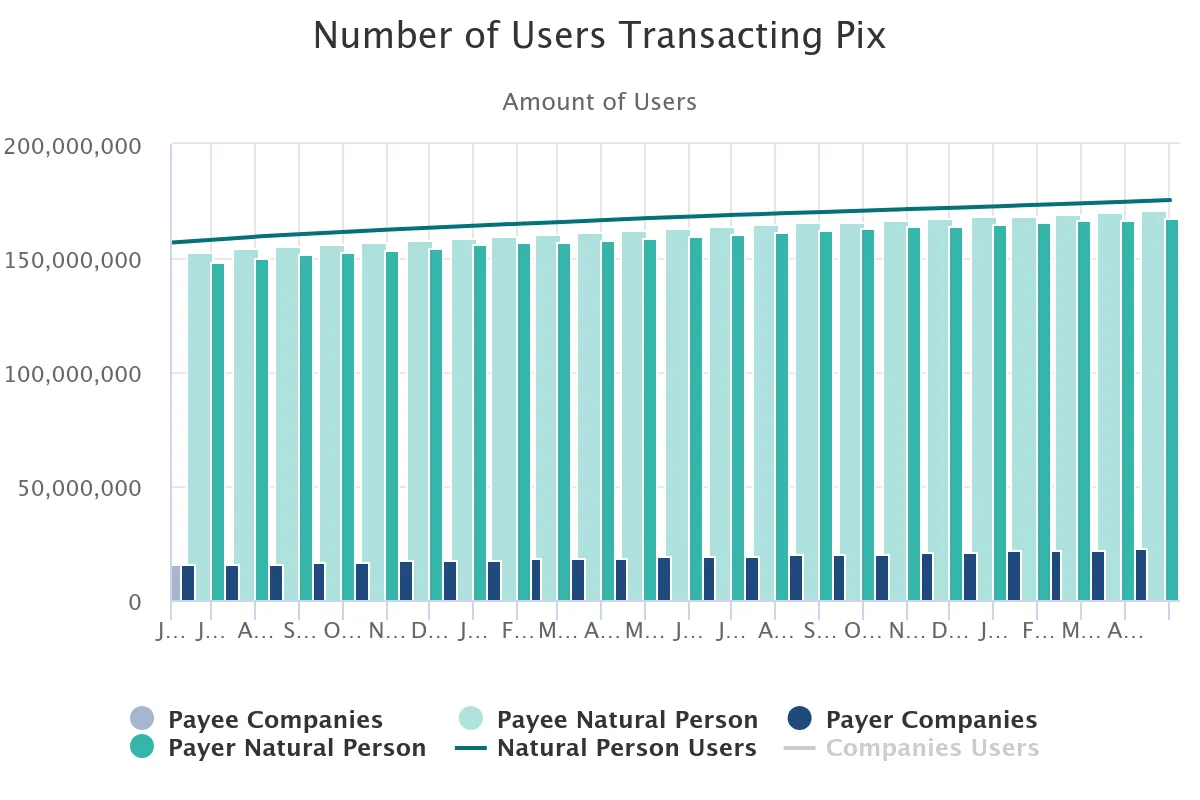
Brazil’s Pix platform attracts more than 150 million users and has fundamentally changed how consumers and businesses spend money. The platform is deeply integrated in everyday commerce in the region and offers one of the most frictionless payment gateways for merchants, both local and foreign.
Middle East
Digital payments are the standard across much of the Middle East. In the UAE, digital transactions account for roughly 80% of payments, reflecting the region’s growing preference for fast and seamless digital experiences. Whether consumers are shopping online, paying bills, or booking services, they expect the convenience and speed that define digital payments.
Africa
Meanwhile, Africa has seen mobile money become the leading standard for payment on the continent. According to GSMA data, mobile money platforms processed approximately $1.68 trillion in transaction value during 2024, while merchant payments alone reached $155 billion. Airtel Money alone processed transactions at an annualised rate of approximately $193 billion in 2025.
For many African consumers, these services are the primary way to send, receive, and spend money, rather than just alternative payment methods. Businesses that fail to support these ecosystems risk excluding large segments of potential customers from the outset.
Market | Preferred Payment Methods |
United States | Cards, Apple Pay, Google Pay |
Thailand | PromptPay, cards |
Singapore | PayNow, cards, wallets |
Malaysia | DuitNow, cards, wallets |
Brazil | Pix, cards |
UAE | Digital wallets, cards |
Africa | Mobile money, cards |
Taken together, these examples reveal why payment localisation is an imperative consideration for global expansion. Local payment habits and infrastructure shape preferred payment methods, and those habits vary dramatically across markets. Businesses that understand and tailor their international payment solutions to those differences will be better positioned to succeed as they expand internationally.
How International Payment Solutions Enable Payment Localisation at Scale
Understanding local payment preferences is one thing. Supporting them across multiple markets is another challenge entirely. Usually, businesses expanding internationally would work with multiple payment service providers, open local bank accounts, and manage separate payment infrastructures across regions. As a business expanded into more markets, its operational complexity would increase exponentially. If that sounds like a nightmare, it is because it was.
That challenge is becoming even more pronounced as payment ecosystems diversify further. According to McKinsey’s Global Payments Report, payment preferences around the world are as fragmented as ever. Consumers adopt a growing mix of digital wallets, account-to-account payment systems, real-time payment networks, and alternative payment methods. Thus, what works in one market will usually be irrelevant in another.
Modern international payment solutions are changing that equation, however. Rather than reconciling dozens of separate bank accounts and balance sheets at the end of the month or quarter, businesses can now access local payment networks and currencies through a single platform. This level of payment orchestration simplifies expansion efforts while helping merchants deliver localised payment experiences to customers in different regions.
Antom, one such solution that addresses this challenge, supports more than 300 payment methods across over 200 markets, so businesses can support customers using payment options they already know and trust. Whether a shopper prefers PromptPay in Thailand, Pix in Brazil, or iDEAL in the Netherlands, businesses can support these preferences from a central dashboard without building separate payment infrastructures for every market.
The benefits extend beyond operational efficiency. Businesses can enter new markets more quickly with a less resource-intensive payment system and adapt more easily as customer preferences evolve.
Building Payment Localisation Into Your Expansion Strategy
Payment localisation is most effective when it is treated as part of market-entry planning rather than a post-launch optimisation project. If a business waits until its conversion rates begin to decline to evaluate the payment preferences it offers, it would have lost several valuable revenue opportunities.
Start Payment Research Alongside Market Research
If this guide has proved anything, it is that payment behaviour deserves the same level of attention as market research, competitor analysis, etc., during expansion planning. Businesses must identify the payment methods that prospective customers in a region already use and trust. They should also evaluate international payment solutions that can support those preferences. Remember, the goal is to understand how to integrate those popular payment methods efficiently as the business expands.
Localise the Entire Payment Experience
Apart from selecting the right payment methods and solution, expanding businesses must also localise product pricing and checkout experiences. Customers and shoppers should not have to break out mental mathematics and currency conversion charts while shopping or at checkout. Eliminating that extra step by displaying prices in the right currencies would help pave the route from “Add to Cart” to a successful purchase. The overarching theme is that businesses should evaluate payment localisation as a complete experience rather than just a list of alternative payment methods.
Build for Growth, Not Just Market Entry
Businesses planning for international expansion must reach for the sky as they do so. Simply, they must plan for the challenges that could arise as sales and operations in those target regions expand. Further entry into additional markets would normally fragment payment operations. New integrations, local providers, and operational requirements can create complexity that slows growth instead of supporting it.
Thus, international businesses must include scalability in their global expansion strategy. They must consider how their payment infrastructure can support customer acquisition and growth initiatives across their target regions.
Conclusion
Ultimately, the most successful global expansion strategies treat payment localisation as an investment in customer experience. Businesses that understand local payment preferences, deliver familiar checkout experiences, and invest in scalable international payment solutions will be better positioned to convert international demand into long-term growth.
Frequently Asked Questions
What is payment localisation?
Payment localisation is the process of tailoring payment experiences to the local market preferences. It mostly involves supporting relevant payment methods, currencies, and checkout experiences.
Why is payment localisation important for international expansion?
Payment localisation helps global businesses avoid friction and improve conversion by meeting customer expectations at checkout and improving brand trustworthiness.
How do you identify the right payment methods for a new market?
With careful research, businesses should identify local consumer payment preferences and regional payment trends. They can use international payment solutions like Antom to simplify access to the popular local payment methods they discover.