
Share on
Mastering the latest digital technologies is essential in the fast-evolving digital economy. Fintech trends in cross-border payments 2026 has become a key differentiator of global businesses. Cross-border trade is becoming increasingly complex. Modern payment infrastructures are evolving from back-office cost centers into strategic engines that accelerate global business growth. Companies can now navigate the international market with ease by leveraging cutting-edge infrastructure.By integrating these innovations, businesses can future-proof their operations against the evolving fintech trends in cross-border payments 2026."
Why Cross-Border Payments Will Change Rapidly in 2026
Global commerce is not satisfied with the legacy financial architectures. The traditional correspondent banking system, which is often characterized by high fees, opaque procedures, and long settlement times, struggles to keep up with the modern demands of digital trade. Today, the core element of Fintech trends for cross-border payments is speed, transparency, and operational agility.
Payment modernization is no longer a luxury anymore, but a strategic requirement for businesses that want to grow. Recent research by the Bank for International Settlements shows that real-time payments infrastructure is expanding globally as financial institutions upgrade their cross-border transaction system. By 2026, the expectation for international transactions is shifting from 'days' to 'near-instant'. Businesses demand that international transfers be as easy as domestic transfers. The convergence of regulatory standards with technological innovation has also created an environment in which friction is being eliminated from the global supply chain.
Five Fintech Trends in Cross-border Payments 2026 That Will Reshape Global Commerce
Five dominant forces are reshaping the cross-border payment landscape by 2026. These forces fundamentally change how value is moved across borders. These trends are a paradigm change in the way platforms, merchants, and financial institutions interact.
Real-time Revolution: Near-instant settlement
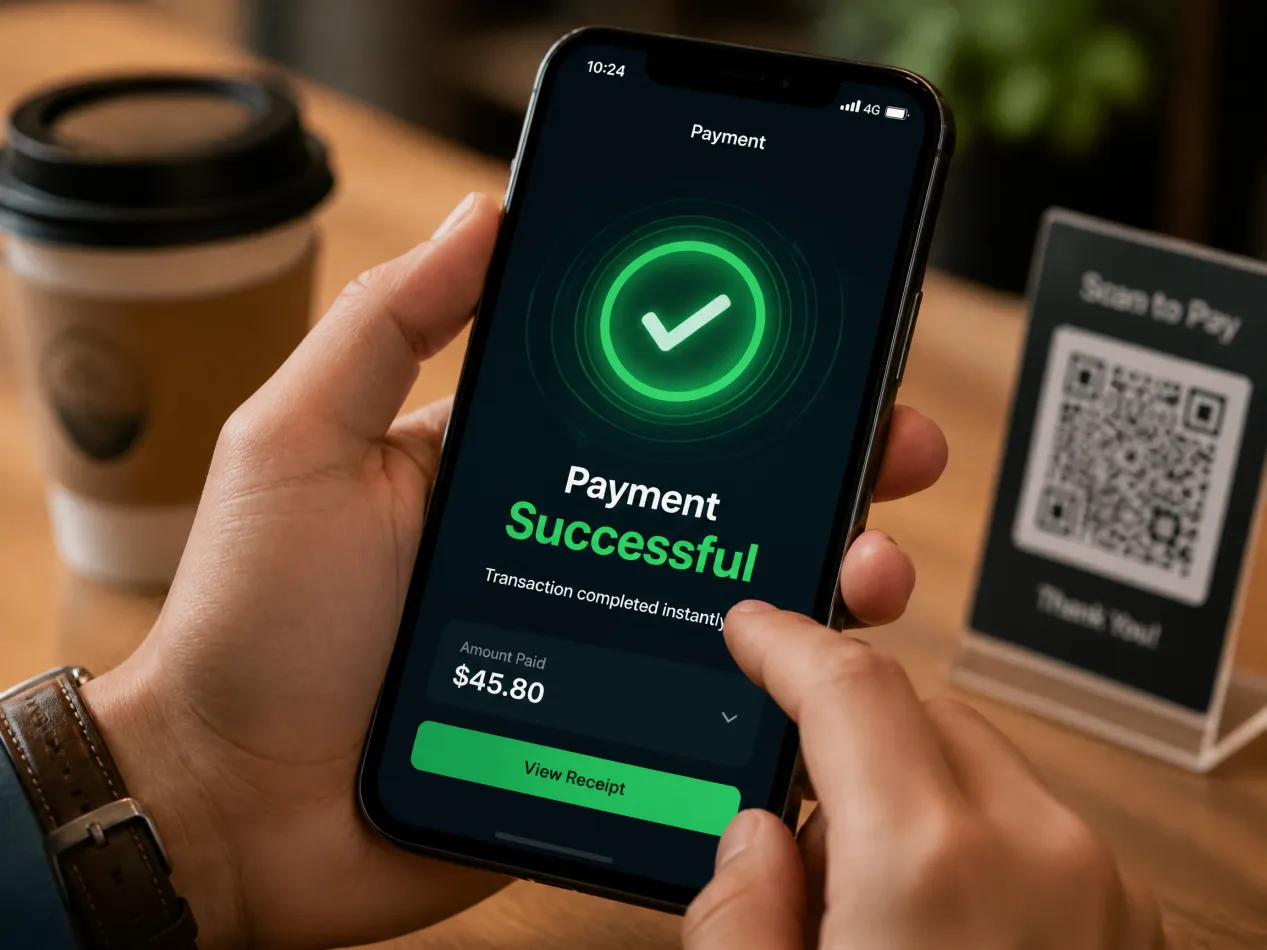
Globally, the demand for real-time 24/7 settlement has become the standard. Businesses are shifting away from batch processing models to rails which allow immediate fund availability. This change not only allows businesses to better manage their cash flow, but also allows them to reinvest more capital and expand faster.
ISO 20022 Adoption: Improve Data Transparency
ISO 20022 is now the language of finance. Standardizing payment data reduces errors in reconciliation and accelerates compliance screening. It ensures that important transaction details, such as invoice numbers and remittance information, remain intact across international boundaries, solving the problem of data loss in transit.
AI-Driven Risk Management: The rise of smart shields
AI-powered risk management has become a necessity with the emergence of sophisticated fraud on a global scale. Modern systems use real-time decisioning to safeguard transactions without compromising the customer experience. These systems balance security and conversion by identifying abnormal behavior patterns at the point-of-entry. They ensure that the user's path of least resistance is also the safest.
E-commerce Payments Increasingly Localized
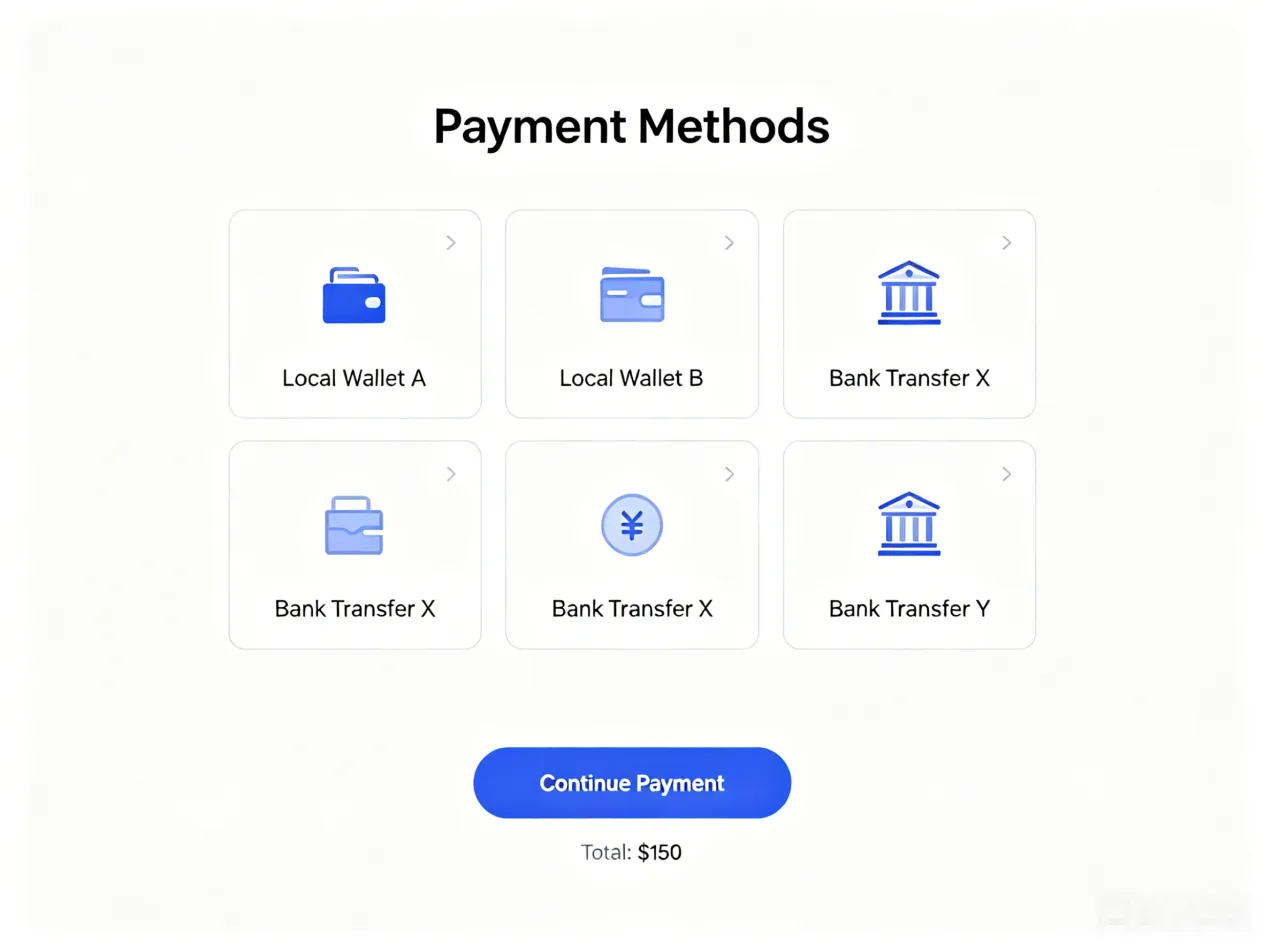
Global users prefer to pay with methods they know and trust, whether it's local eWallets, bank transfers, or QR codes. Localizing payments for markets with high growth is essential. To ensure ROI, it is important to evaluate the local adoption rates of payment methods before investing in any new integrations. In many emerging Asian or Latin American markets, data shows that digital wallets are already the preferred checkout method. They have surpassed traditional credit cards in volume and trust. You can reduce the "cultural friction" which often results in cart abandonment by using a gateway that supports local habits.
Embedded Finance and Multi-rail Interoperability
Platforms are embedding more and more payment capabilities into the user journey. These platforms connect multiple payment rails to ensure that transactions can still be completed even if one route is congested. The result is a financial infrastructure capable of absorbing localized outages and maintaining a seamless user experience.
Feature | Legacy Payment Models | 2026 Trend-Driven Models |
Settlement Speed | T+N Days | Real-time / Near-instant |
Data Format | Proprietary or Fragmented | ISO 20022 Standardized |
Risk Control | Manual / Rules Based | AI-powered / Dynamic |
User Experience | High-friction / Standardized | Localized / Embedded |
Antom’s Cross-border Payment Solutions for SME and Global Merchants: A Solution to the Complexity
Modernization is a trend in the industry, but the implementation can be daunting. Antom distinguishes itself from traditional infrastructure giants. Antom, a company specialized in e-commerce and platform marketplaces for growing digital businesses, has been designed to meet the high-volume, fast-paced demands of these industries.
Antom's focus is on eliminating the friction associated with localized trade. Antom's platform aggregates over 300 payment methods, including regional eWallets, bank transfers, and local payment tools, allowing merchants the ability to reach diverse global consumers without having to manually integrate in each individual market. Case studies indicate that unified payment aggregation can improve first-month market conversion rates by approximately 20% by reducing integration friction.
Our Scan-to-Link solution also revolutionizes checkout for cross-device purchases. We've reduced payment paths from 40 seconds down to 6 seconds by moving authorization away from input devices (like PCs or Smart TVs) and onto a mobile confirmation device. This is supported by Antom Shield. Our engine safeguards against fraud while maintaining a high rate of approval for legitimate buyers. This ensures that "stopping loss" actually leads to "net revenue growth." We reduce your operational burden by automating the validation and approval of legitimate transactions. This allows you to focus more on the growth of your product or market.
Mastering Operational Efficiency with an E-commerce Payment Gateway
In 2026, the top-tier Global e-commerce payment gateway is vital. Reconciliation is one of the biggest bottlenecks in finance. Antom's APO (Global Payment Manager) integrates automated reconciliation of payments to address this issue. We reduce manual verification by 90% when we automate multi-currency reporting and conversions. Our system converts your payment data into a dynamic, real-time tool for executives.
It supports over 140 transaction currencies and more than 20 multi-currency account types. Your team can view the global cash flow on one dashboard. This simplifies tracking in different markets. The unified reconciliation provides clarity, allowing your team to focus more on growing the business than on chasing down lost records. This central visibility is crucial for managing inventory and managing liquidity across regional operations.
Best Practices to Implement a Future-Proof Paying Strategy

As you plan your roadmap beyond 2026, use the following checklist to align your infrastructure with the latest fintech trends in cross-border payments 2026. This will ensure that you are well-positioned for long-term scaling.
Localized coverage: Does your gateway support local eWallets that your target market uses? In many emerging markets, the use of credit cards is low compared to mobile wallets.
Intelligence: Does the system utilize AI to improve success rates? Manual routing is often unable to cope with sudden traffic spikes and localized outages. Deploy smart routing automation once cross-border volume exceeds $100k/month to maintain uptime during traffic spikes and reduce manual oversight. It will reduce latency and impact on checkout before the traffic spikes.
Transparency: Can you view settlement data in real time across all regions on one dashboard? A lack of transparency can lead to a "leaking" of revenue, due to poor FX Management or hidden fees.
Compliance: Does the partner hold local licenses? Relying solely on third-party aggregators in regulated markets increases your compliance liability and complicates audits. Prioritize partners with local licenses in regulated markets to minimize compliance liability and streamline complex audit requirements. Antom has acquired licenses for 16 countries and areas, ensuring a compliant, solid foundation for international expansion.
Integration speed: Are you able to deploy new payment methods in a matter of weeks or are you tied down by a vendor who is rigid and slow? Your infrastructure needs to be flexible and able to adapt when market preferences change.
Conclusion and Next Steps
Your global growth is directly influenced by the maturity of your payment infrastructure. The ability to handle multi-currency reconciling automatically and protect revenue with AI will be the difference in 2026 between leading and falling behind. You can thrive in global complexity by embracing the most recent technological advances. Is your current setup ready for 2026 demands? Contact our integration specialists for a tailored audit of your payment infrastructure.
FAQs
What are the essential fintech trends in cross-border payments 2026 for global businesses?
The key trends are ISO 20022 standardization and AI-driven management of risk. Antom has integrated this capability to ensure that our partners remain on the cutting edge of the industry.
How do SMEs achieve Real-time Settlement for international payments?
Antom provides platforms with direct clearing and multi-rail interoperability, which allow SMEs to optimize liquidity and bypass the traditional bank's latency.
How do cross-border online merchants improve global conversion rates?
Localizing the payment experience is the most effective method. Antom offers over 300+ localized payment options, so that every user can choose a method they are comfortable with. This reduces the abandonment rate at the checkout stage.
How can AI help to improve the risk management of cross-border payments?
AI enables millisecond-level transaction scanning. Antom Shield uses these models to identify fraudulent patterns dynamically. This minimizes the false positive rate for real customers, and ensures smooth payment flows.
How can I manage my account?
An integrated platform such as the Antom Global Payment Manager (APO), allows you to consolidate currency inflows on one dashboard. This automates reconciliation, FX exchange, and reporting tasks.
Sources and References
- Bank for International Settlements (BIS): Research and reports on the evolution of real-time payment infrastructures and the global transition toward faster cross-border settlement.
- ISO 20022 Standard Documentation: Official guidelines regarding the standardization of global financial messaging for improved data transparency and reconciliation.