
Share on
Expanding into international markets can help your business grow, but it also brings challenges that are easy to overlook. Compliance rules might change suddenly, international transfers can take longer than planned, foreign exchange costs can eat into profits, and managing fraud risks gets harder as you operate in more countries. If you do not solve these issues, it can be difficult to provide customers with a smooth buying experience.
Cross-border payment solutions help businesses deal with these issues by making it possible to send and receive payments between buyers and sellers in different countries. These platforms handle currency conversion, process payments through both local and global networks, manage compliance, and keep funds secure. Most importantly, they connect businesses to many payment methods, currencies, and banks, making global trade easier.
This guide will explain what cross-border payments are and how to pick the right provider for your business. You will also find out which features help your business grow internationally and learn how to improve customer experience, boost conversion rates, and work more efficiently.
What Industry Research Says About Cross-Border Payment Solutions
Mastercard's Borderless Payments Report shows that two-thirds of small and medium businesses already use mobile apps and digital channels for cross-border payments. Another Mastercard study found that three out of five SMEs in Latin America and the Caribbean work with international suppliers, and many plan to grow their global partnerships soon. This highlights how important reliable international payment systems are for business growth.
But just having a cross-border payment provider is not enough. The provider should be professional, localised, secure, and simple to use. Research from PYMNTS found that 99% of cross-border shoppers want to use their preferred payment methods, and 94% like to pay in their own currency. This means businesses that offer local payment options are more likely to get customers to finish their purchases.
Mastercard's Borderless Payments research also found that 39% of small and medium businesses say slow international payments delay their supply chains. Another 25% said suppliers will not work with them because they are unsure when payments will arrive.
A more interesting report by Grand View Research projects that the global digital payment market will grow from USD 165bn in 2026 to USD 683bn by 2033. More businesses are likely to adopt digital payment methods, enhancing international transactions.
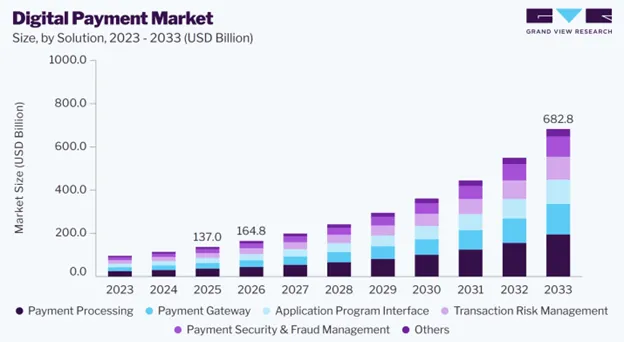
Overall, the findings above show that customers and businesses want a smooth payment experience. With these expectations in mind, the following considerations can help you identify a cross-border payment provider that aligns with your operational needs and growth objectives.
How to Choose the Right Payment Provider for Your Business
Evaluate Global Coverage
When you expand into new countries, first check if your payment provider supports the markets you want to enter. Many businesses pick a provider for their current needs, only to find out later that it does not cover key regions. This can mean adding extra systems later, which makes things more complicated.
A good international payment provider should make it easier to accept payments and settle funds across several countries. The wider the provider's network, the easier it is for businesses to scale into new markets. For instance, Antom enables businesses to access 200+ payment markets, accept over 300 payment methods, and support more than 140 currencies.
Prioritise Local Payment Methods
Naturally, payment preferences vary widely from one country to another. While credit cards may dominate in some markets, consumers elsewhere may opt for digital wallets, bank transfers, or real-time payment systems.
The more payment options your provider offers, the easier it is to serve customers worldwide. This can also help you get more sales, reduce abandoned carts, and build customer loyalty.
Consider Currency Support and Foreign Exchange Management
Customers usually feel better about buying when they see prices in their own currency. If they have to deal with currency conversions at checkout, they might get confused or decide not to buy. For example, a customer in Japan who sees prices in Japanese Yen instead of U.S. Dollars knows right away what they will pay, which makes it more likely they will finish the purchase.
Businesses also need to watch out for foreign exchange costs. Bad exchange rates and undisclosed fees can hurt profits, especially if you handle a lot of international payments. The best providers offer good exchange rates and clear fees, so you get the most value for your money.
Review Payment Approval Rates
If a payment is declined, you can lose a sale right away. And if this happens often, your business could lose a lot of money, even if you are bringing in interested customers.
Now, think about an online retailer that processes thousands of international transactions every month. If its payment provider has low authorisation rates in certain markets, legitimate customer payments may be declined because of poor routing, limited local acquiring relationships, or outdated payment infrastructure. The customer may then abandon the purchase altogether and buy from a competitor instead.
But if you work with a provider that has high approval rates, you can earn more from your current customers without spending more on marketing. Providers with smart routing can pick the best payment path, which helps reduce declines and keeps customers happy.
Assess Fraud Prevention and Security
As your business grows internationally, fraud risks can get more complicated. Each region may have its own fraud patterns, rules, and customer habits. Your payment provider should help you keep strong security standards.
The good news is that most payment systems now use artificial intelligence to track transactions in real time. These tools can spot unusual activity and help stop fraud before it happens.
For example, if a payment comes from an unusual location or looks very different from a customer's normal buying habits, the system can ask for extra checks. This helps lower fraud risk and protects real customers from having their payments declined for no reason.
Examine Integration Options
Even the best payment platform might not work well with your current systems. This might pose a bigger problem if your business uses many different tools for e-commerce, accounting, inventory, customer service, and reporting.
Choose a provider that integrates smoothly with your systems and daily processes. This can cut down on manual work and help your business run more smoothly. For example, if payment data syncs automatically with your accounting software, your finance team can spend less time matching transactions and more time on bigger projects, like improving customer experience. Depending on your business and tools, you might want to check if the platform offers:
● API integrations
● E-commerce platform compatibility
● ERP integration
● Reporting tools
Understand Compliance and Regulatory Support
Cross-border payments involve more than moving money between countries. Businesses must also comply with a growing number of regulations created to prevent fraud.
Unfortunately, regulatory requirements vary across jurisdictions, which makes compliance difficult. Some common requirements may include:
● Anti-money laundering regulations
● Know Your Customer verification
● Data privacy laws
● Regional financial regulations
A provider that complies with these requirements can help you avoid legal and operational obstacles. This essentially means that if your company expands into multiple markets, your payment provider should be able to independently comply with data privacy requirements and local financial regulations in those regions.
Look for Scalability
Your payment needs today might change a lot in a few years. Pick a provider that can grow with you, support more countries, new payment methods, and higher payment volumes. This way, you will not have to switch providers or payment systems as your business grows.
Evaluate Reporting and Analytics
Payment data provides important insights about customer behaviour and business performance. Look for reporting features that include:
● Transaction success rates
● Payment method performance
● Geographic trends
● Currency analysis
● Fraud metrics
According to a study, data-backed insights can help businesses identify opportunities for optimisation and growth. You will be able to detect patterns and generate accurate predictions about financial and customer behaviour.
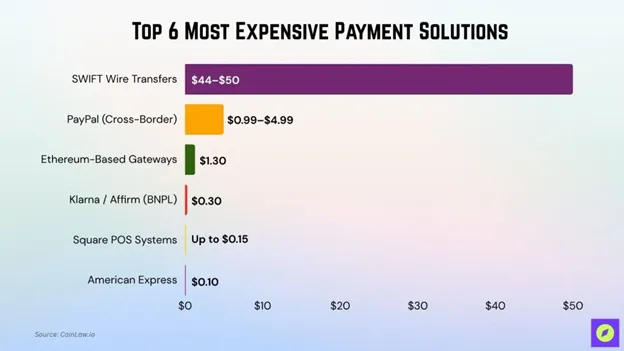
Compare all Costs
Most businesses focus on evaluating transaction fees when comparing payment providers. While these costs matter, they are just one part of the overall financial picture.
When comparing providers, consider the total cost of ownership. This means comparing chargeback fees, settlement costs, integration expenses, compliance support, and how failed payments might affect your revenue.
Building a Firm Foundation for Global Growth
International expansion creates tremendous opportunities, but success depends on your ability to offer seamless payment experiences across several markets. This is because customers expect fast transactions, local payment options, open pricing, and secure checkout experiences regardless of where they are located.
Get in touch with the team at Antom to learn how you can simplify business operations through its AI-powered cross-border payment solutions.
FAQs
How long do cross-border payments typically take?
The processing time for cross-border payments depends on the countries involved, payment methods, regulatory requirements, and the provider's network. While traditional bank transfers may take several business days, modern payment platforms can process and settle transactions much faster.
Can small and medium-sized businesses benefit from cross-border payment solutions?
Yes. Cross-border payments are not a preserve for big companies anymore. Small and medium enterprises can use them to accept international payments, make operations simpler, reach new markets, and offer local payment options without needing a big financial setup.
What is the difference between cross-border payments and international wire transfers?
International wire transfers are bank-to-bank transactions that move funds through banking networks. Cross-border payment is a broader term that includes bank transfers, digital wallets, card payments, and other local payment methods, allowing businesses to send and receive payments across countries through multiple channels.